What Is Potch Opal? A Cutter's Guide to Common Opal
Potch is opal without play-of-colour. Here's what it is, why it turns up next to precious opal, and how cutters put it to use.
Opal Cutting · By Stephanie Caruana ·
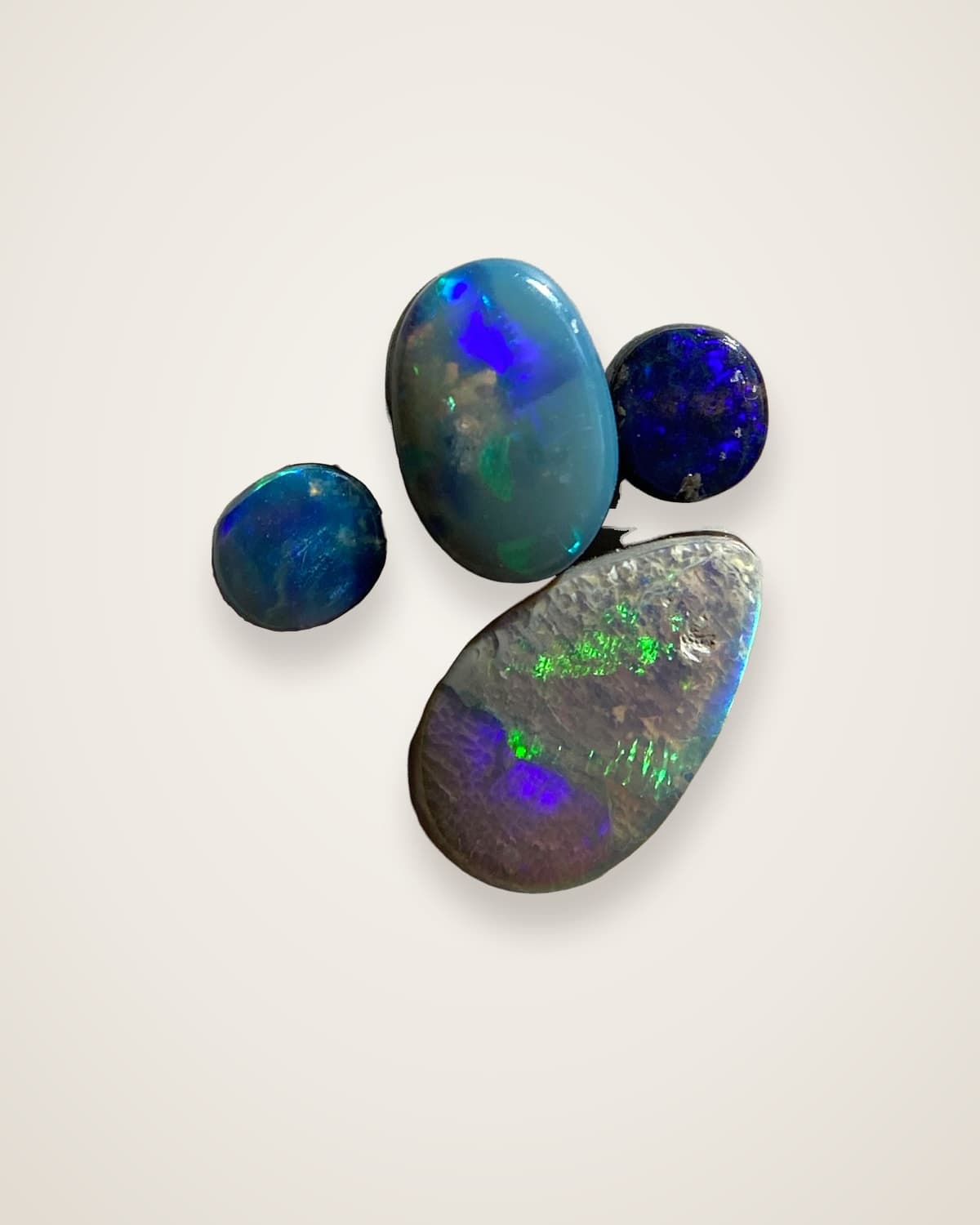
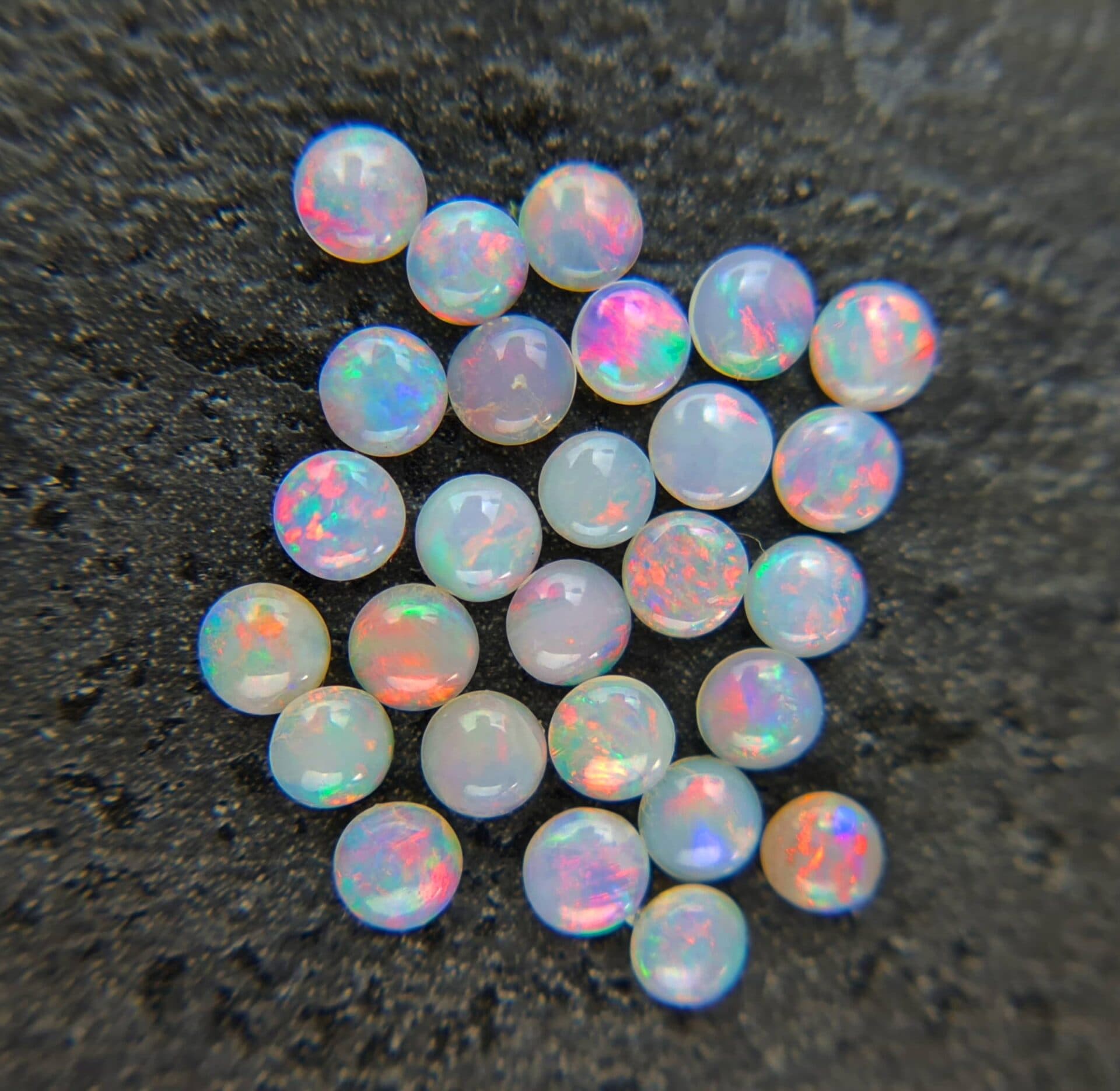
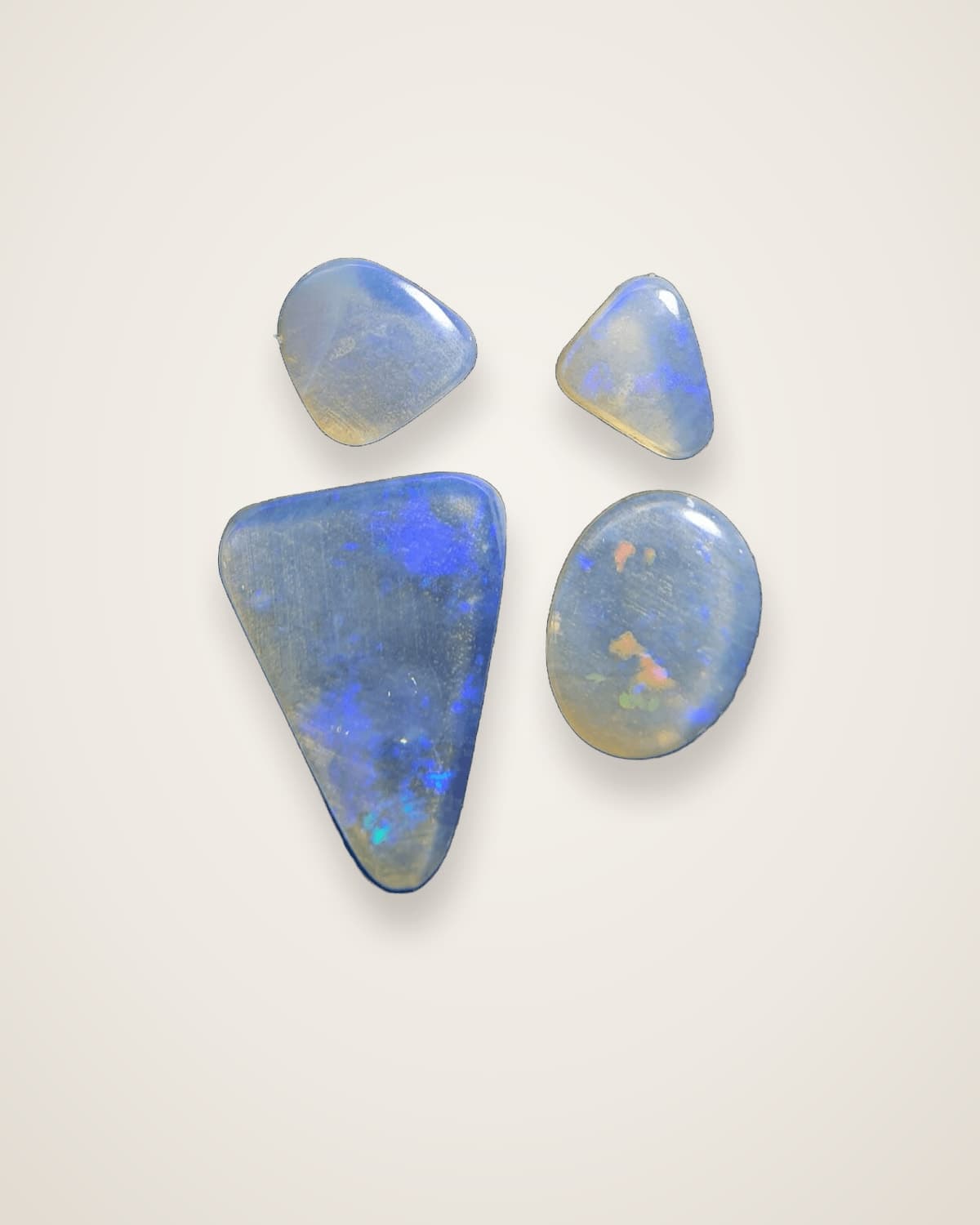
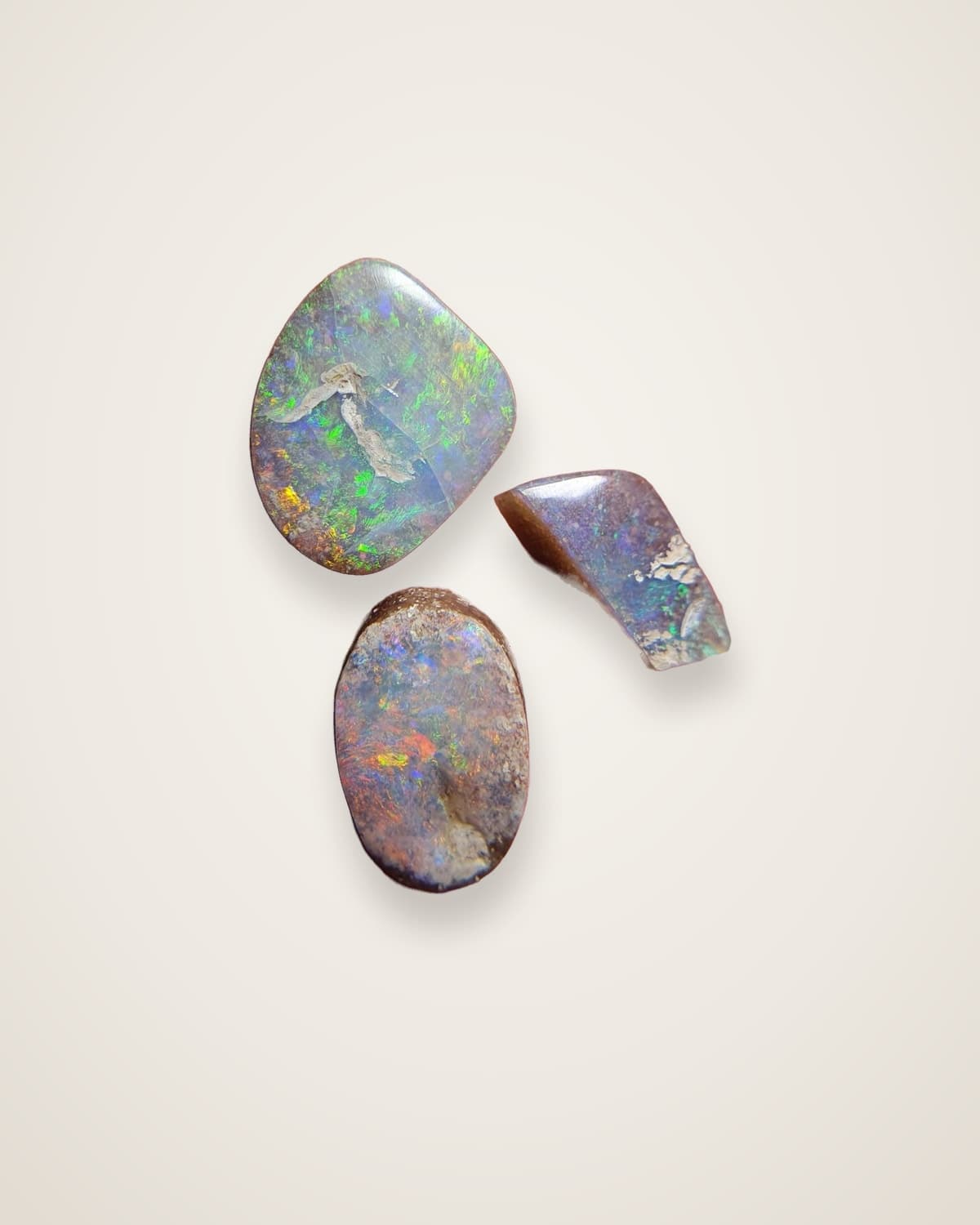
Potch is opal with no play-of-colour. It's the same material as precious opal, hydrated silica, but it doesn't flash the rainbow colours opal is famous for. Miners and cutters call it potch; gemmologists call it common opal. It's often found right beside precious opal, and plenty of good stones have potch behind the colour.
What is potch opal made of?
Potch is made of the same stuff as precious opal: silica and water, with a hardness of about 5.5 to 6.5 on the Mohs scale. The difference is in how the silica is arranged, not what it is.
Precious opal is built from tiny silica spheres stacked in neat, even rows. Light passing through that orderly structure is split into colours, which is what we call play-of-colour. In potch, the spheres are uneven in size or jumbled, so the light isn't split and you see one flat body colour instead.
That's why a single piece of rough can be part potch and part precious opal. Conditions changed slightly as the silica settled, and an ordered layer formed right next to a disordered one.
What does potch look like?
Potch has a single, even colour with no flashes as you tilt it. Depending on the field, it can be:
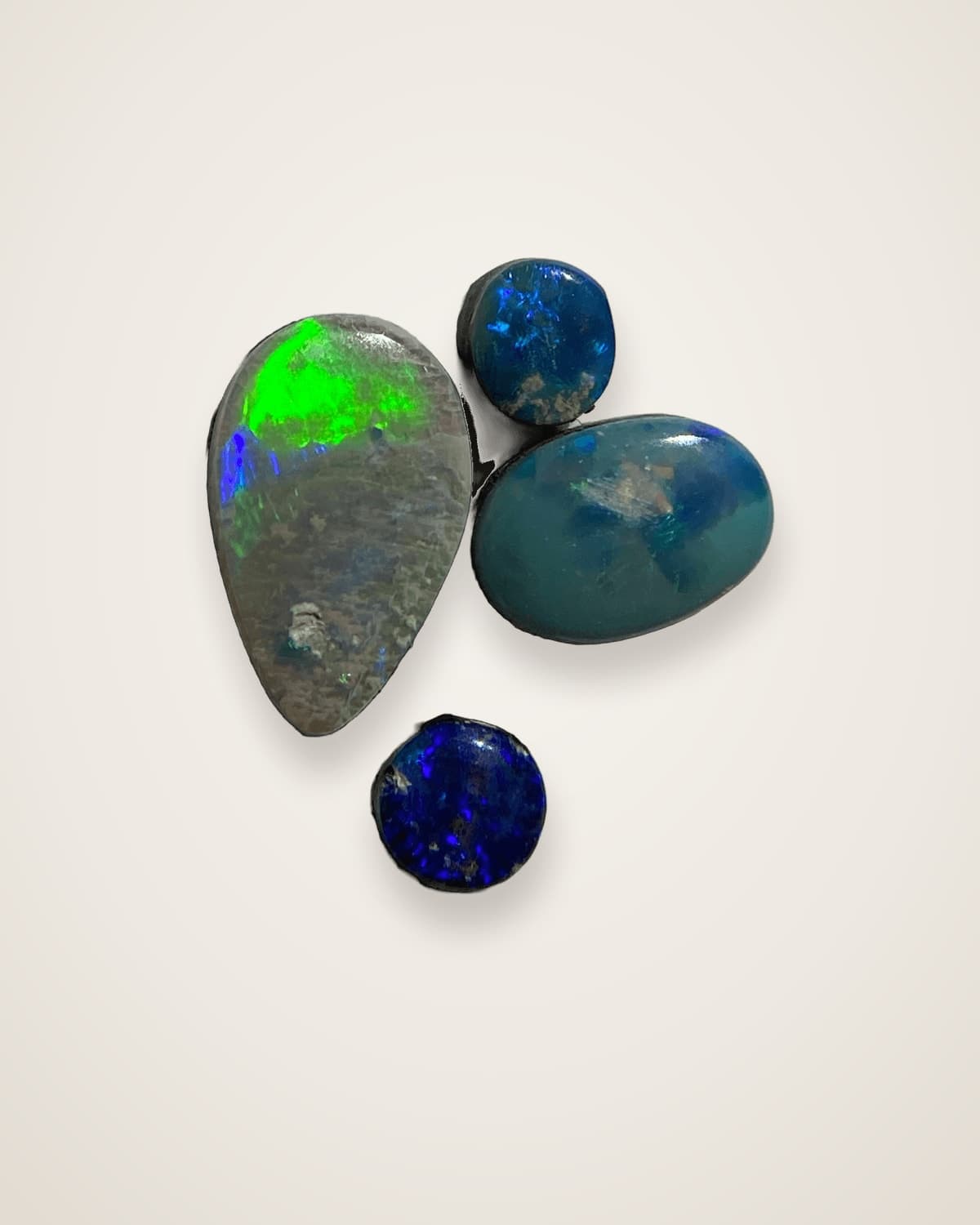
- Black or dark grey, which is common at Lightning Ridge
- White or milky, which is common at Coober Pedy and Andamooka
- Clear, amber or honey-toned, which can look glassy but still shows no colour
Polished potch has the same glassy lustre as precious opal, so on a dull day it can be hard to tell apart from a weak piece of colour. A torch or sunlight answers it quickly. If nothing flashes from any angle, it's potch.
Why is potch found with precious opal?
Potch and precious opal form the same way, from silica-rich water seeping into cracks and cavities and slowly hardening. Most of what forms is potch, because precious opal needs the silica spheres to settle evenly, and that happens far less often.
So miners at Lightning Ridge, Coober Pedy and Andamooka dig through a lot of potch to find a little colour. A seam of precious opal often sits as a thin bar on top of a band of potch. If you've read about how opal is mined, that's why the mullock heaps at the fields are full of the stuff.
Many Lightning Ridge black opals have a layer of dark potch behind the colour. That dark backing is a big part of what gives black opal its dark body tone, rated on a scale from N1 (black) to N9 (white), and it's why the colour looks so intense.
Is potch opal worth anything?
Potch on its own has little value as a gem, because play-of-colour is what makes opal valuable. It's still useful, though, and it isn't rubbish to a cutter.
- Practice stone. Potch cuts and polishes just like precious opal, so it's the best way to learn without wrecking good material.
- Doublet backing. Black potch is one of the traditional backings for opal doublets. Glued under a thin slice of precious opal, it darkens the background and lifts the colour.
- Inlay work. Some jewellers use coloured potch for inlay, where an even colour is exactly what's wanted.
Potch is also worth a second look before you throw it out. Sometimes a thin line of colour is hiding inside a piece that looks plain on the outside.
How do cutters work with potch?
Cutters usually remove most of the potch, then keep enough behind the colour to give the stone strength and a good body tone. Deciding how much to leave is one of the main skills in opal cutting.
When I cut a stone with colour sitting on potch, I:
- Look at the rough wet, under good light, to find where the colour runs.
- Grind away the potch above and around the colour bar, slowly, checking often.
- Leave a potch backing under the colour so the stone has enough depth to be set safely.
- Shape and polish the face so the colour sits across the top of the dome.
It doesn't always go the way you expect. Last June I shared a stone that started as an off-cut of potch and sand and turned into an absolutely electric opal once it was ground back. That's the stuff opal cutters dream of, and it's why I check even unpromising pieces under a light.
If you'd like to try it yourself, my beginner's guide to opal cutting suggests practising on potch, and you'll find rough opal in the shop when you're ready to step up.
How is potch different from a doublet?
Potch is a natural, solid piece of common opal. A doublet is a built stone: a thin slice of precious opal glued onto a backing, which is often black potch, ironstone or glass.
So if you see black potch mentioned in a doublet listing, it means the backing is natural common opal rather than glass or resin. The top layer is still real precious opal. Have a look through the opal doublets to see how much colour a dark backing brings out.
Questions people ask
Is potch real opal?
Yes. Potch is natural opal made of the same hydrated silica as precious opal. It just doesn't show play-of-colour, so it's called common opal.
Can potch turn into precious opal?
No. The silica structure is set once the opal has formed, and plain potch can't be given play-of-colour. What does happen is that colour hidden inside a piece gets exposed during cutting.
Why is the back of my opal grey or black?
That's very likely potch. Many solid opals, especially from Lightning Ridge, are cut with a potch back to give the stone strength and a darker body tone.
Is potch used in jewellery?
Plain potch isn't usually set as a gem, but it's widely used as a doublet backing and for inlay. Any piece containing it should be described honestly so you know what you're buying.