Freeform vs Calibrated Opal: Which Should You Choose?
Calibrated opals are cut to standard sizes that drop into ready-made settings, while freeforms follow the rough to keep as much colour as possible. Here is how to choose between them for rings, earrings, pendants and your own jewellery making.
Opal Cutting · By Stephanie Caruana ·
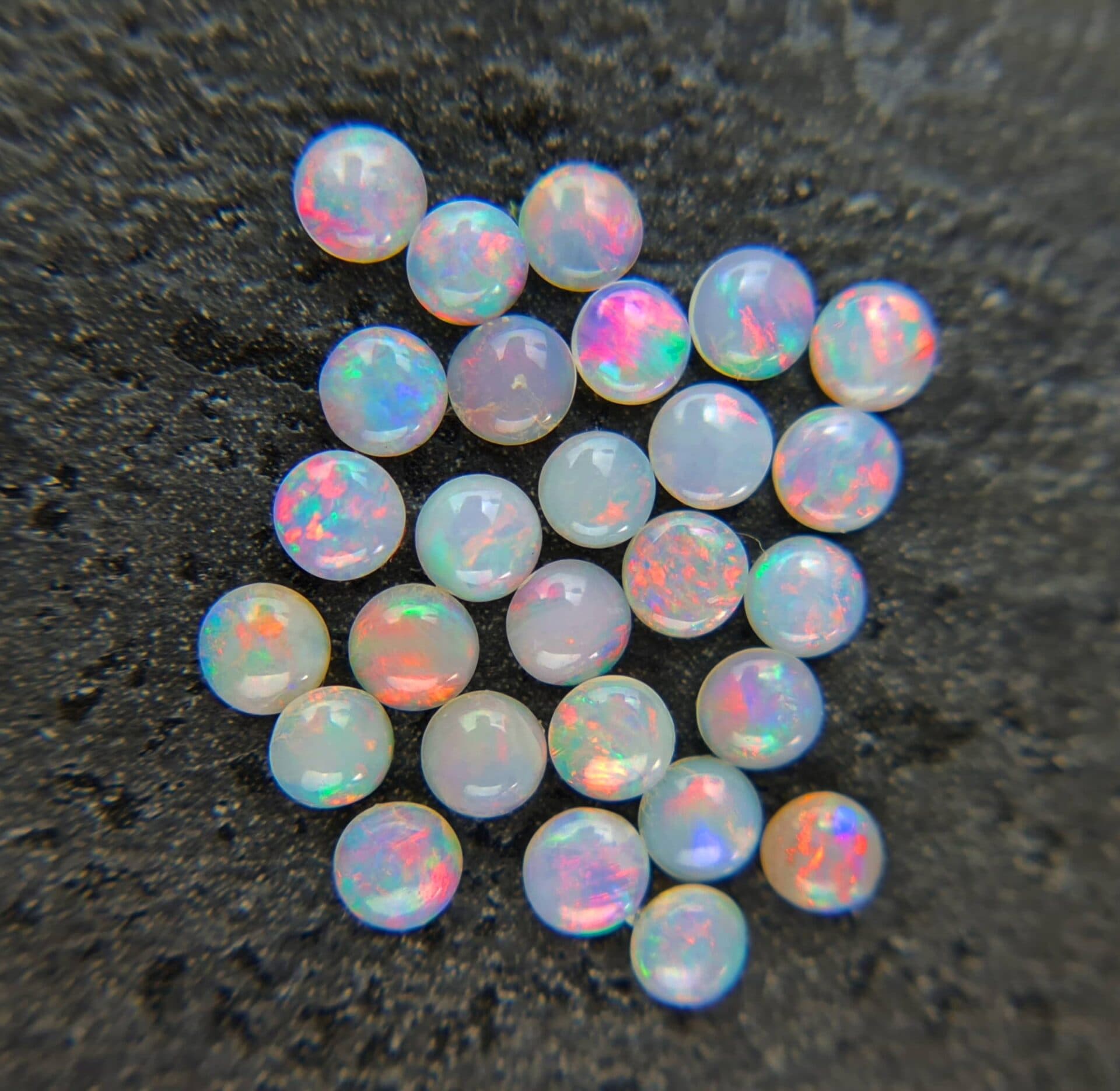
A calibrated opal is cut to a standard shape and size, such as a 6x4mm oval or a 3.5mm round, so it fits a ready-made setting. A freeform opal is cut to whatever shape best shows off the colour in the rough. Choose calibrated for matching sets and standard mounts; choose freeform for one-off pieces and maximum colour.
What is a calibrated opal?
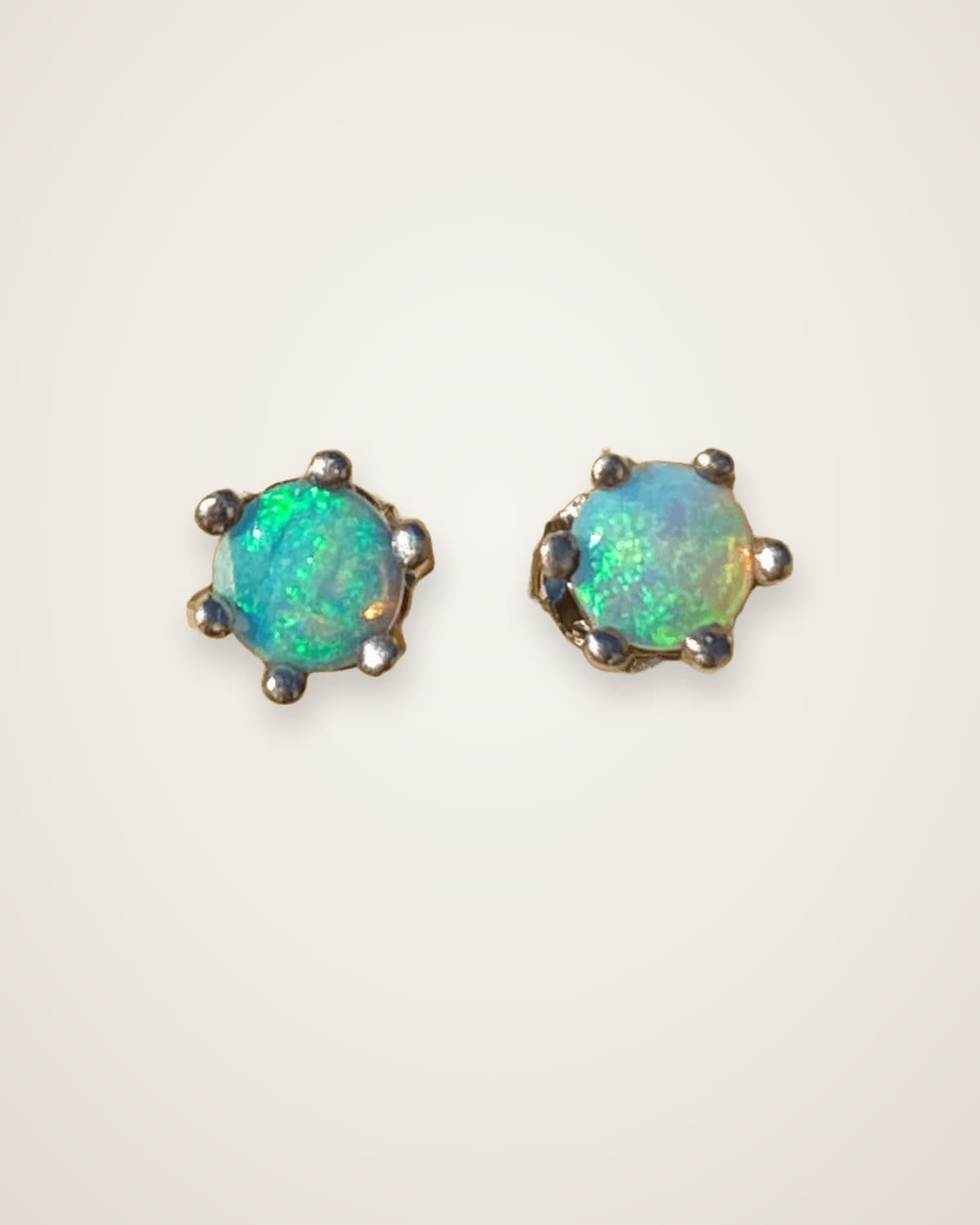
A calibrated opal is cut to an exact, standard size and shape. Common shapes are rounds, ovals, pears, marquises and squares, sized in millimetres, like 5x3mm, 6x4mm or 7x5mm for ovals and 2.5mm or 3.5mm for rounds.
The point of calibration is fit. Jewellery findings, like bezel cups, claw settings and earring blanks, are made in the same standard sizes, so a calibrated stone drops straight in. That's a big help if you're making jewellery yourself, setting several stones in a row, or matching a pair of earrings.
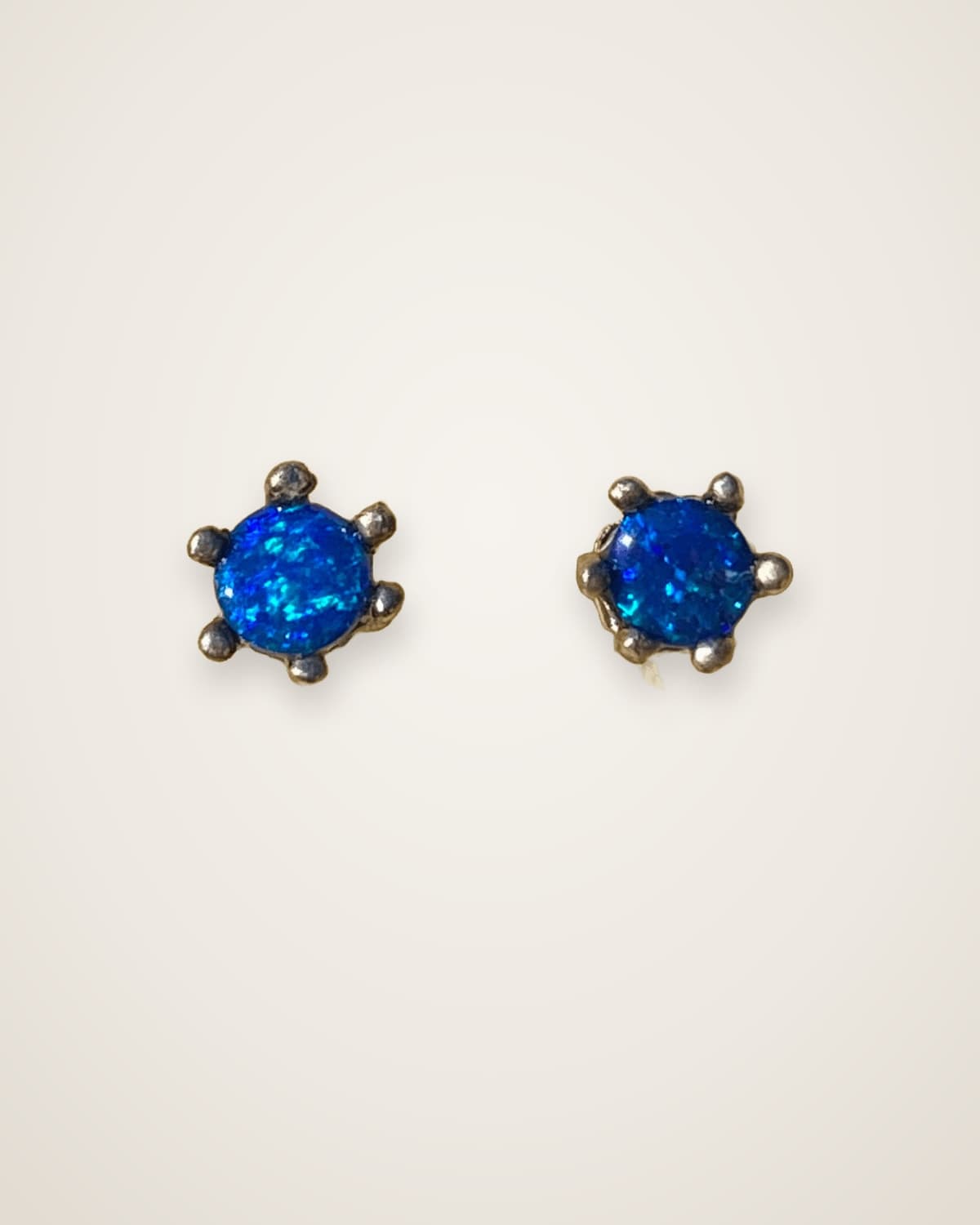
Small calibrated stones are especially useful. Solid 3.5mm calibrated crystal opals, for example, are excellent for signets and multiple-stone settings, and I recommend darkening the setting behind small crystal to bring out the best colour.
What is a freeform opal?
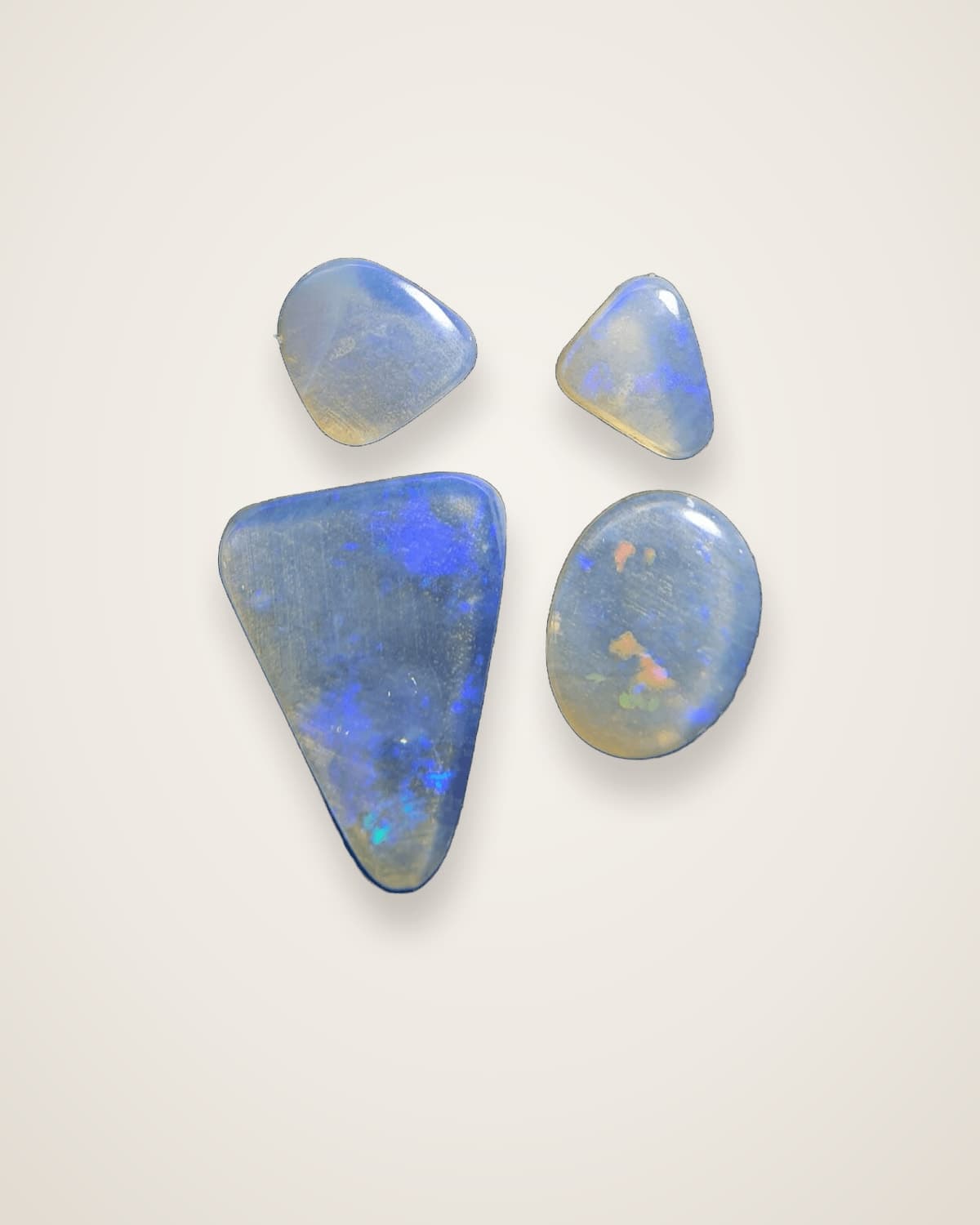
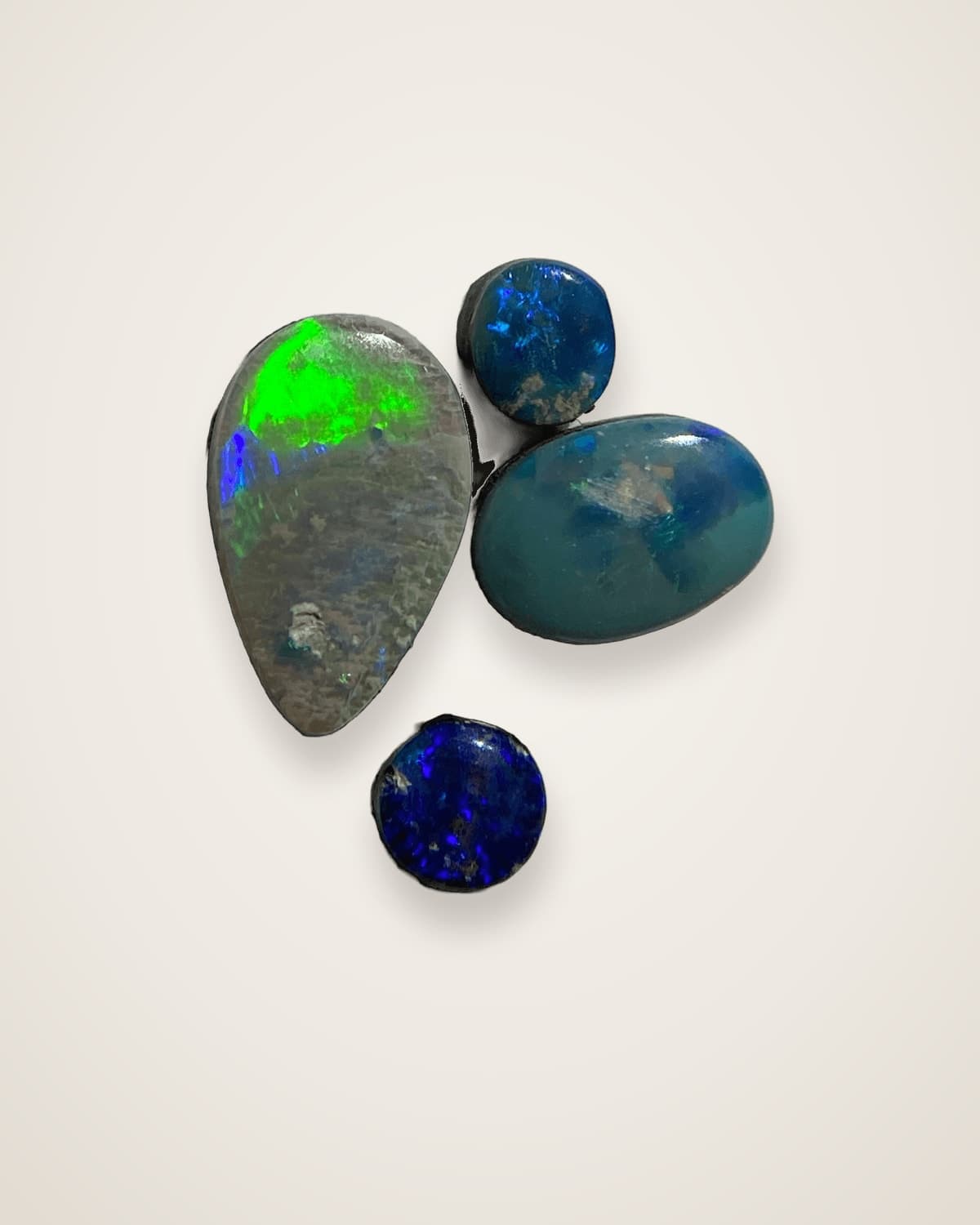
A freeform opal is cut to follow the natural shape of the rough and its colour bar. It has no standard outline: it might be a rounded triangle, a long drop, a lopsided oval or something completely its own.
When I cut a freeform, the shape is a decision made by the stone. I follow the colour, cut away the sand and the weak spots, and stop where the colour stops. The result keeps more of the original stone, and more of the best colour, than forcing it into a set size.
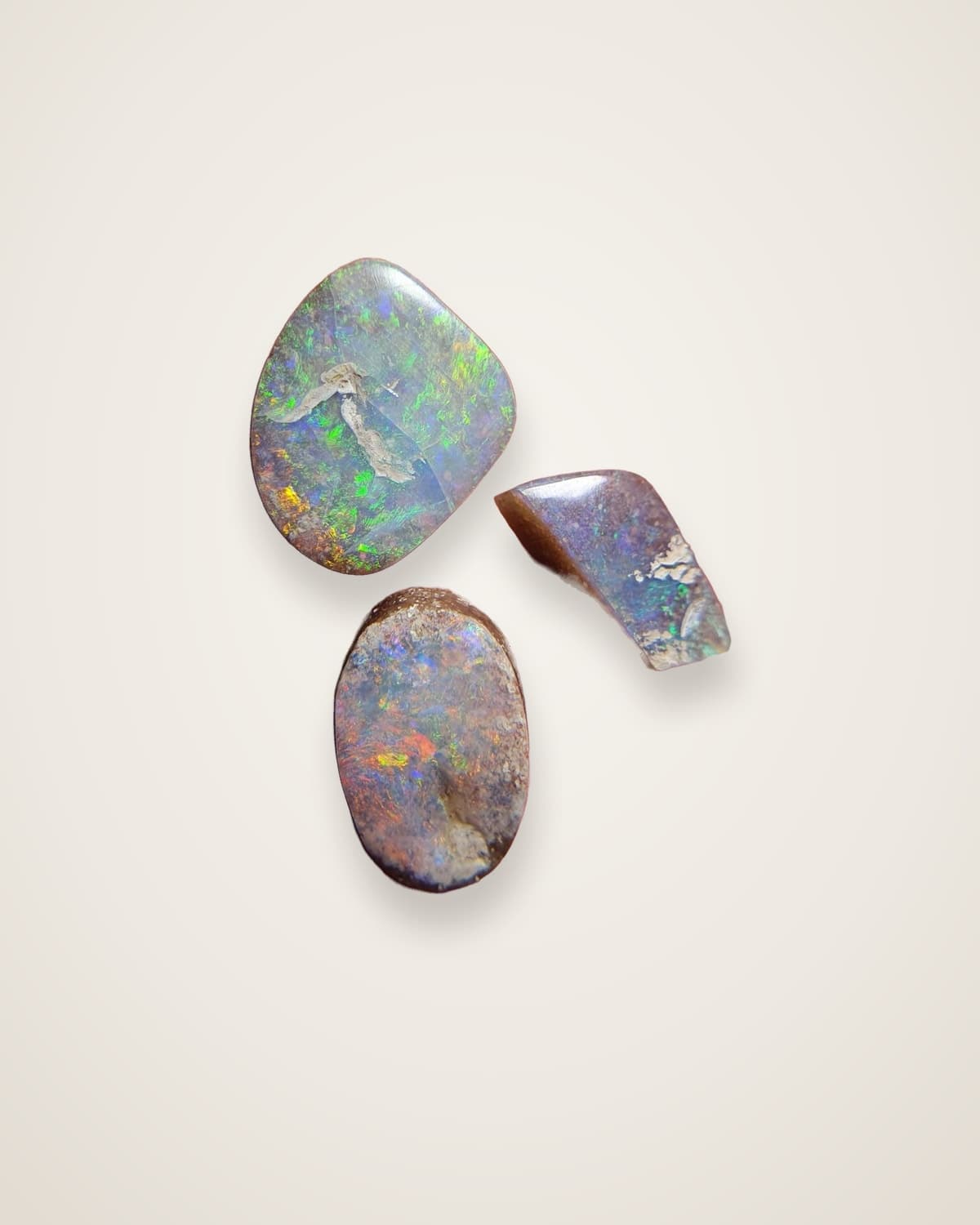
Freeforms suit opal particularly well, because opal rarely forms in neat, even layers. Boulder opal is a good example: the colour sits in thin veins through ironstone, so most boulder is cut freeform to follow them.
What's the difference between freeform and calibrated opal?
The real difference is what gets priority when the stone is cut: the setting or the colour. Calibrated stones put fit first. Freeforms put colour and carat weight first.
- Shape. Calibrated stones are symmetrical and repeatable. Freeforms are one of a kind.
- Material. Cutting to an exact size usually means grinding away more of the rough, so a freeform from the same piece will often be larger and carry more colour.
- Matching. Calibrated stones are easy to pair and set in rows. Matching two freeforms takes luck or careful cutting from the same piece.
- Setting. Calibrated stones fit stock findings. Freeforms need a setting made to fit, such as a hand-built bezel or claws.
- Look. Calibrated stones read as classic and tidy. Freeforms read as organic and natural.
When I'm cutting a parcel, I'll often look at a piece of rough and decide whether it wants to be a calibrated stone or a freeform. The best colour bar doesn't always line up with a 6x4 oval.
Which is better for rings, earrings and pendants?
Neither is better overall; it depends on the piece and how it will be worn. As a rule of thumb, calibrated suits stud earrings, multi-stone rings and classic designs, and freeform suits pendants and statement rings.
- Stud earrings. Calibrated pairs are the easy choice. They match, and they fit standard settings.
- Everyday rings. Either works. A calibrated oval in a bezel is simple and protective; a low freeform in a custom bezel is just as wearable and more distinctive.
- Multi-stone and signet rings. Calibrated, almost always. Small rounds and ovals line up neatly.
- Pendants. Freeforms shine here. A pendant can carry an unusual outline and a bigger stone, and it hangs at a steady angle, which suits stones that show colour best from the front.
- Statement pieces. Freeform, especially boulder and matrix, where the natural pattern is the whole point.
The usual questions still apply to both: is it solid or a doublet, which way does it show its colour, and how hard is the wearer on their hands? A low, protective setting matters more than the outline.
How do you set a freeform opal?
A freeform is set in a setting made to fit it: usually a bezel shaped around the stone's outline, or claws placed where its edge needs them. That's custom work, so it takes more time than dropping a calibrated stone into a stock cup.
If you're making jewellery yourself, trace the stone onto paper first and build your bezel to that outline. Fit it gently; never force an opal into a setting. My older post on opal jewellery making tips has more on setting opal safely.
If you'd rather have it made, you can sketch a piece with a real opal from the shop in our design studio and get a quote for the finished piece.
Which should you buy?
Buy calibrated if you need a stone to fit a specific setting, want a matching set, or are making several pieces of the same design. Buy freeform if you want the most colour for the size, a one-off design, or a stone with personality.
For jewellers and hobby makers, it's common to keep both on hand. Calibrated stones cover the repeatable work, and freeforms are for the pieces you design around a stone. A while back, before a batch of freeforms, I warned followers it would be the last chance for a while to get calibrated 6x4 ovals, and that push and pull between the two is part of every cutting session.
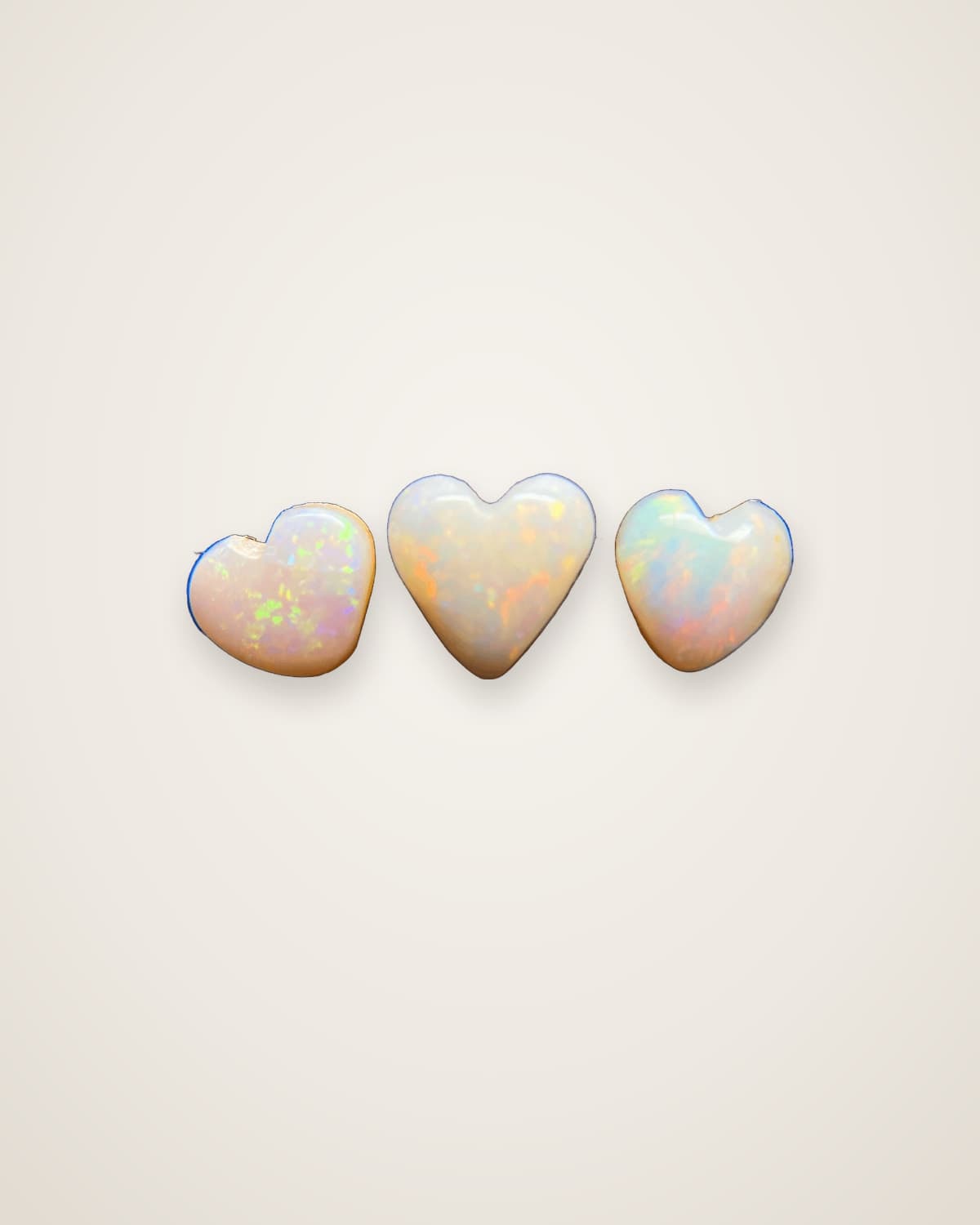
You can browse both in our loose opals, including calibrated and freeform opal doublets.
Questions people ask
Are freeform opals lower quality than calibrated opals?
No. The outline says nothing about quality. Some of my favourite stones have been freeforms, because the shape was chosen to keep the best colour.
Can a freeform opal be recut to a calibrated size?
Often, yes, if the stone is big enough. Expect to lose material and possibly some colour, so ask a cutter to look at it first.
What sizes do calibrated opals come in?
Common sizes include small rounds such as 2.5mm and 3.5mm, and ovals such as 5x3mm, 6x4mm and 7x5mm. Always measure the stone and the setting before you set it.
Are calibrated opals always solid?
No. Calibrated stones are cut in solid opal, doublets and triplets. A good listing says which one you're buying.