How to Polish Opal: From Sanding to a Mirror Finish
Polishing opal is a matter of working through finer and finer grits until no scratches are left, then finishing with cerium oxide or diamond paste. Here is how I do it, by machine and by hand.
Opal Cutting · By Stephanie Caruana ·
To polish opal, sand the shaped stone through progressively finer grits, keeping it wet and cool, until every scratch from the coarser grit is gone. Then finish it with cerium oxide or fine diamond paste on a soft pad. Light pressure, plenty of water and patience between grits matter more than any particular machine.
What do you need to polish opal?
You need a series of fine abrasives, water, and a final polishing compound on a soft surface. That can be a cabbing machine with soft wheels or a few sheets of sandpaper on a towel.
On a machine:
- Soft diamond wheels or flexible diamond belts in finer grits, for example 600, 1200, 3000 and finer
- A felt, leather or canvas pad for the final polish
- Cerium oxide, or diamond paste for porous material
- A steady water drip
By hand:
- Wet-and-dry sandpaper in 600 and 1200 grit (finer grits help if you can find them)
- A folded towel to sand on
- A spray bottle of water
- Cerium oxide powder or solution, plus a piece of leather or a Dremel with a polishing buff
Whichever you use, good light is essential. You can't polish out scratches you can't see.
How do you polish an opal step by step?
Polishing is a sequence, not a single step: each finer grit removes the scratches left by the one before. Skip a grit and those deeper scratches will still be there when you reach the polish.
- Finish the shape first. All the real shaping happens on the hard wheels or coarse paper. Polishing won't fix a lumpy dome or a flat spot, so get the outline and dome right before you move on.
- Start on 600 grit. Work the whole face evenly, rolling the stone so you don't create flats. Keep it wet the whole time.
- Check under bright light. Dry the stone, tilt it under a lamp and look for scratches running in different directions. If you can still see coarse scratches, keep going.
- Move to 1200 grit. Repeat until the surface looks evenly satin, with no deeper lines.
- Work through finer grits. On a machine, step through each finer soft wheel in turn, cleaning the stone between grits so a stray coarse grain doesn't scratch it.
- Polish. Apply cerium oxide (or diamond paste) to a felt, leather or canvas pad and work the stone lightly until the face is glassy and reflects light like a mirror.
- Clean and inspect. Wash the stone, dry it, and check it from every angle. If a scratch shows up now, go back to the grit that will remove it.
Heat is the enemy throughout. Pressing hard creates friction, and too much heat can crack an opal. Let the abrasive do the work, keep the stone wet and lift it off regularly.
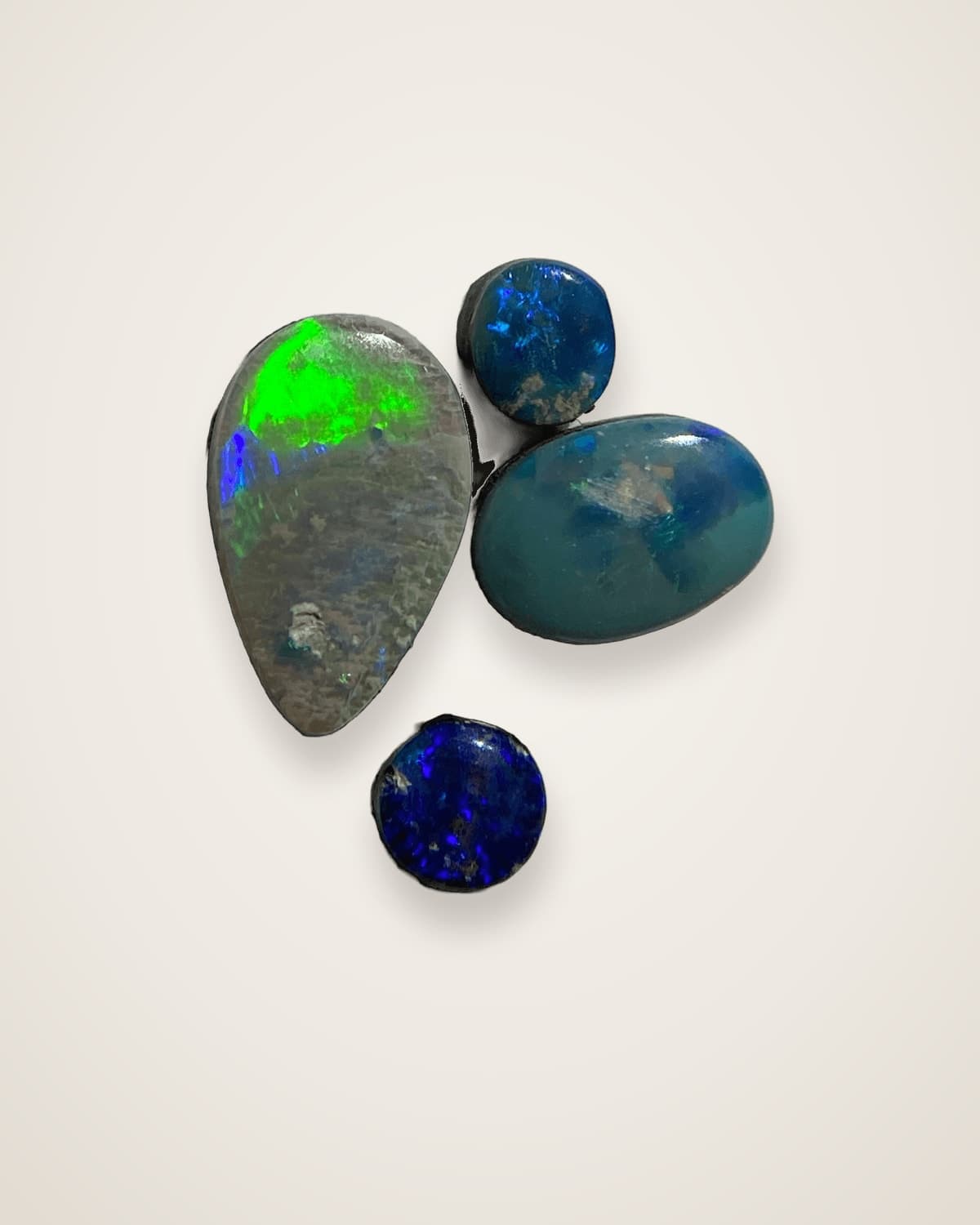
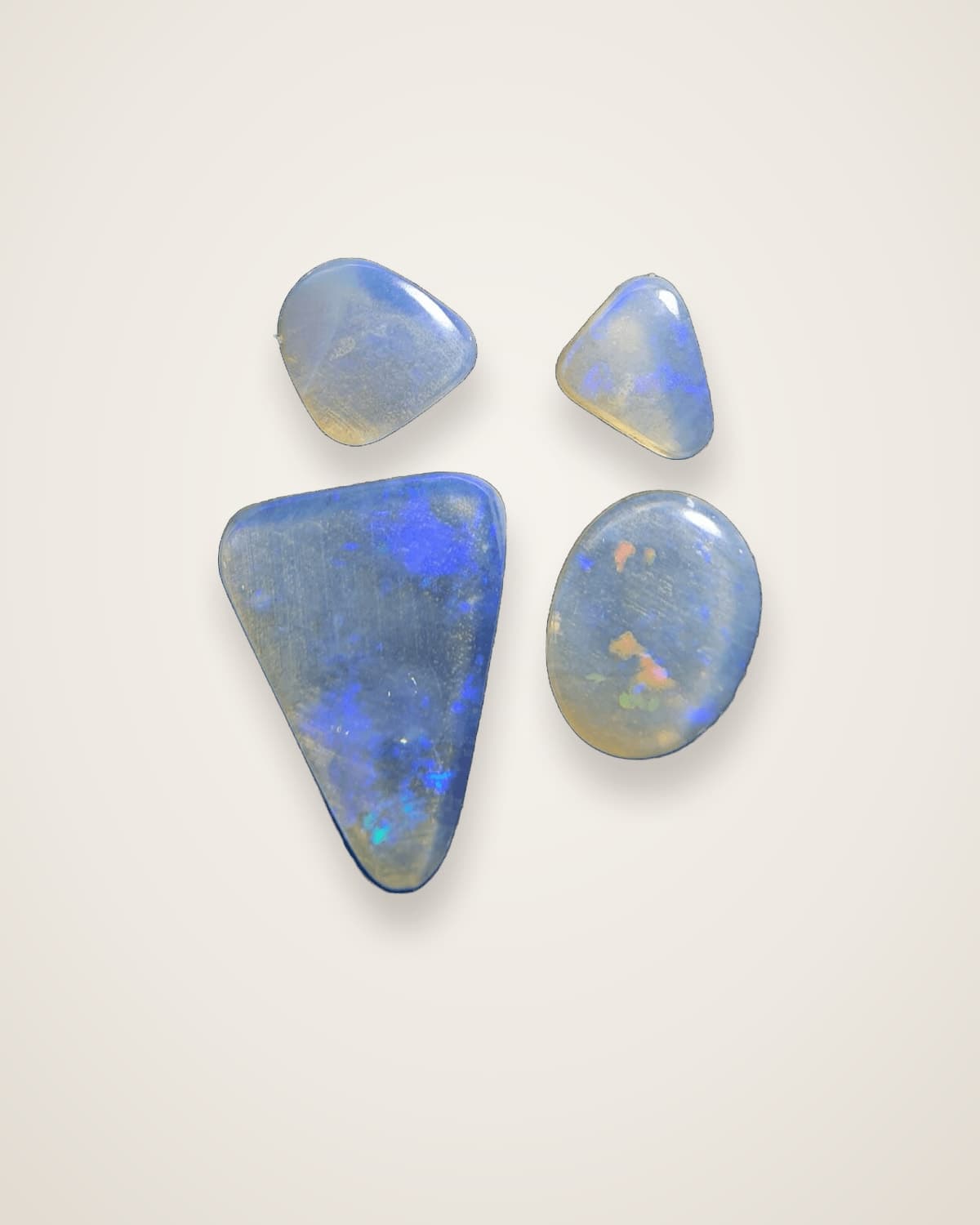
There's something very satisfying about putting the before and after side by side. I once posted a before and after of a custom lot I'd just polished, and the difference that last stage makes still surprises people.
How do you polish opal by hand without a machine?
You can polish opal by hand with wet-and-dry sandpaper, water and cerium oxide. It takes longer, but it's how I recommend beginners start, and it gives a lovely result.
In my beginner's guide to opal cutting I suggested putting the sandpaper on a folded towel. The soft surface stops you pressing too hard and leaving flat impressions in the face. Keep wetting the paper so the grit stays slick and you can see the stone.
Don't rub the face flat on the paper. Work from the edges up to the top in a rolling motion so you keep the dome. After 1200 grit, polish with cerium oxide on a piece of leather, or use a Dremel on a low setting with a polishing buff dipped in cerium oxide solution. Hold the stone firmly and keep moving.
Should you use cerium oxide or diamond paste?
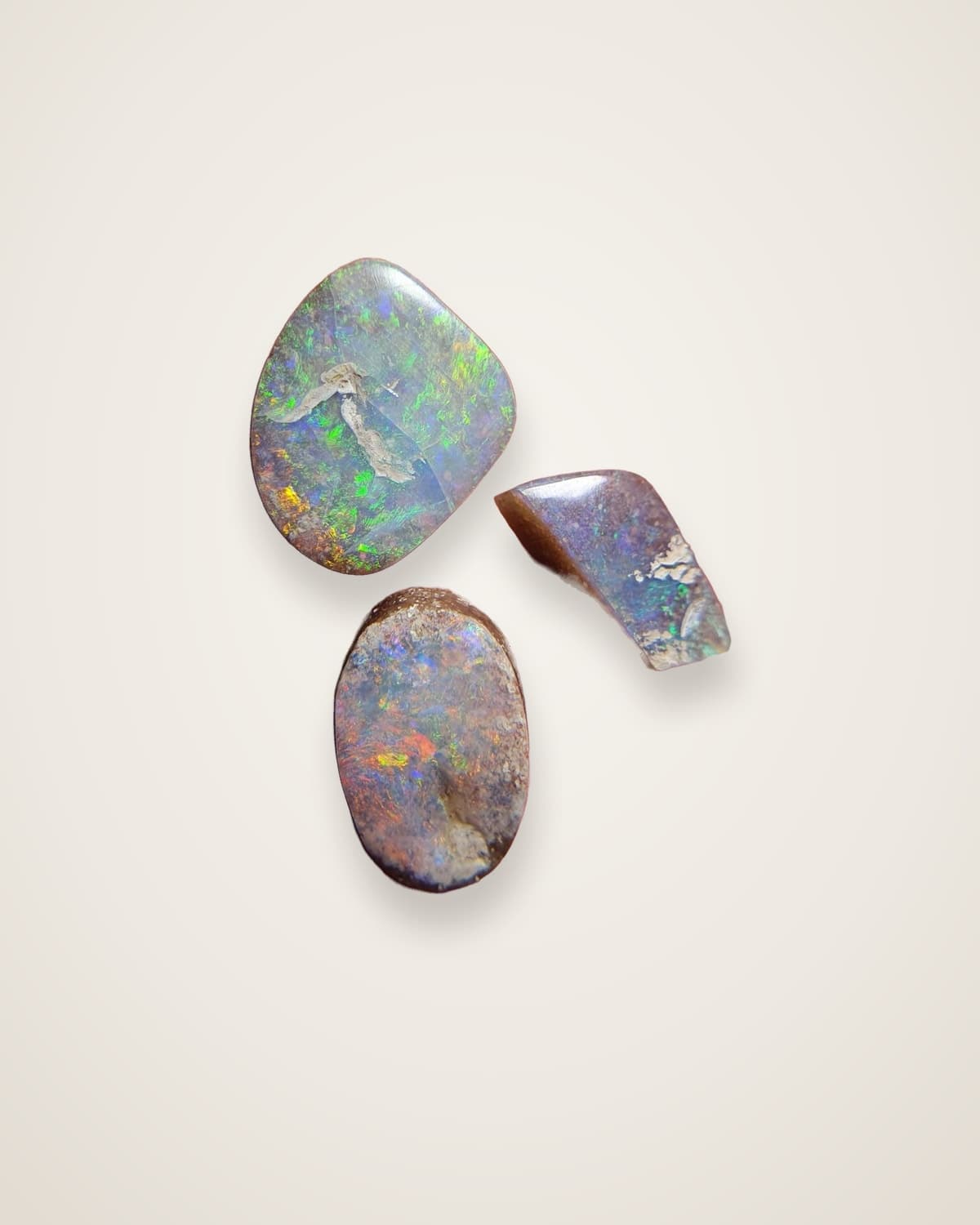
Cerium oxide gives a beautiful polish on most solid opal. Diamond paste is the better choice for boulder opal, matrix and other porous material.
The reason is the host rock. Boulder ironstone and Andamooka matrix are often porous, with tiny pits and crevices. Cerium oxide is a pale powder and fills those voids, leaving white dots all over the stone. A fine diamond compound (50,000 grit is what I recommend for those stones) is darker and much less noticeable.
I covered this when I wrote about Queensland boulder opal, and it still catches out a lot of new cutters.
Sometimes the right polish is very little polish. I've left some Andamooka opal in a semi-natural state rather than cutting back the face for a fine polish, to keep as much of a beautiful colour gradient as possible.
Why won't my opal take a polish?
Usually because scratches from an earlier grit are still there, or because part of the stone is a different material from the rest. Going back a grit or two fixes most problems.
The common culprits:
- Leftover scratches. The most common cause. Go back to the grit that removes them and work forward again.
- Sand or host rock on the face. Sand spots and soft inclusions don't polish like opal and can pit. If you can, cut them away.
- Contaminated pads. A grain of coarse grit on a polishing pad will scratch the stone. Keep pads clean and separate.
- Too much heat or pressure. This can leave a hazy surface and risks cracks. Lighten up and add water.
- Very porous matrix. Some matrix simply won't take a high polish because the surface is mostly pores.
Can a scratched opal be repolished?
Yes. A solid opal that has lost its shine from everyday wear can be repolished by an opal cutter, and it will look like new again. Opal sits at about 5.5 to 6.5 on the Mohs scale, so fine surface scratches build up over the years, especially on rings.
Doublets and triplets are different. A doublet's layer of opal is thin, so there's very little to work with, and a triplet's clear cap is a separate material. Ask a cutter to look at the stone before deciding.
If you'd like to learn polishing properly, our opal cutting courses cover it hands-on, and you can pick up practice material in our raw opal range.
Questions people ask
What grit should I polish opal with?
Most cutters work up through at least 600 and 1200 grit before a final polish, and many go much finer on soft diamond wheels. The final shine comes from cerium oxide or fine diamond paste on a soft pad.
Can you polish opal with toothpaste?
Not properly. Toothpaste won't restore a scratched opal's lustre; that needs a real polish by a cutter.
How long does it take to polish an opal?
It depends on the stone and your setup. By hand, expect to spend much longer at each grit than on a machine, and don't rush to the polish while scratches remain.
Can you polish boulder opal with cerium oxide?
You can, but it tends to leave white specks in the pores of the ironstone. Fine diamond paste gives a cleaner result on boulder and matrix.