How to Tell if Opal Is Real: Synthetic vs Natural Opal
How to tell if an opal is real, with the signs that separate natural opal from synthetic and imitation opal, and where doublets and triplets fit in.
About Opal · By Stephanie Caruana ·
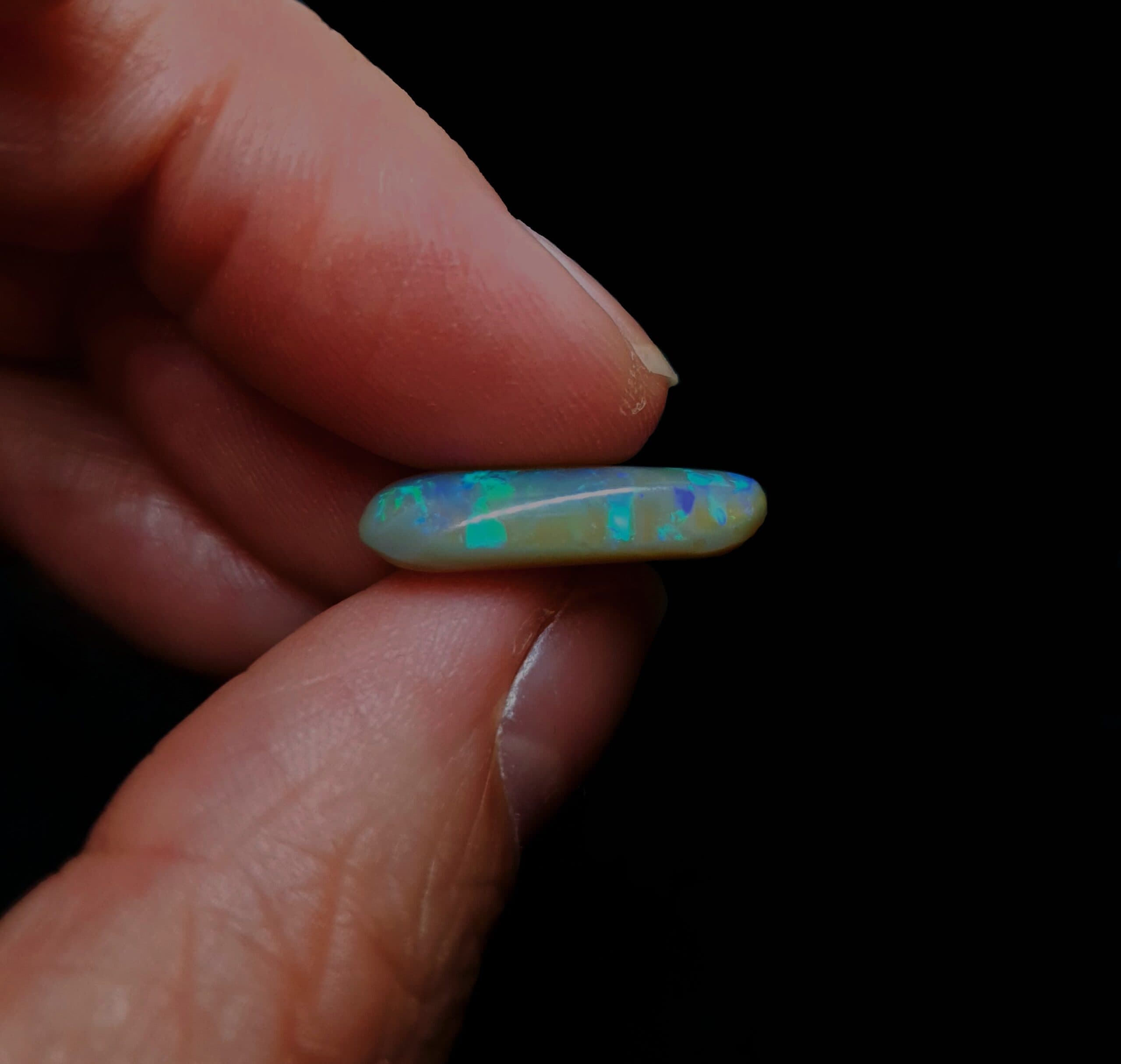
To tell if an opal is real, look closely at its colour pattern, its sides and its back. Natural opal has irregular, flowing patches of colour and often potch, sand or ironstone behind it. Lab-created opal tends to show a very regular, scaly pattern, and imitations often look plasticky or glassy. For certainty, ask a qualified gemmologist.
What counts as "real" opal?
"Real" can mean a few different things, so it helps to know the four kinds of opal you'll see for sale.
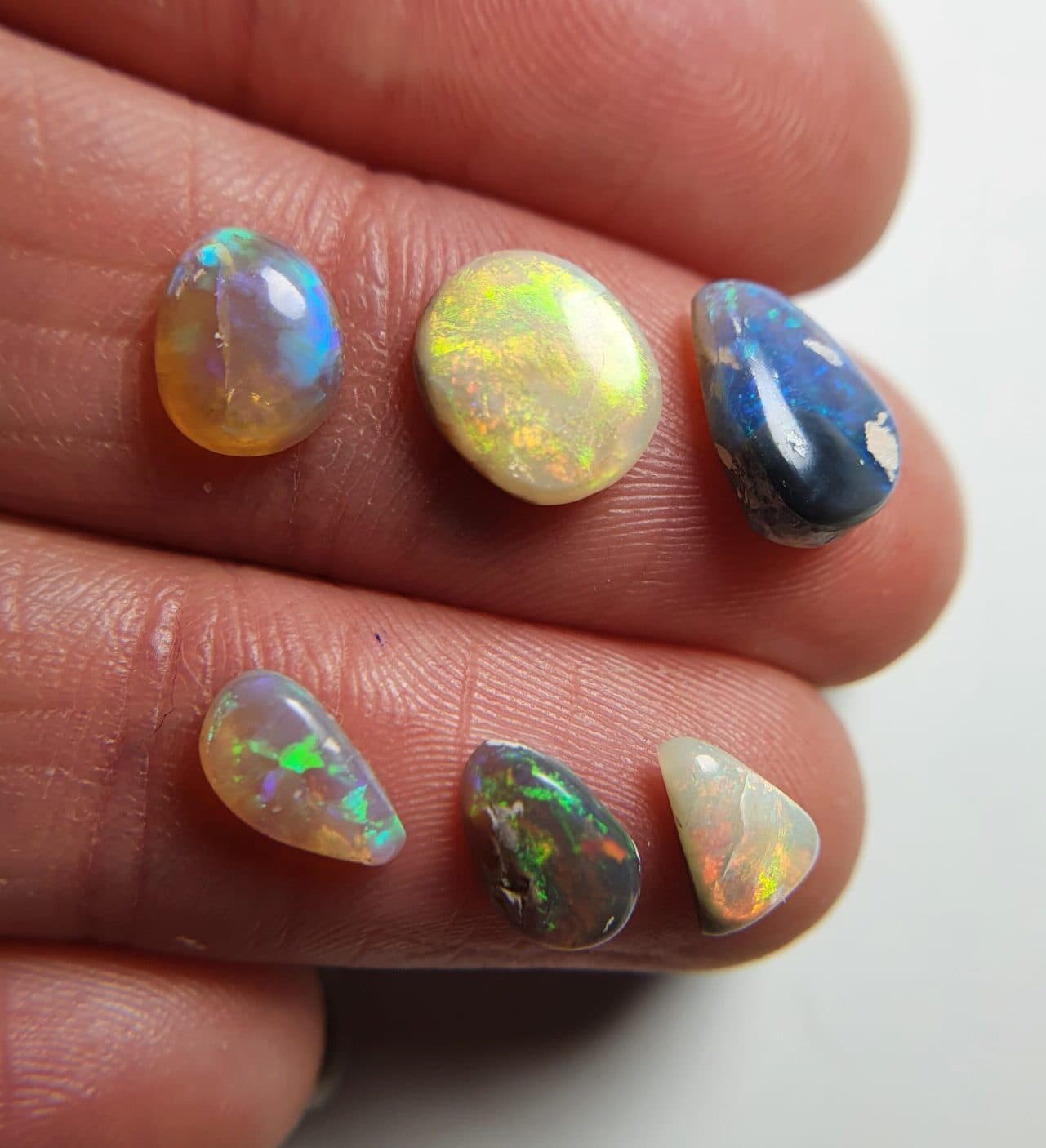
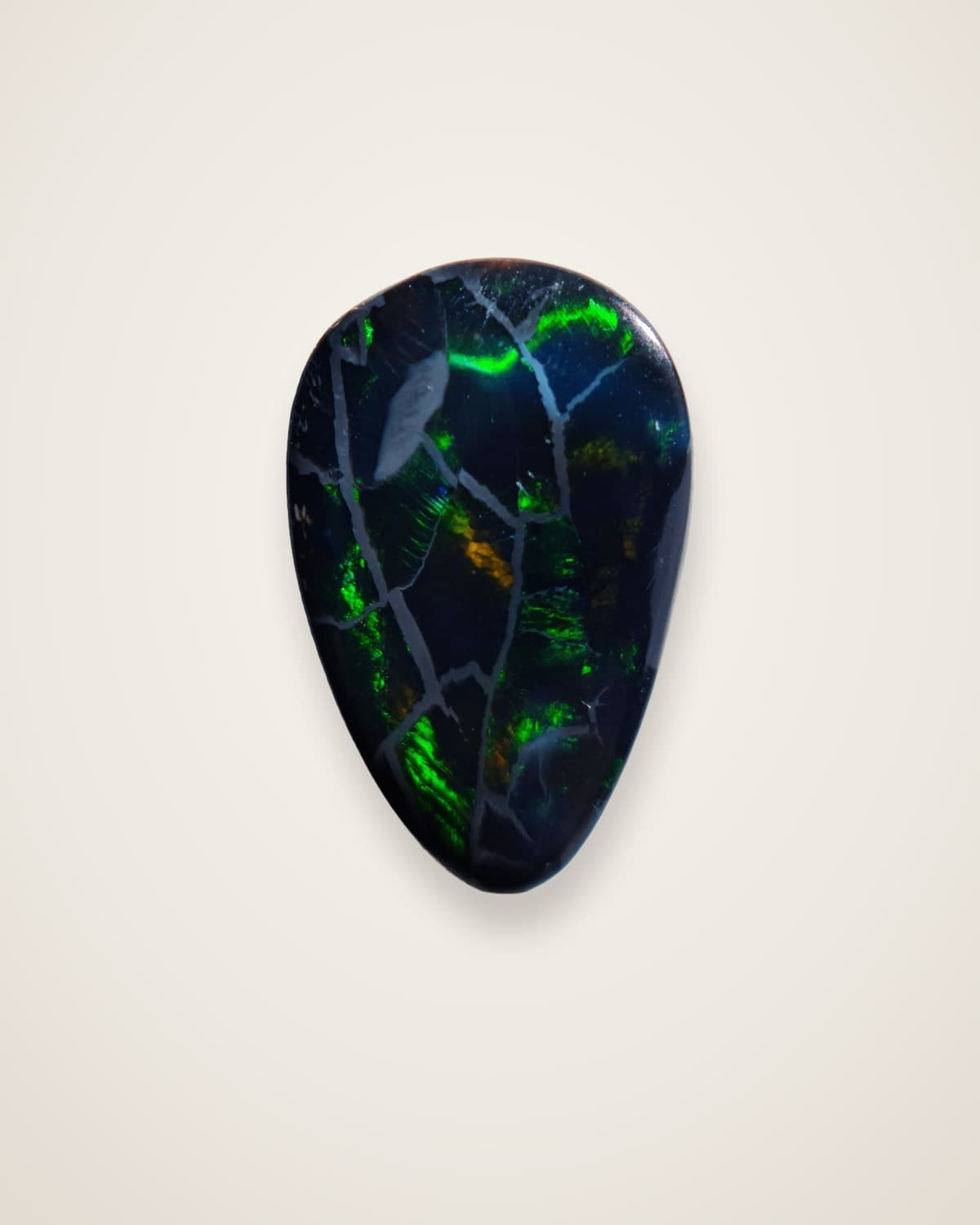
- Natural solid opal: mined opal, cut and polished, with nothing added. Black, white, crystal and boulder opal all belong here.
- Composite opal: doublets and triplets. The opal layer is natural, but it's glued to a backing and sometimes capped.
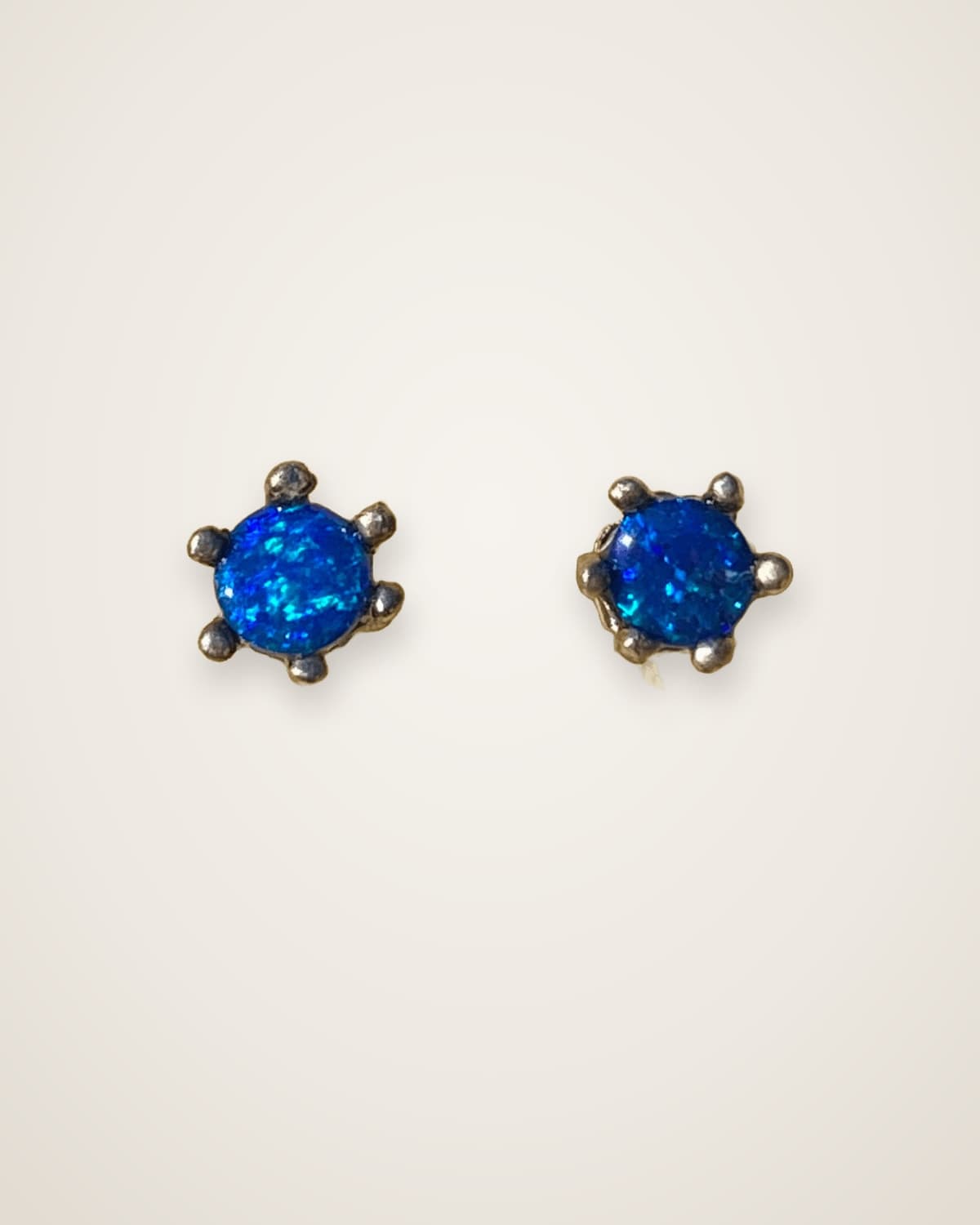
- Synthetic (lab-created) opal: made in a laboratory with an ordered structure that shows play-of-colour, but never mined.
- Imitation opal: glass, plastic or resin made to look like opal, without opal's structure.
Any of these can be fine to buy if it's described honestly and priced to match. The problem is when one is sold as another.
How can you tell natural opal from synthetic opal?
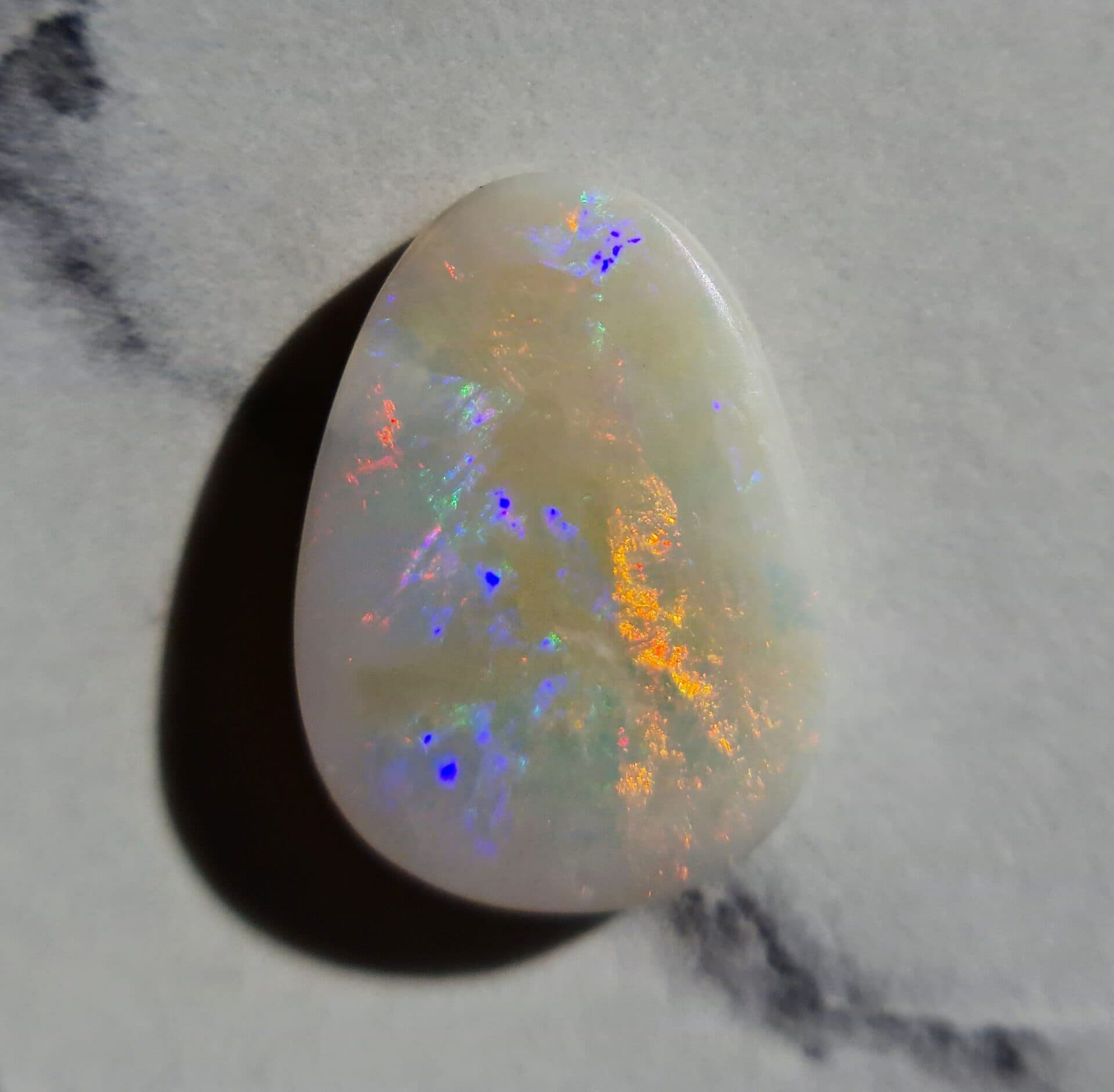
The colour pattern is the best clue. In natural opal, colour patches have irregular shapes and soft, flowing edges. In synthetic opal they often form a very regular mosaic, which people describe as "lizard skin", "snakeskin" or "chicken wire".
Use a 10x loupe and look for these signs:
- Pattern: natural opal shows pinfire, flash, rolling flash or broad patches that change across the stone. Synthetic opal often shows tightly packed, uniform cells, a bit like scales.
- Side view: some synthetic opal shows columns of colour running straight up and down when you look at it from the side.
- Inclusions: natural opal often has potch lines, sand spots or ironstone. Synthetic opal usually looks too clean and too even.
- Back: many natural solid opals keep some potch or host rock on the back, and boulder opal keeps its ironstone.
Look at the stone in daylight as well as under a lamp, and tilt it slowly. In natural opal the colour tends to roll, shift and change in intensity across the face, while the colour in many synthetics stays in the same tidy cells as it moves.
None of these signs is proof on its own, and well-made synthetics can be tricky. A gemmologist can test properties such as specific gravity and study the structure under magnification to confirm.
How do you spot imitation opal?
Imitations are usually easier to pick than synthetics. Plastic imitations feel light and warm in the hand, and glass imitations often have colour that looks like flakes or foil sitting inside the stone.
- The colour looks like glitter or flakes, rather than light moving through the stone.
- The piece feels noticeably light for its size, which points to plastic.
- The same pattern repeats almost identically across several "different" stones.
- The surface scratches very easily, or you can see tiny round gas bubbles under a loupe.
How do you tell a doublet or triplet from solid opal?
Look at the side and the top. A doublet usually shows a straight join line between the opal and a dark backing, and a triplet adds a clear, glassy dome over a very thin opal layer.
Doublets and triplets contain real opal, so they aren't fakes. They're a different, more affordable product, and they should always be labelled as such. My older post on buying opal jewellery online has more tells, especially for closed-back settings that hide the layers.
What about treated opal?
Some opal is treated to change its look, and that should always be disclosed. A well-known example is matrix opal from Andamooka, which is sometimes treated to darken the porous host rock so the colour stands out more.
Treated matrix opal is still natural opal, but it's a treated stone and the listing should say so. If you're curious about other things people believe about opal, I've sorted a few in opal fact or fiction.
What should you ask a seller?
The simplest test is a clear description. Before you buy, ask:
- Is it natural, synthetic or imitation?
- Is it solid, a doublet or a triplet?
- Has it been treated in any way?
- Where was it mined? Lightning Ridge, Coober Pedy, Andamooka, Mintabie and the Queensland boulder fields around Winton, Quilpie, Yowah and Koroit each produce opal with its own look.
- Can you see a photo or video of the stone moving in daylight?
A seller who knows their stones will answer all five without fuss. In our shop the stone type is part of each listing, so you can filter for black opal or opal from Lightning Ridge and know what you're looking at.
Questions people ask
Is lab-created opal worth anything?
It's a legitimate jewellery material, but it's generally worth far less than natural opal of a similar look. It should never be sold as natural.
Does real opal feel cold?
Natural opal usually feels cool at first, a bit like glass, but this test is unreliable. It only helps rule out plastic, which tends to feel warm.
Can a jeweller tell if opal is synthetic?
An experienced opal cutter or gemmologist can often tell under magnification. For a definite answer, a gemmological laboratory can test the stone.
Is white or black opal ever synthetic?
Yes. Synthetic opal is made in light and dark versions, so body colour alone tells you nothing. Check the pattern, the side and the seller's description instead.
Are doublets fake opal?
No. A doublet has a real layer of natural opal on a backing. It's a composite stone, and it should be labelled as one.