Opal Terms Glossary: The Words Cutters and Sellers Use
A plain-English glossary of opal terms, from body tone and brightness to potch, nobby, harlequin and doublet. Use it to read any opal listing with confidence.
About Opal · By Stephanie Caruana ·
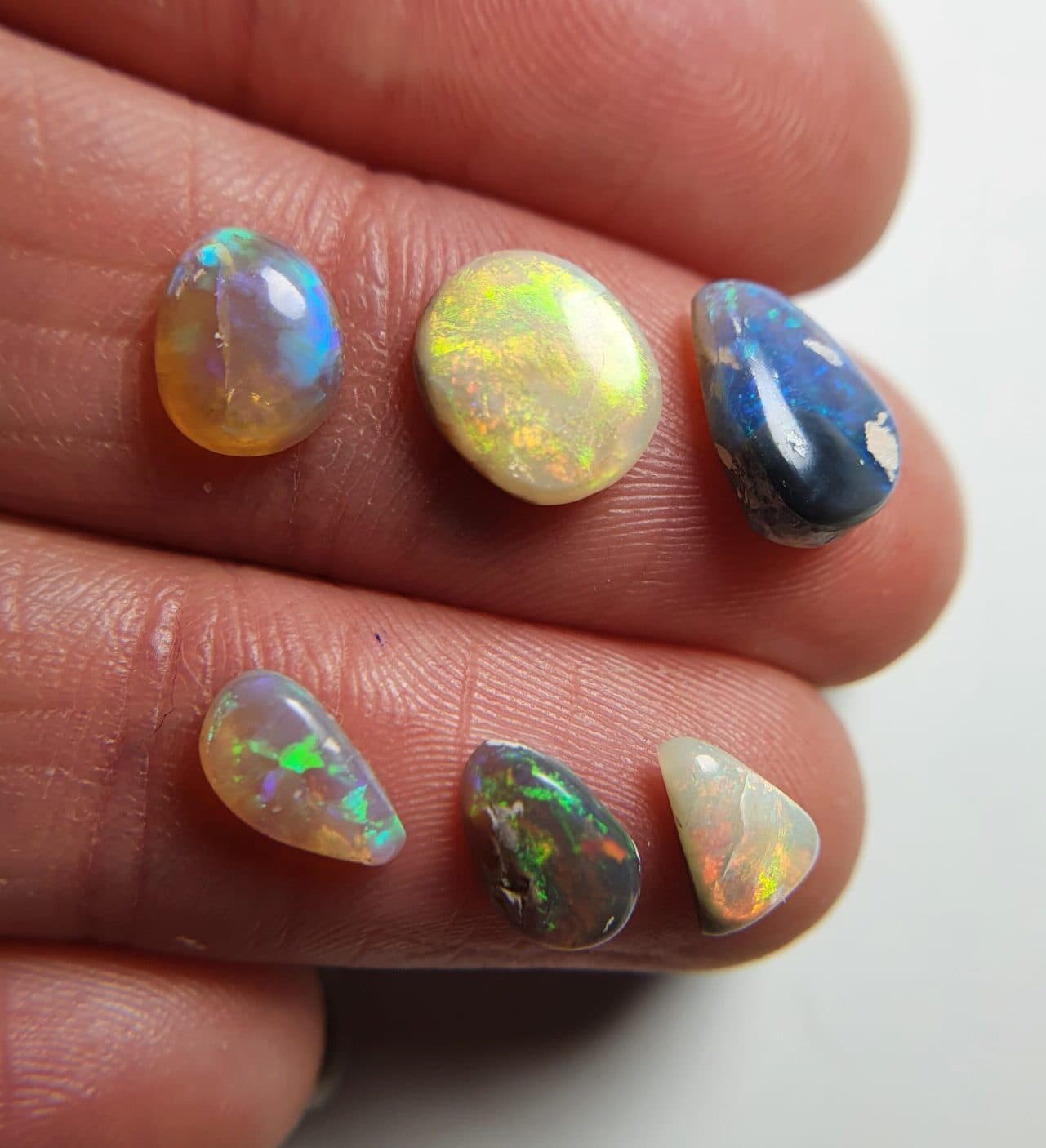
This opal terms glossary explains the words cutters, miners and sellers use. The most important are body tone (how dark the background is, N1 to N9), brightness (how vivid the colour is), play of colour (the flashing colour itself), and solid, doublet or triplet (how the stone is built). Know these and you can read most opal listings.
What do the opal type terms mean?
Opal type describes the stone's body tone, transparency and host rock. These are the names you'll see first in most listings.
- Precious opal: opal with play of colour.
- Common opal or potch: opal with no play of colour. It can be black, grey, white or coloured.
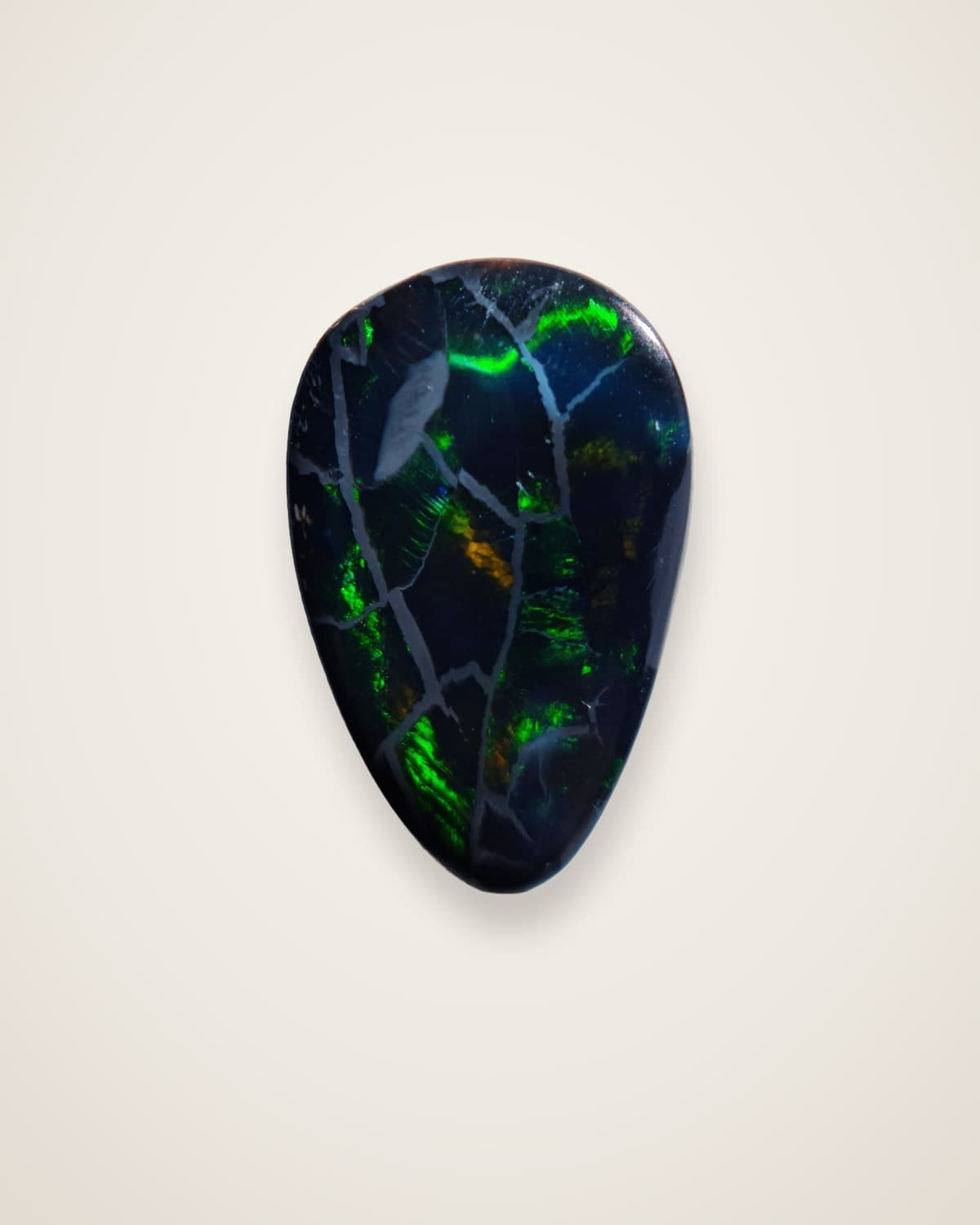
- Black opal: solid opal with a dark body tone, N1 to N4. Lightning Ridge is the best-known source.
- Semi-black or dark opal: opal with a mid to dark grey body tone, usually N5 to N6.
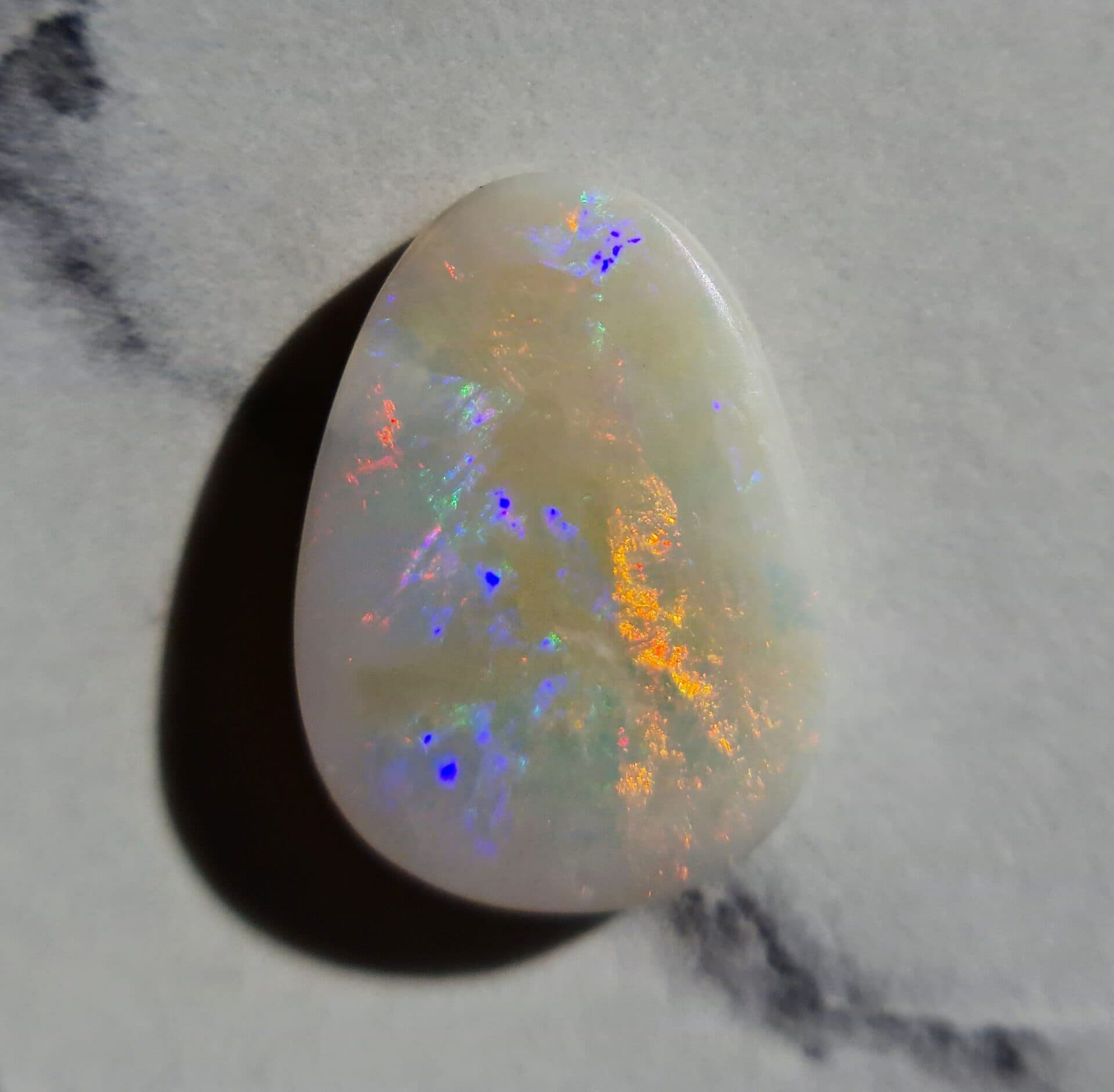
- White or light opal: opal with a pale to milky body tone, N7 to N9. Coober Pedy is well known for it.
- Crystal opal: a transparency term, not a body tone. Crystal opal is transparent to translucent, and can be black crystal or light crystal.
- Boulder opal: opal formed in ironstone, mainly from Queensland, often cut with its natural ironstone back.
- Matrix opal: opal spread through its host rock as fine specks or veins, as in Andamooka matrix and Yowah matrix.
- Yowah nut: a small ironstone nodule from Yowah, Queensland, that can hold opal inside.
What do opal grading terms mean?
Grading terms describe how a stone looks and how it rates. There's no single universal opal grade, so sellers describe the factors one by one.
Body tone and brightness
- Body tone: the background colour of the opal, ignoring the play of colour. It's described from N1 (black) to N9 (white) and judged face up.
- Brightness: how vivid the play of colour is, described from brilliant down to dull. It often matters as much as body tone.
- Directional: colour that only shows from some angles.
- Colour bar: the layer of precious opal within a piece of rough.
Colour and pattern
- Play of colour: the shifting spectral colours caused by light bending around ordered silica spheres.
- Dominant colour: the colour that shows most. Red across the face is the least common.
- Harlequin: large, angular patches of colour like a mosaic.
- Pinfire or pinpoint: tiny dots of colour packed closely together.
- Rolling flash: a band of colour that moves across the face as you tilt the stone.
- Broad flash: large areas of colour that switch on and off with the angle.
- Flagstone: large, irregular patches of colour, often mistaken for harlequin.
- Floral, ribbon, straw and Chinese writing: other named patterns based on the shapes the colour makes.
What do opal cutting terms mean?
Cutting terms describe the rough and the finished shape. You'll see them in parcels, calibrated stones and course notes.
- Rough: uncut opal as it comes from the ground.
- Rub or rubbed opal: rough that's been ground back to show the colour, but not fully shaped or polished.
- Nobby: a rounded nodule of opal, typical of Lightning Ridge.
- Seam opal: opal that formed in a flat layer in a crack in the rock.
- Sand or inclusions: pieces of host rock caught in the opal.
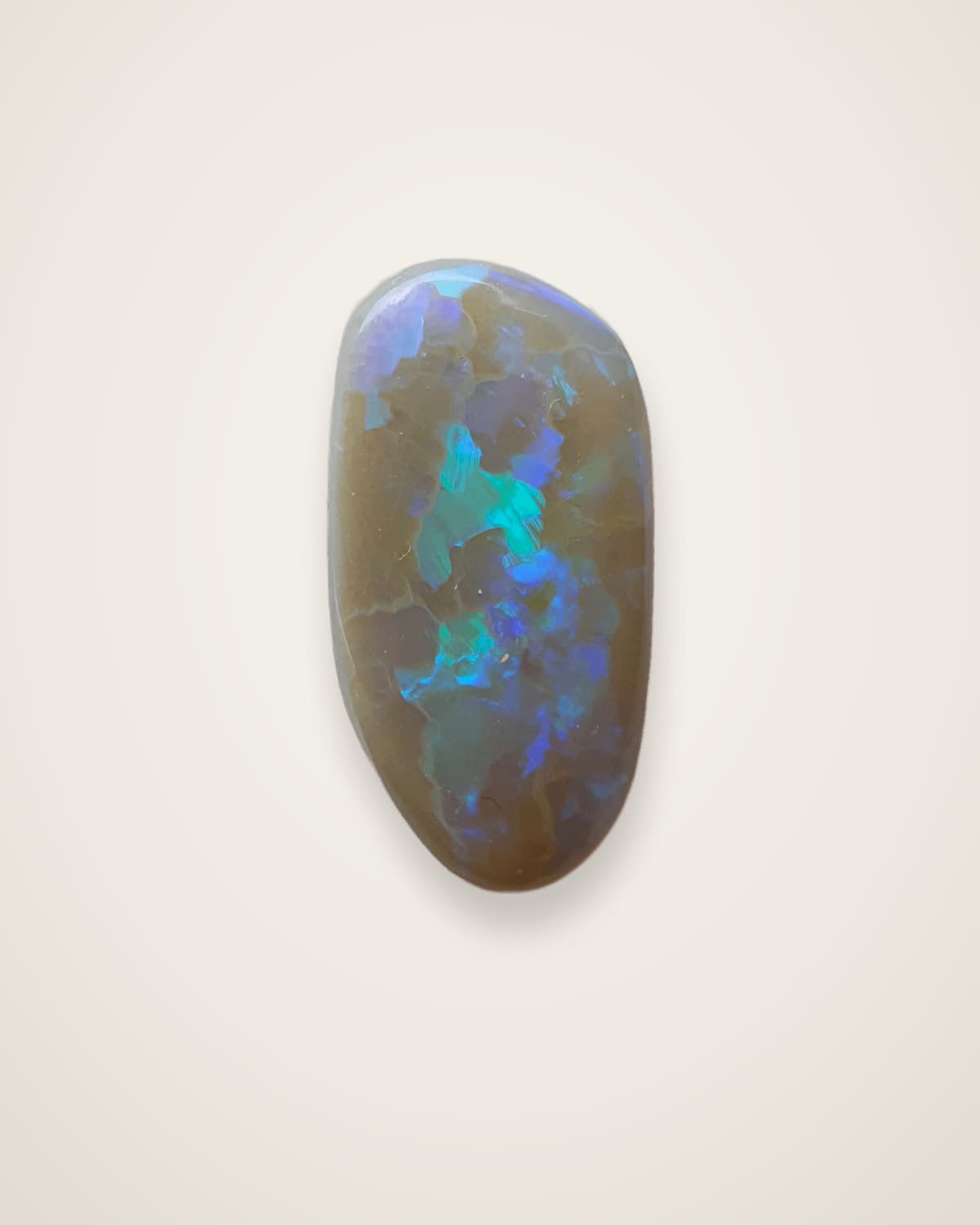
- Cabochon: a stone with a domed, polished top and no facets. Most opals are cut this way.
- Freeform: a cabochon cut to follow the opal's natural shape rather than a standard outline.
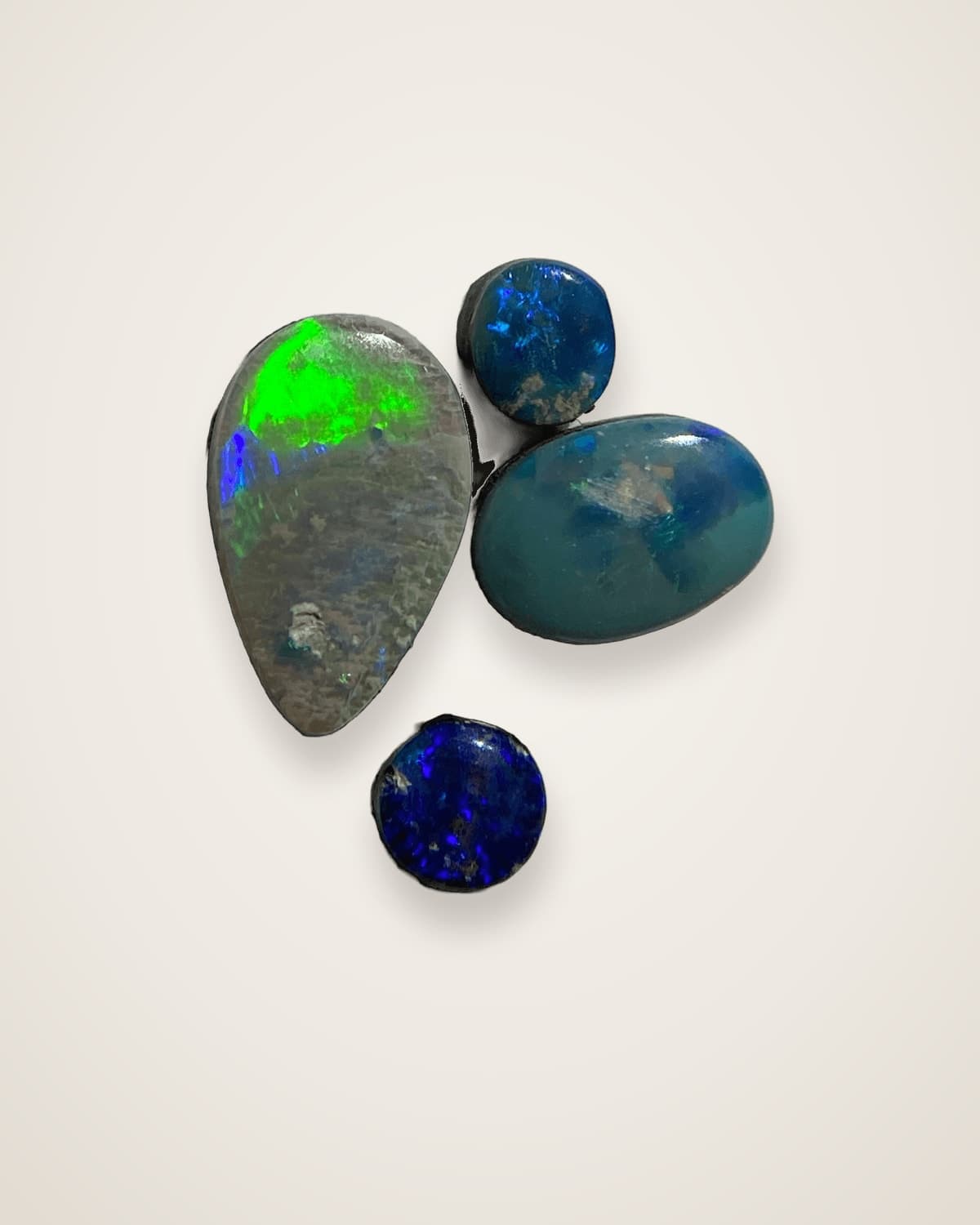
- Calibrated: cut to a standard size and shape, such as a 3.5 mm round, to fit standard settings.
- Parcel: a group of stones sold together.
- Dome: the curve of the stone's top. A good dome adds strength and spreads the colour.
In my own cutting, the decision about where the colour bar sits drives almost everything else. If you'd like to try it, our opal-cutting courses and my older post on cabbing 101 are good starting points.
What do doublet, triplet and treatment terms mean?
These terms tell you how the stone is built and whether it's been treated. They matter a lot for price and care, so a good listing always states them.
- Solid opal: opal all the way through, with nothing glued on. Boulder opal counts as solid even with its natural ironstone back.
- Doublet: a thin slice of real opal glued to a dark backing.
- Triplet: a very thin slice of real opal with a dark backing and a clear domed cap on top.
- Treated matrix opal: matrix opal that's been treated to darken its background, common with Andamooka matrix.
- Hydrophane: opal that can absorb water and change appearance while wet.
- Crazing: a network of fine surface cracks that can develop in some unstable opal.
You can browse composite stones on their own under opal doublets, where the build is part of each listing.
What do opal field and mining terms mean?
Field terms come from the opal fields themselves. You'll meet them in mining stories and when buying rough.
- Opal field: an area where opal is mined, such as Lightning Ridge, Coober Pedy, Andamooka, Mintabie, Yowah, Koroit, Winton or Quilpie.
- Opal dirt or level: the layer in the ground where opal tends to occur.
- Mullock: waste rock and dirt brought up from mining.
- Noodling: searching through mullock heaps for opal the miners missed.
- Fossicking: searching for gems by hand, usually under a licence or permit.
- Opalised fossil: a shell, bone or other remains that has been replaced by opal.
For more on how opal comes out of the ground, see my older post on how opal is mined.
Questions people ask
What does N1 mean in opal?
N1 is the darkest body tone on the opal body tone scale. It means the background is jet black, with N9 at the other end being white.
What is the difference between potch and precious opal?
Potch is opal with no play of colour. Precious opal has play of colour, caused by tiny silica spheres stacked in an orderly way.
Is crystal opal the same as white opal?
No. Crystal describes transparency, while white describes body tone. A white opal can be crystal or opaque, and so can a black opal.
What does solid opal mean?
Solid opal is opal all the way through, with nothing glued to it. Doublets and triplets are composite stones built from a slice of opal and other layers.