Opalised Fossils: How Shells, Bones and Wood Turn to Opal
Opalised fossils are shells, bones and wood whose shape has been filled or replaced by opal. Here is how they form, where they're found in Australia and what to look for.
About Opal · By Stephanie Caruana ·
Opalised fossils are the remains of ancient shells, bones, wood and other living things whose shape has been filled or replaced by opal. They form when silica-rich water seeps into the space a buried organism leaves behind and slowly sets as opal. In Australia, most come from fields that were once under or beside a shallow inland sea.
How do opalised fossils form?
An opalised fossil forms when silica, carried in groundwater, fills a hollow left by a buried organism or replaces it bit by bit. The silica settles out as opal, keeping the original shape and sometimes fine detail.
The usual story goes like this:
- Burial. A shell, bone or piece of wood is buried in sediment.
- Dissolving. Over a very long time, the original material can dissolve away, leaving a mould-shaped space in the rock.
- Silica arrives. Weathering of the surrounding rock releases silica, which groundwater carries down into cracks and cavities.
- Opal sets. The silica gel slowly hardens in the space. If the tiny silica spheres settle in an orderly way, the result is precious opal with play of colour. If not, it's common opal, or potch.
So an opalised fossil is a cast or a replacement, not the original shell or bone. Some keep surprising detail, like growth lines on a shell or the structure inside a bone.
Where are opalised fossils found in Australia?
Opalised fossils turn up across the Australian opal fields, especially in rocks laid down during the Cretaceous period around a shallow inland sea. Coober Pedy, Andamooka, White Cliffs and Lightning Ridge are the best-known sources.
- Coober Pedy: known for opalised shells, including bivalves and gastropods, and belemnites. It also produced "Eric", an opalised pliosaur skeleton now held by the Australian Museum in Sydney.
- Andamooka: opalised shells and other marine fossils from the same ancient seabed.
- White Cliffs: opalised shells, belemnites and marine reptile bones, plus the opal crystal clusters known as "pineapples".
- Lightning Ridge: famous for opalised dinosaur bones and the opalised jaw of an early monotreme, a relative of today's platypus.
Opalised wood is found in several fields too. If you'd like the background on the fields themselves, see my posts on Coober Pedy opal and Lightning Ridge opal.
What kinds of fossils turn into opal?
Almost anything that left a space in the sediment could, in principle, be filled with opal. In practice, shells are the most common opalised fossils, with belemnites, bone, wood and teeth also found.
Shells
Bivalves (clam-like shells) and gastropods (snail-like shells) are the fossils most people picture. A whole opalised shell is a collector's piece; broken fragments are often cut and polished for jewellery.
Belemnites
Belemnites were squid-like animals with a bullet-shaped internal guard. Their guards opalise well and are among the most recognisable fossil shapes from the opal fields.
Bones and teeth
Opalised bone comes from marine reptiles and, at Lightning Ridge, dinosaurs and early mammals. Significant finds are important to science, and the best of them end up in museums where everyone can see them.
Wood
Opalised wood shows the grain of the original timber. Much of it is common opal, but some pieces carry colour.
Are opalised fossils precious opal?
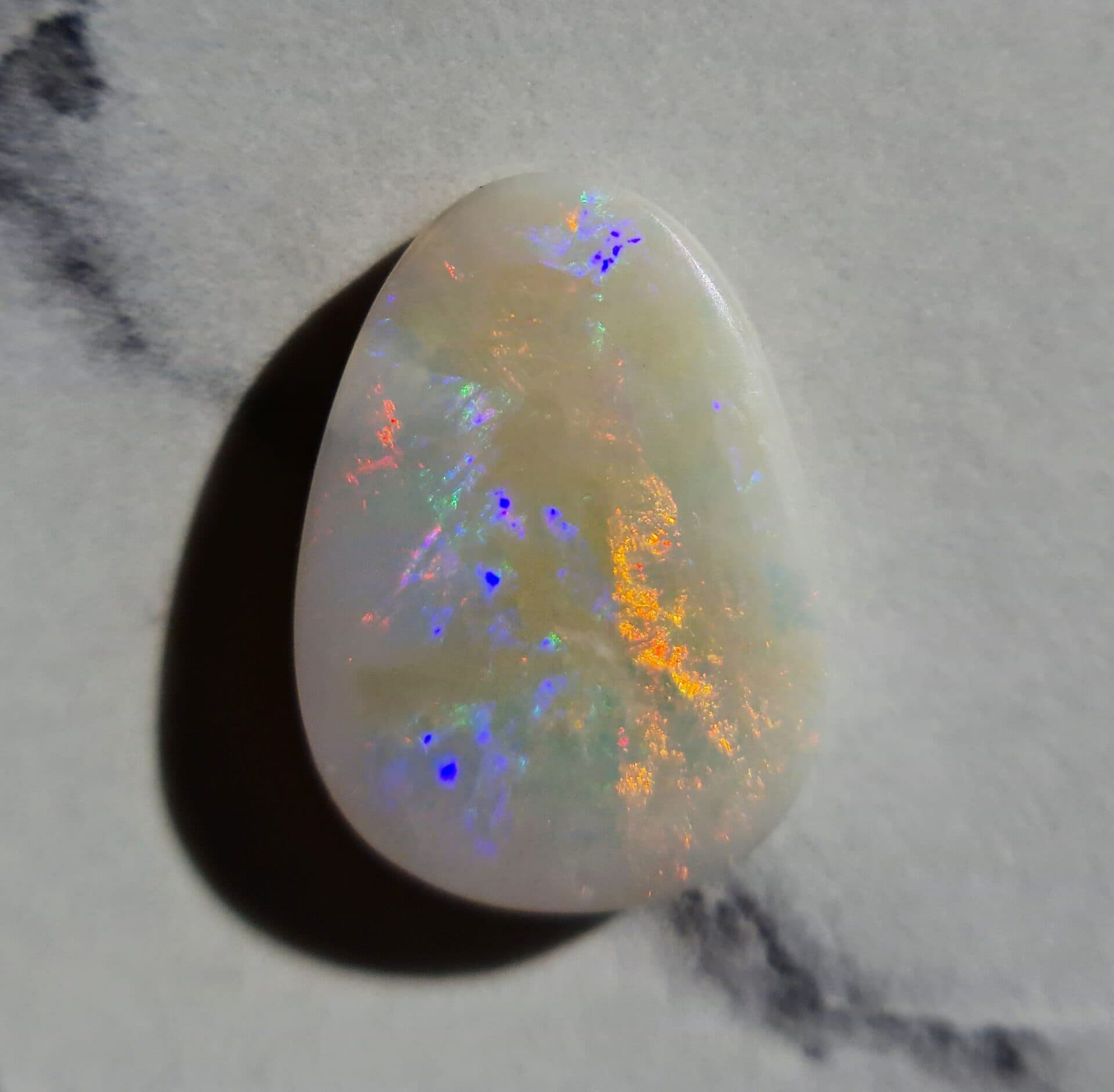
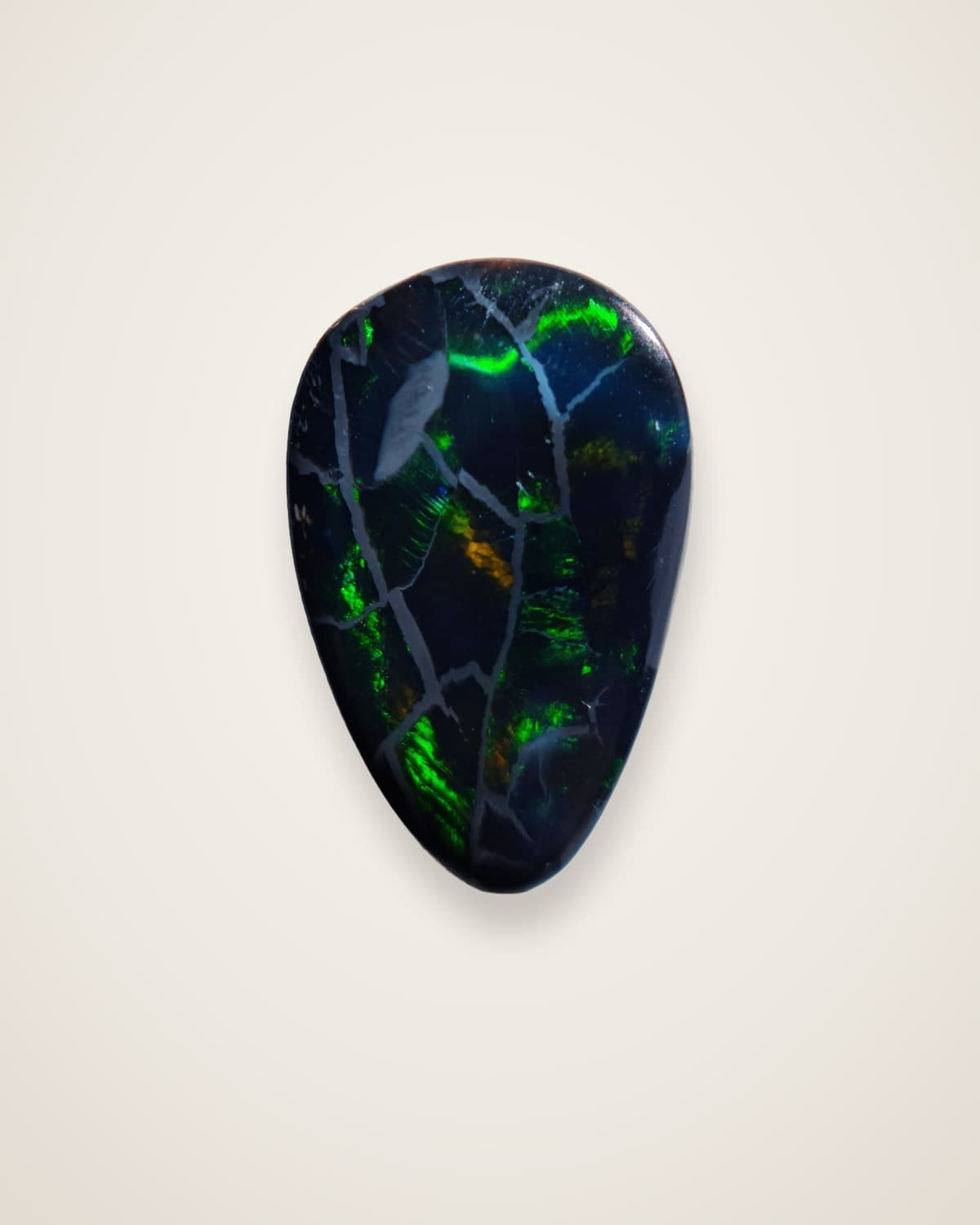
Some are and many aren't. A lot of opalised fossils are filled with potch, opal without play of colour, while others show bright flashes of precious opal through part or all of the fossil.
When you look at a fossil piece, you're judging two things at once: the fossil (shape, completeness, detail) and the opal (colour, brightness, body tone). A small shell fragment with strong colour can make a striking cabochon, while a complete fossil with little colour can still be a lovely specimen.
I have a real soft spot for fossil opal. A few years ago I said goodbye to a green fossil opal and it had me wanting to work on the stash of fossil opals I have hidden away.
How are opalised fossils used in jewellery?
Fossil opal is usually cut into cabochons, carved, or set whole when it's small enough. The fossil shape makes each piece especially individual.
A few pieces from the shop show the range:
- Carved: I once carved a Coober Pedy white opal fossil into a clam shape, then turned it into a custom ring.
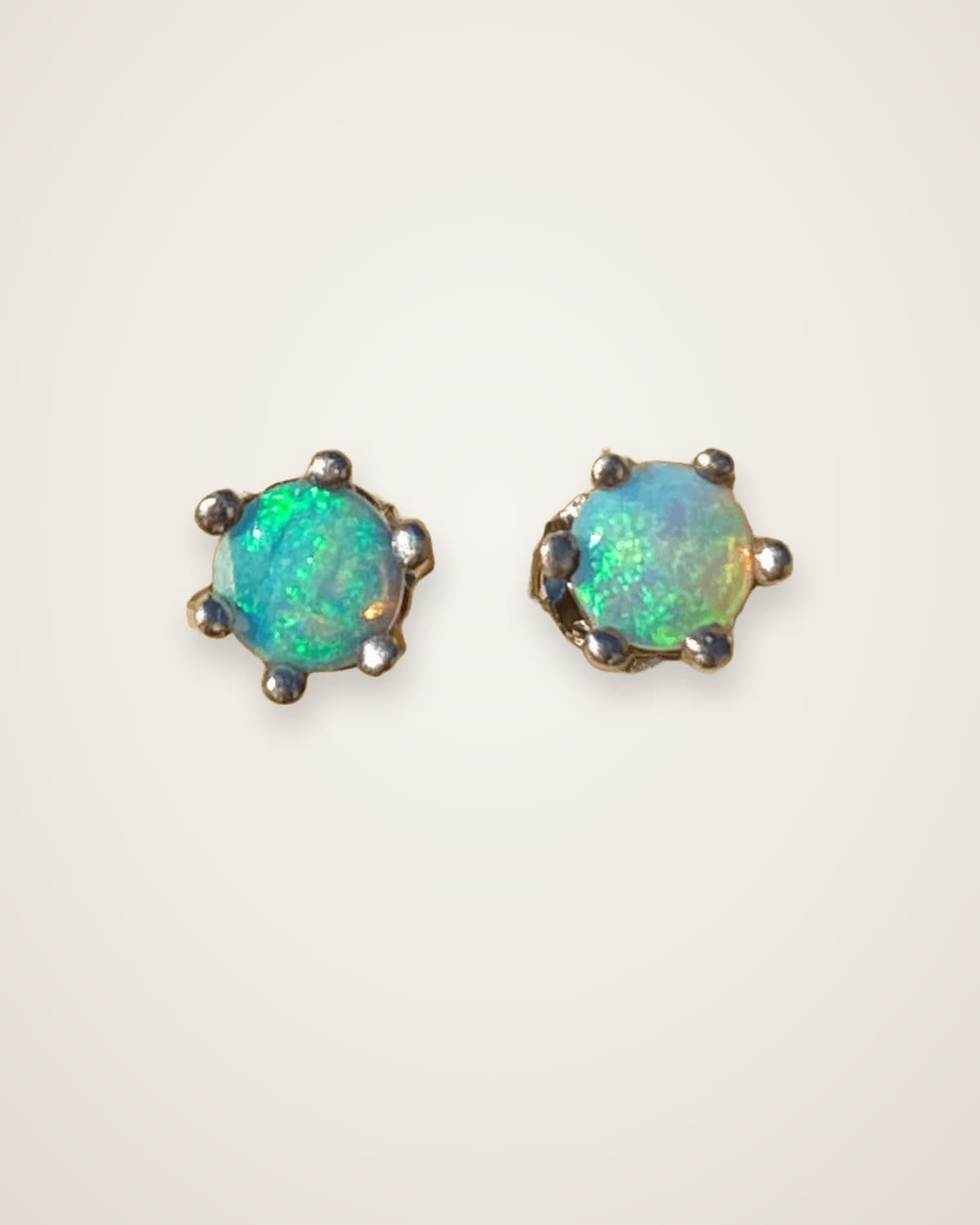
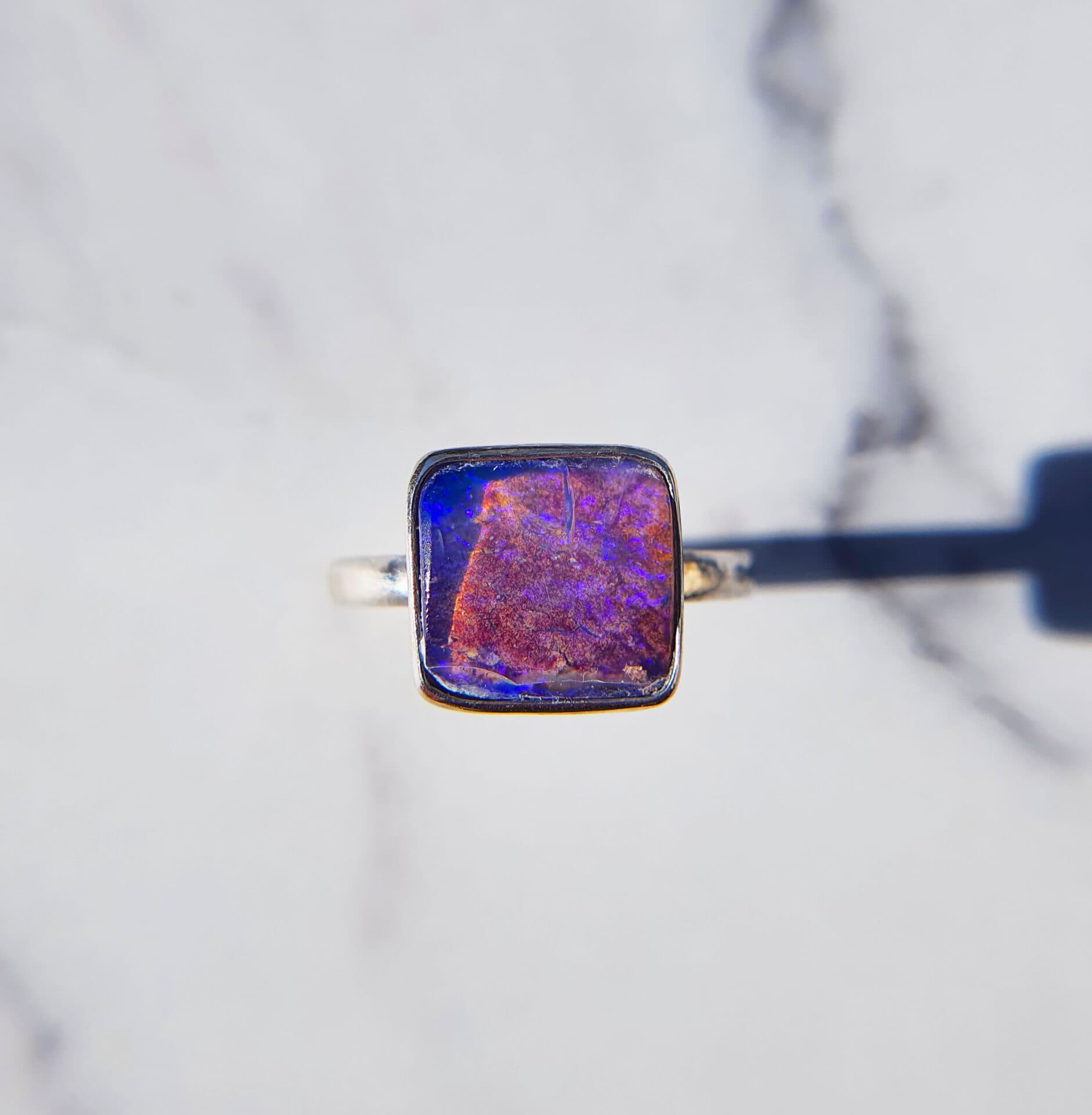
- Cabochon: our Coral Ring was set with an opalised fossil shell in 925 silver, and the Coral range paired opalised shell with crystal black opal.
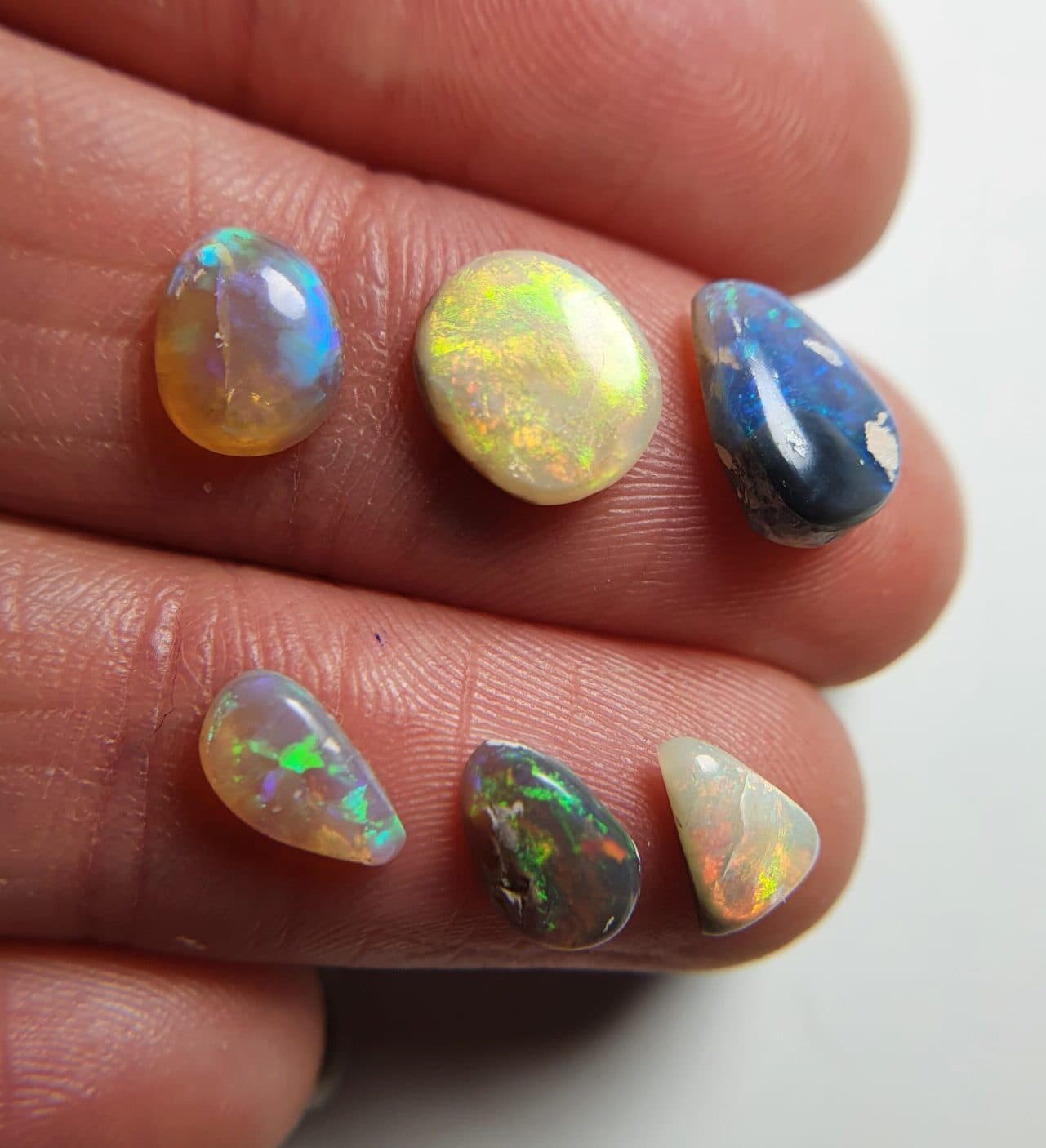
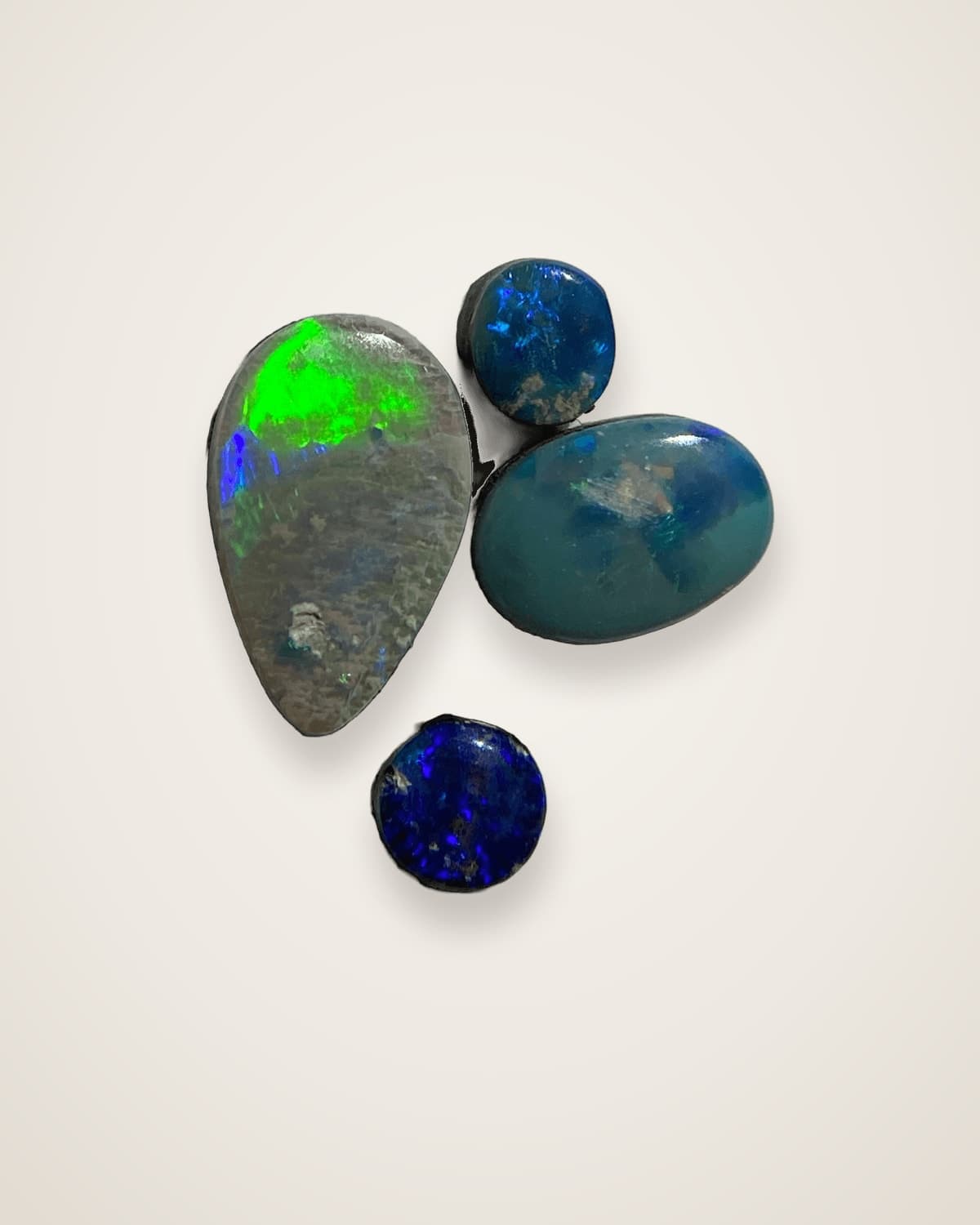
- In parcels: fossil shell fragments sometimes sit in mixed parcels. One of mine combined Lightning Ridge crystal opal, a Coober Pedy fossil shell fragment and White Cliffs milky opal.
Fossil opal is still opal, around 5.5 to 6.5 on the Mohs scale, so it needs the same care as any opal. Fossil pieces can also have natural voids or weak spots where the shape was, so a protective setting is worth it in a ring.
If you'd like to work fossil opal into a piece, our custom design service can help, and the raw opal and Coober Pedy ranges are worth checking for fossil material.
Questions people ask
What is an opalised fossil?
It's a fossil whose original material, such as shell, bone or wood, has been filled or replaced by opal. The opal keeps the shape of the organism.
Where can you find opalised fossils?
In Australia they're best known from Coober Pedy, Andamooka, White Cliffs and Lightning Ridge. Opalised shells, belemnites, bones and wood are all recorded from the opal fields.
How old are opalised fossils?
The animals and plants in most Australian opalised fossils lived during the Cretaceous period. The opal itself formed later, after they were buried.
Do opalised fossils have play of colour?
Some do. Many are filled with potch, which has no play of colour, while the best show bright precious opal.
Can opalised fossils be worn in jewellery?
Yes. Fragments and small whole pieces are cut, carved or set in rings and pendants. Treat them like any opal and choose a protective setting for rings.