Opal Crazing: What It Is, What Causes It and How to Spot It
Crazing is a network of fine cracks that can develop in opal, usually as it dries out after mining. Here is what causes it, how to spot it before you buy, and how to protect the opal you already own.
About Opal · By Stephanie Caruana ·
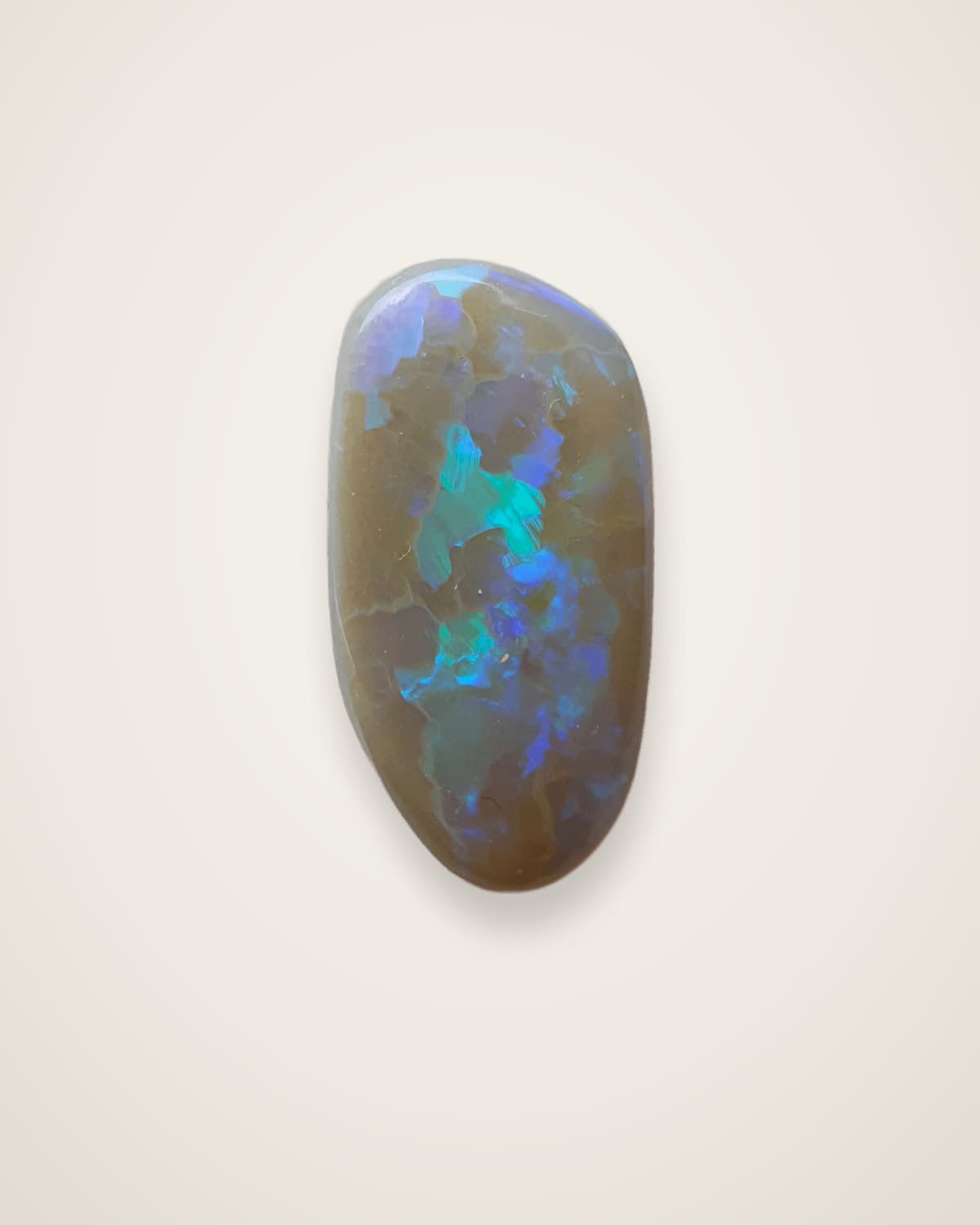
Opal crazing is a network of fine cracks that forms on the surface or inside an opal, often looking like a spider web or crackle glaze. It usually happens when an unstable stone loses water and stress after it leaves the ground. Crazing can't be reversed, so the best defence is buying stable opal and avoiding sudden heat.
What is opal crazing?
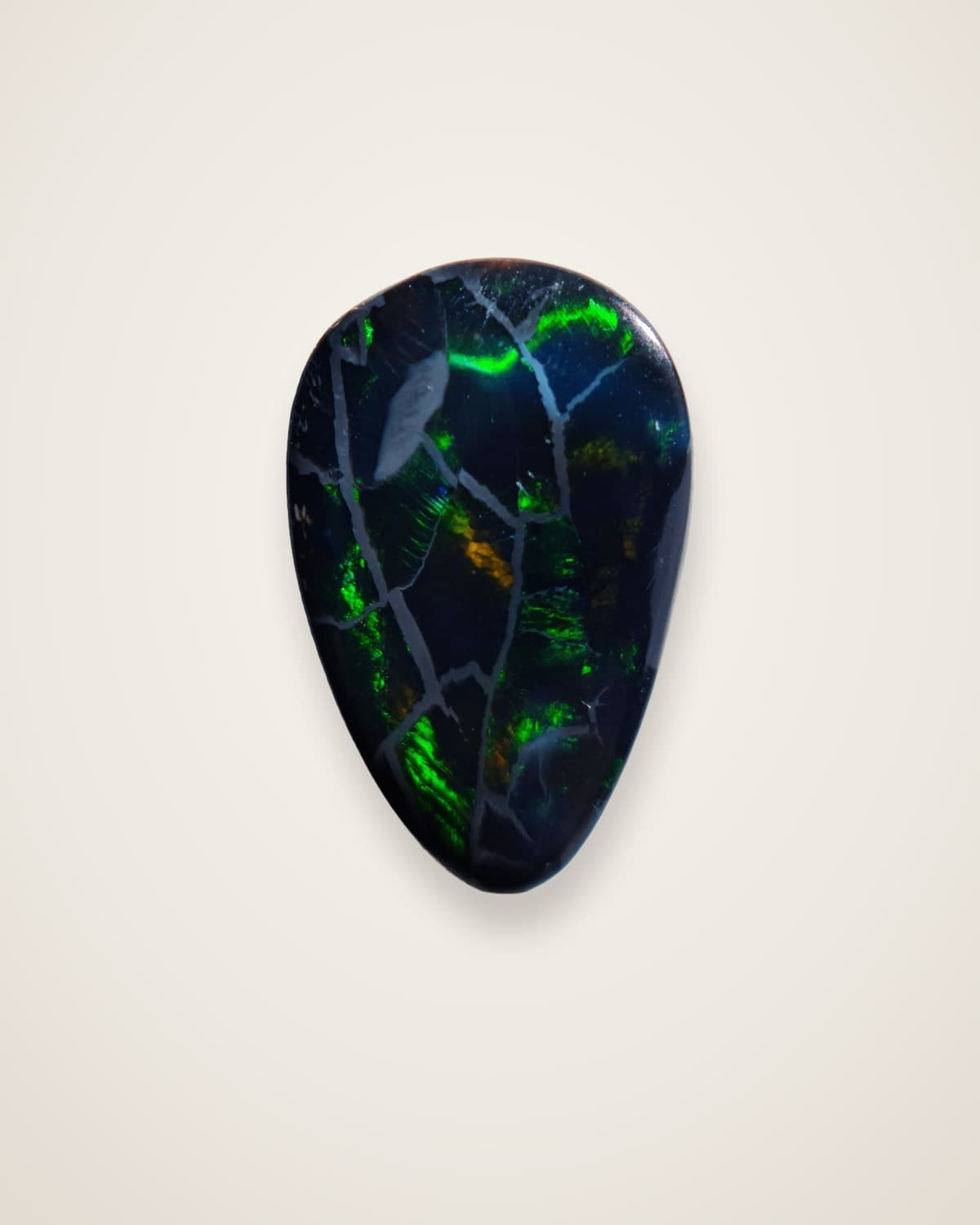
Crazing is a mesh of many fine, intersecting cracks, as opposed to one single crack. It can sit just under the surface or run through the stone, and it often catches the light as fine silvery lines.
It's worth separating crazing from two other things:
- A single crack is one fracture, often following a natural weakness in the rough. It can sometimes be cut away.
- Surface wear is a build-up of tiny scratches on the polish that makes the stone look dull. That's a polish problem, not crazing, and a repolish fixes it.
Crazing is the one that worries cutters, because it's in the body of the stone and tends to show up only after the work is done.
What causes opal to craze?
Crazing mostly comes from stress inside the opal being released, usually as the stone dries after mining. Opal is made of silica and contains a small amount of water, and when unstable material loses some of that water, it can shrink unevenly and crack.
Things that can trigger or speed it up:
- Drying out after mining. Rough that has been kept damp underground can change once it's exposed to dry air.
- Sudden temperature changes. Like glass, opal can crack if it goes from one extreme to another quickly.
- Direct heat. Jewellers should never solder near a set opal, and opal shouldn't be left near a heater, on a car dashboard or in a hot dishwasher.
- Unstable material. Some deposits, and some layers within a single deposit, simply produce opal that's more prone to crazing.
Australian sedimentary opal, from fields such as Lightning Ridge, Coober Pedy and the Queensland boulder fields, generally has a reputation for stability. That doesn't mean any field is immune. Natural cracks have tested me at the cutting wheel more than once, and it's heartbreaking every time.
How can you tell if an opal is crazed?
Look at the stone dry, under bright light and from several angles, ideally with a loupe. Crazing shows as fine lines that catch the light as you tilt the stone, often crossing each other.
When you're checking a stone:
- Make sure it's dry. Wetting a cracked or scratched stone can hide faults for a while, which makes opal cutting tricky at times. Water and oil fill the cracks and make them disappear.
- Use a torch. Shine a small torch through or across the stone. Cracks and crazing show up as lines that interrupt the light.
- Tilt it slowly. Crazing often flashes silver at one angle and vanishes at another.
- Check the back and the edges. Cracks often start at the edge of a stone or across the potch.
Buying online, you can't do all of that yourself, so ask. A good seller will mention known cracks or crazing in the listing and send another photo or video if you ask. My older post on buying opal jewellery online has more on what to ask.
Can crazed opal be fixed?
No, crazing can't be reversed. Shallow surface crazing can sometimes be cut away, at the cost of size, but crazing that runs through the stone is there for good.
There are a few myths worth clearing up:
- Glycerine or oil won't fix it. Solid Australian opal doesn't absorb liquids the way some hydrophane opal does, so soaking a crazed stone in glycerine or oil only makes it oily. It may hide the cracks for a while, which isn't the same thing.
- Soaking in water won't prevent it. Soaking a solid opal won't put back what an unstable stone has lost, and it does nothing to extend a stone's life.
- Stabilising products only go so far. Some products can help protect a cracked stone from further damage, but they can't repair the cracks already there, and any treatment should be disclosed when the stone is sold.
If an opal you love has crazed, it can still be worn with care. A pendant or earrings, in a protective bezel, keep it away from the knocks a ring takes.
How do you stop opal from crazing?
You can't control what's inside a stone, but you can buy carefully and protect it from the things that make crazing worse. Most of it comes down to avoiding heat and sudden temperature changes.
- Buy from a cutter who knows the material. Many cutters let rough rest after mining and before cutting, so that unstable stones have a chance to show themselves early.
- Avoid sudden temperature swings. Don't move opal jewellery straight from a hot car into cold water, or wear it in a sauna.
- Keep it away from direct heat. Take rings off for cooking over a hot stove or washing up in very hot water.
- Have repairs done by a jeweller who knows opal. The stone must come out before any soldering.
- Store it on its own. A soft pouch protects the polish and stops harder gems knocking it.
Cold on its own is less of a worry than people think. Australian opal handles cold weather fine; it's the fast change from one extreme to another that does the damage.
Questions people ask
Does crazing make an opal worthless?
It lowers the value considerably, because it affects both durability and appearance. Condition matters alongside body tone, brightness and pattern; my older post on how to value opal covers those.
Can crazing get worse over time?
It can spread, particularly if the stone is knocked or heated. There's no reliable way to predict it, so treat a crazed opal gently.
Is crazing the same as a crack?
No. A crack is a single fracture; crazing is a network of many fine cracks. Both are faults to look for before you buy.
Do doublets craze?
The thin opal layer in a doublet can crack like any opal, and the glue layer can also fail if the stone is soaked. Keep doublets and triplets out of water and away from heat. If you're unsure about a stone in our shop, send me a message and ask.