Matrix Opal Explained: Andamooka, Boulder Matrix and Treated Stones
Matrix opal is precious opal spread through its host rock rather than sitting in a clean seam. Here is how Andamooka and Queensland boulder matrix form, why some matrix is treated, and how to buy and care for it.
Opal Fields · By Stephanie Caruana ·
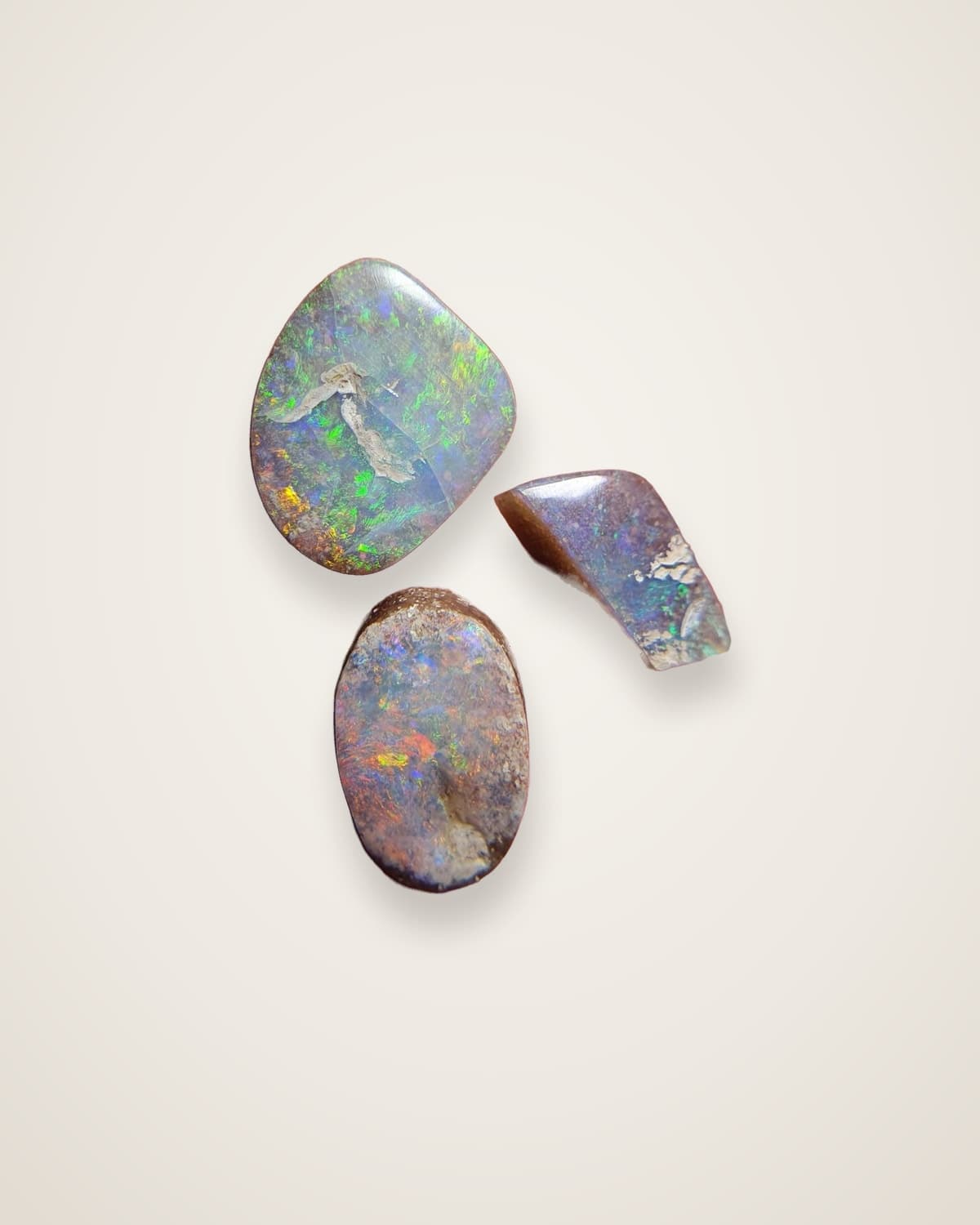
Matrix opal is precious opal that has formed through its host rock, filling the tiny spaces between grains or scattering in specks and veins, instead of forming a clean seam. The opal and the rock are cut and polished together as one stone. In Australia, the best-known matrix comes from Andamooka in South Australia and the boulder fields of Queensland.
What is matrix opal?
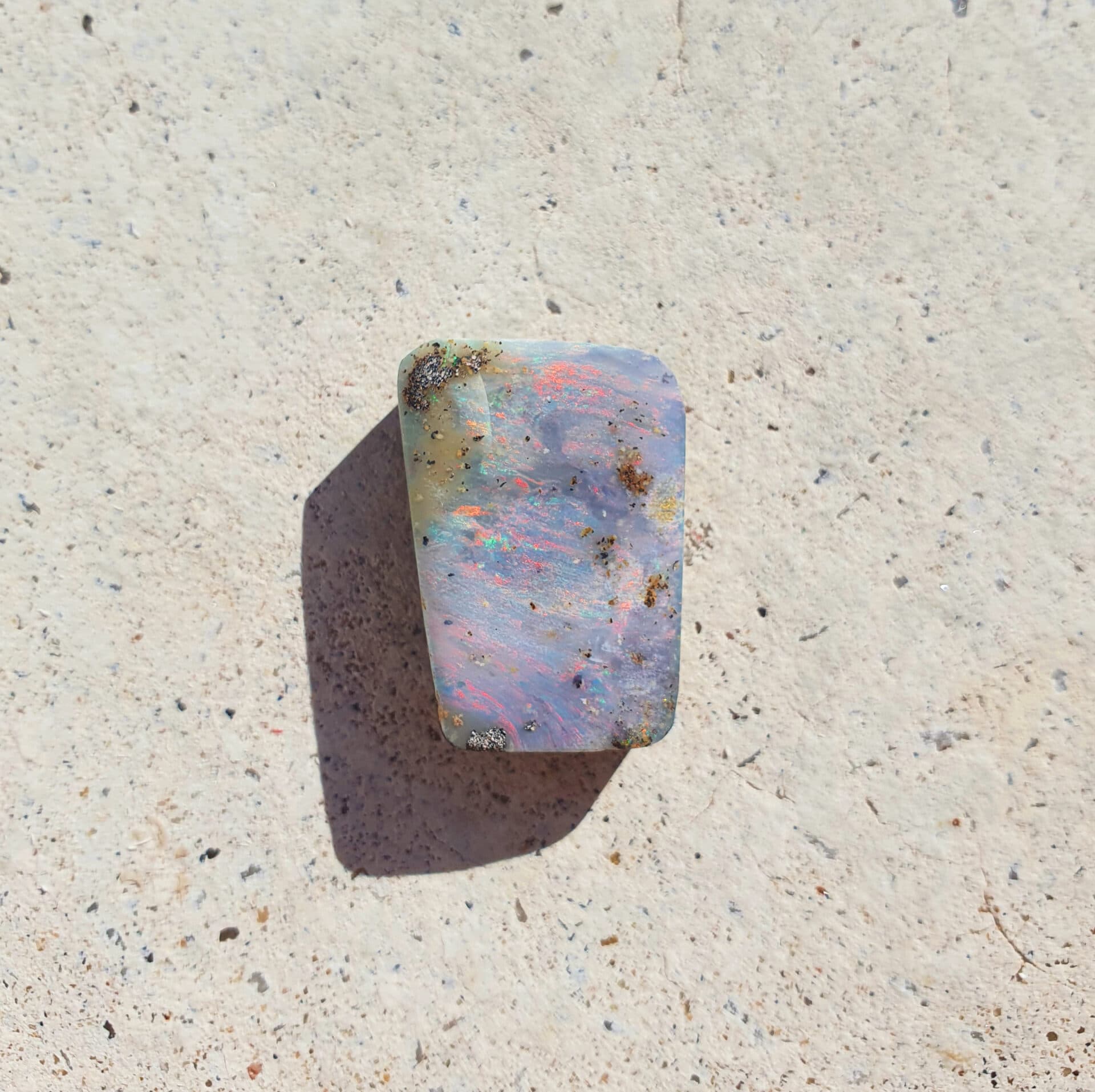
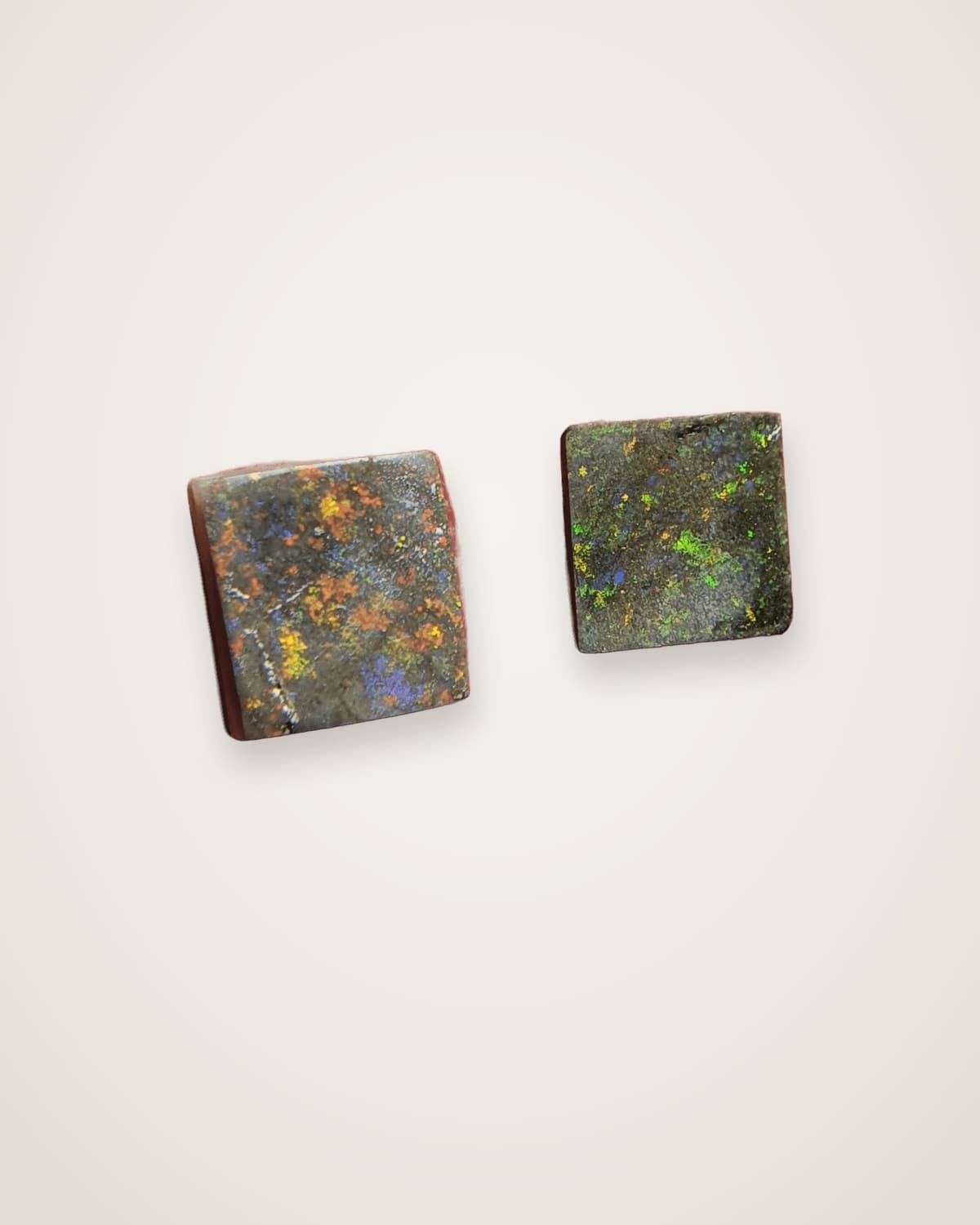
Matrix opal is a stone where the colour and the rock are mixed together, so you can't separate the opal from its host. Instead of a solid bar of colour, you see flashes, pinpoints and threads of colour sitting in rock.
All opal starts the same way. Water carrying silica seeps into gaps in the ground, and over a very long time the silica is left behind. In most opal fields that silica collects in cracks, seams and cavities, which is where solid opal comes from. In matrix, the silica soaked into the pore space of the rock itself and set there, cementing the grains together.
That's why I like to describe good matrix as "fairy dust". The colour is spread through the stone in fine sparkles rather than in a single layer.
Where does matrix opal come from?
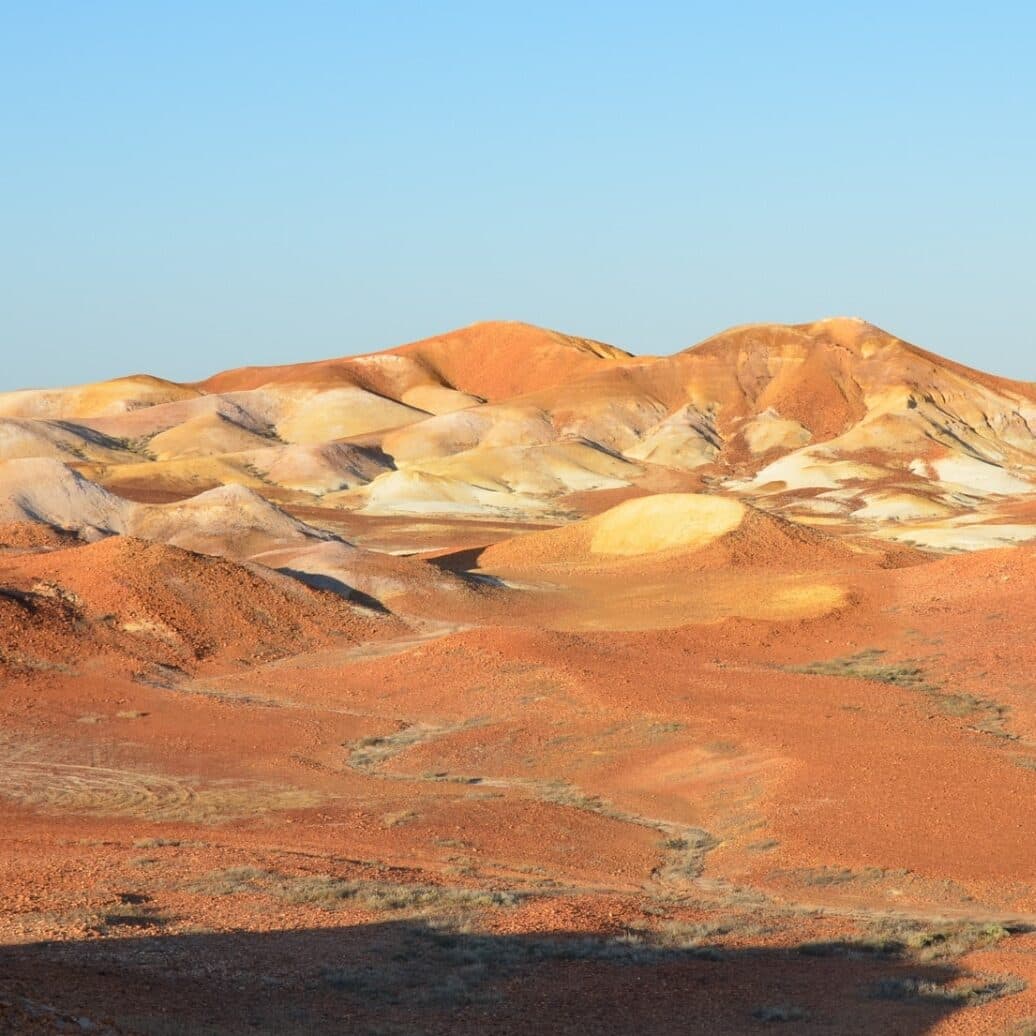
The two main Australian sources are Andamooka in South Australia and the boulder opal country of western Queensland. They form in different rocks and look quite different once cut.
- Andamooka matrix forms in a pale, porous sedimentary rock. In its natural state it often looks light, with soft colour in a grey or brown base. Andamooka has more variety of host rock than most fields, which is why it produces so many different kinds of opal, including matrix, crystal and "painted lady" opal.
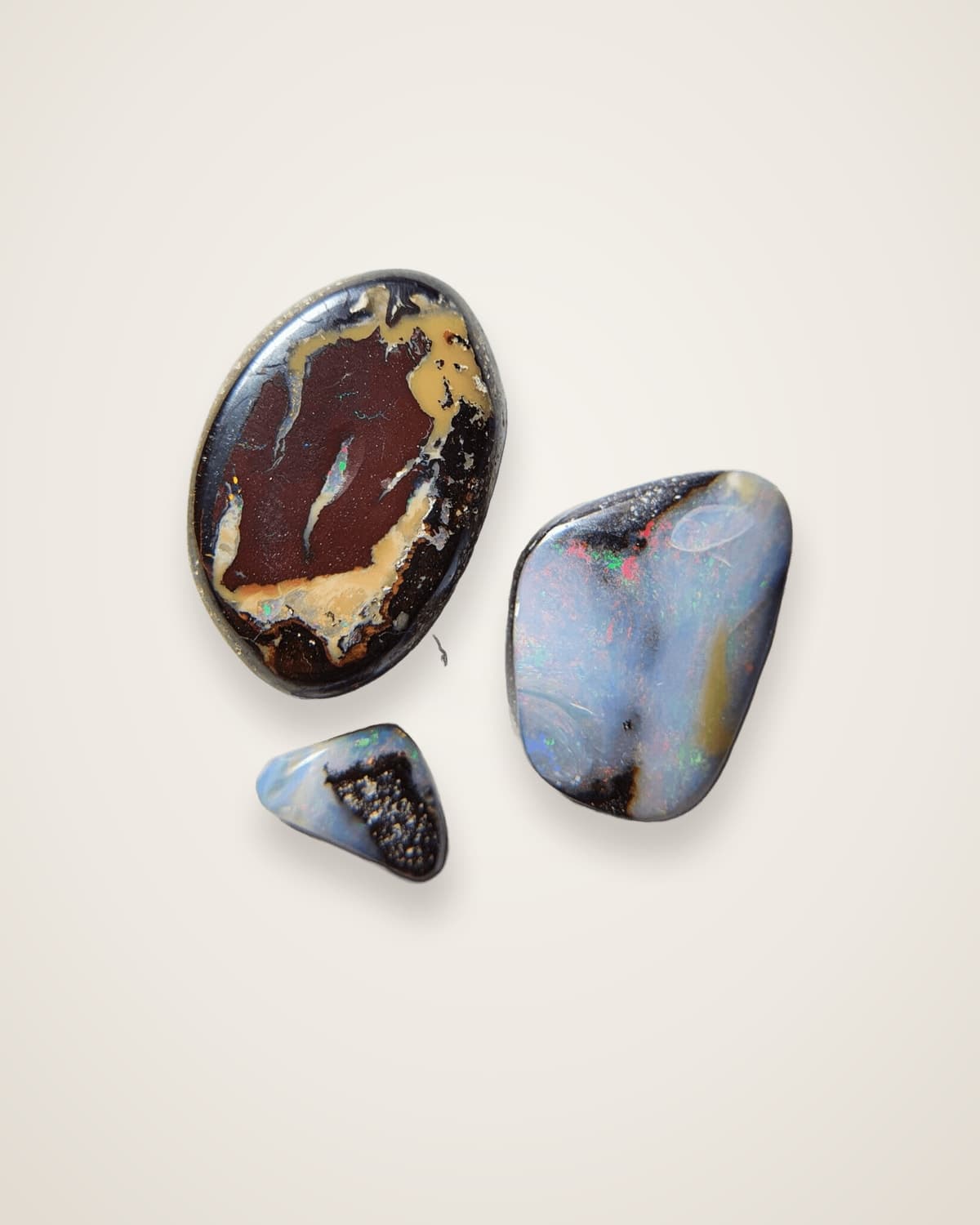
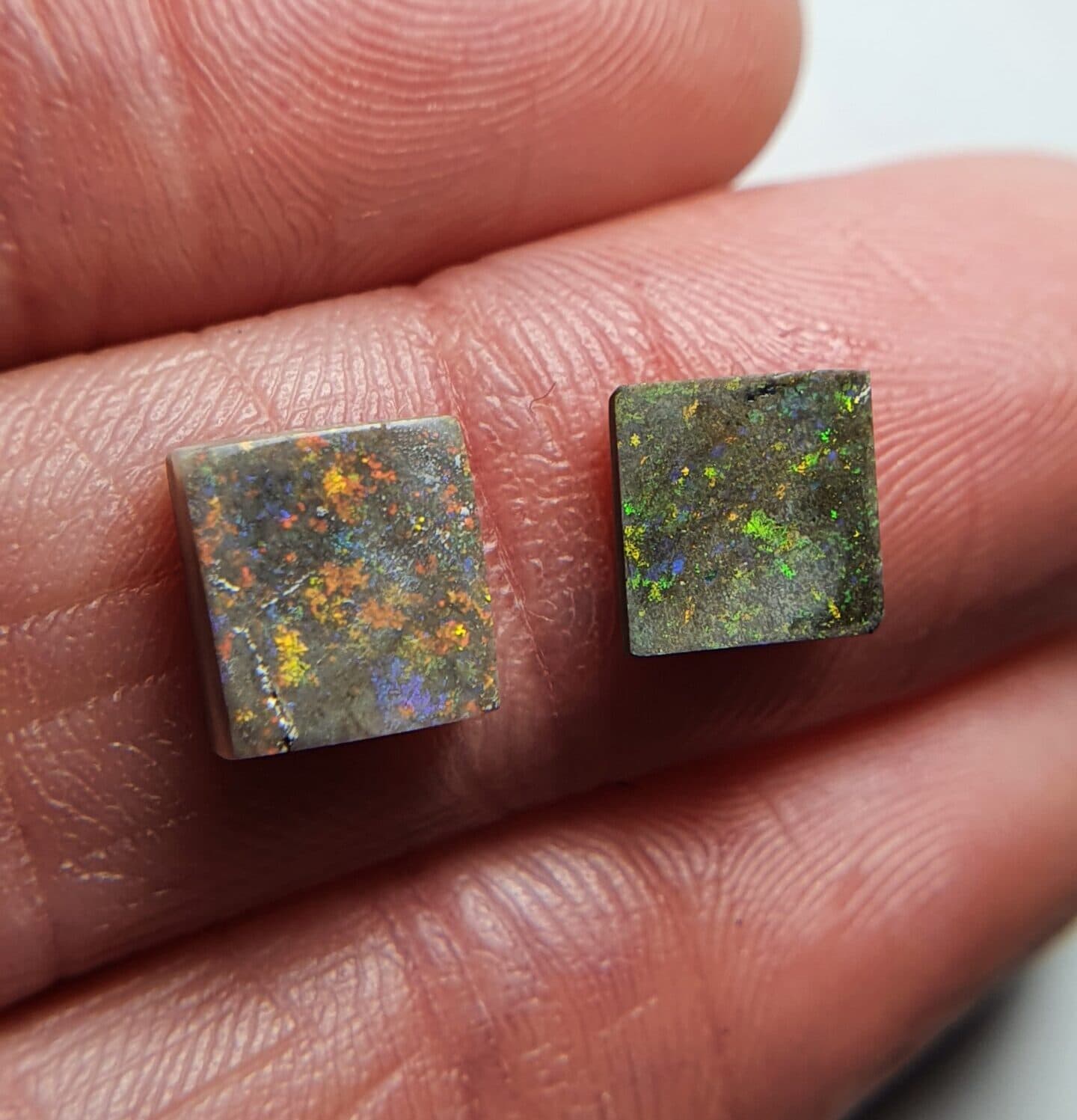
- Queensland boulder matrix forms in ironstone and sandstone around fields such as Yowah, Quilpie and Winton. The dark brown ironstone gives it a rich, earthy base that makes the colour pop without any help.
One of my favourite things about opal is that the host rock changes how it presents. Boulder opal and Andamooka opal form in a similar way: both can be found as matrix, and both form in hard host rock, often in thin veins of colour. I think of them as cousins. My older posts on Andamooka opal and Queensland boulder opal go into each field in more detail.
How is matrix opal different from boulder opal and solid opal?
The difference is where the colour sits. Solid opal is opal all the way through, boulder opal has a layer of colour on an ironstone back, and matrix has the colour spread through the rock.
- Solid opal (black, white, crystal) is cut from seams of pure opal, often with a potch base.
- Boulder opal is usually a thin, continuous layer of colour following a vein in ironstone, cut with the ironstone left on the back.
- Boulder matrix has the colour woven through the ironstone itself, in specks, webs and veins.
- Yowah nuts and Koroit opal are Queensland boulder varieties where opal forms in ironstone nodules or in ripples and patterns through the rock.
Because the host rock carries most of the weight in matrix and boulder material, comparing them carat for carat with solid opal doesn't tell you much. Judge them on the brightness and spread of colour across the face.
What is treated matrix opal?
Treated matrix is Andamooka matrix that has been darkened so the colour stands out. The usual method is a sugar and acid treatment that leaves carbon in the pores of the stone, turning the pale host rock dark grey to black.
It works because Andamooka matrix is porous. The darker background does what a black backing does for a doublet: it makes the flashes of colour look far more vivid. Similar to boulder opal, the host rock is what makes the colours in the opal stand out.
A few things worth knowing about treated matrix:
- It should always be disclosed. Treatment is a long-standing, accepted practice, but a treated stone is a different product from natural dark opal and should be priced and described that way. I name treated matrix as treated in the listing title.
- The darkening is only near the surface. The treatment doesn't go deep, so recutting a treated stone can bring the pale natural rock back to the surface. That's why treated matrix is best treated as finished once it's cut.
- It polishes differently. Cerium oxide, the polish I use for most solid opal, can lodge in the pores of matrix and leave tiny white spots. Diamond paste is the better finish for porous matrix and boulder material.
Not all Andamooka material takes treatment. It's only the porous matrix that absorbs it, and Queensland boulder matrix is generally sold in its natural state.
Is matrix opal durable enough for jewellery?
Usually, yes. Matrix tends to be a tough material because the host rock gives the stone body and support. Andamooka and boulder material are both much harder to work than Coober Pedy or Mintabie opal, which is something I notice every time they go on the wheel.
The opal itself is still opal, at about 5.5 to 6.5 on the Mohs scale, so the polished surface can scratch over time like any opal. A few sensible precautions:
- Choose a protective setting, such as a bezel, for a ring that will be worn every day.
- Take it off for gardening, the gym and cleaning.
- Clean it with a soft, damp cloth and mild soap, and dry it straight away.
- Keep treated matrix away from harsh chemicals and out of ultrasonic cleaners.
Matrix also suits bold, organic jewellery. It is often cut in freeform shapes to follow the colour, and a chunky pendant or statement ring shows off the pattern far better than a small, tight setting.
How do you choose a good matrix opal?
Look for colour that is bright and spread across the face, on a base that is even and well polished. The best matrix has many tiny deposits of gem opal all lighting up together, rather than a few dull patches.
When comparing stones, check:
- Coverage. How much of the face shows colour, and is it spread evenly?
- Brightness. Do the specks glow in ordinary light, or only under a spotlight?
- Polish. Is the surface smooth and glossy, without pits or white specks in the pores?
- Disclosure. Does the listing say where it's from and whether it has been treated?
If you're cutting your own, matrix rough is a rewarding thing to practise on, though it's messy (boulder ironstone stains everything) and slower to grind than softer opal. You can find rough and loose stones in our raw opal range, and Queensland pieces under boulder opal.
Questions people ask
Is matrix opal real opal?
Yes. Matrix is natural precious opal that formed inside its host rock. Treated matrix is still natural opal; only the colour of the host rock has been darkened, which should always be disclosed.
Why is some matrix opal black?
Most black Andamooka matrix has been treated to darken the porous host rock. Queensland boulder matrix is naturally dark because of its ironstone.
Can you recut treated matrix opal?
It's not a good idea. The darkening only reaches a short way into the stone, so grinding it back can expose the pale natural rock underneath.
What is the best polish for matrix opal?
Diamond paste generally gives the cleanest result on matrix and boulder material, because cerium oxide can sit in the pores and show as white spots.