Best Setting for an Opal Ring: Bezel vs Claw
A bezel setting protects an opal best for everyday wear, while claws show off more of the stone. Here's how to choose between them for your ring.
Jewellery · By Stephanie Caruana ·
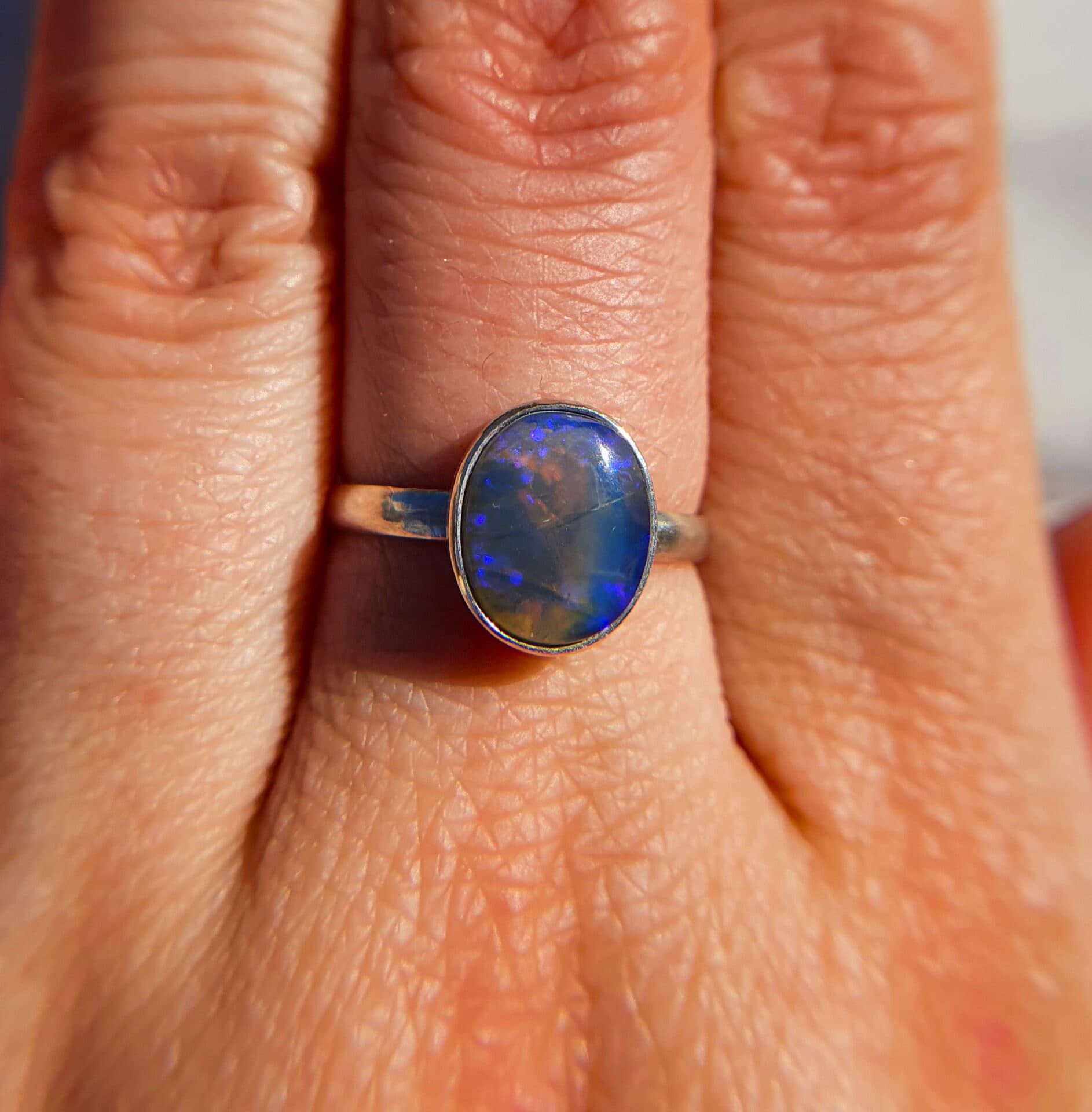
For an opal ring you'll wear every day, a bezel setting is usually the best choice. A bezel wraps a rim of metal around the whole stone and protects its edges from knocks. Claw settings show more of the opal and let in more light, but they leave the edges exposed, so they suit occasional-wear rings, pendants and earrings better.
Why does the setting matter so much for opal?
Opal is softer than most ring stones, so the setting does a lot of the protecting. It sits around 5.5 to 6.5 on the Mohs hardness scale, compared with 9 for sapphire and 10 for diamond.
Rings take more punishment than any other jewellery. They get knocked on benches, door frames and car doors, and the edge of the stone (the girdle) is where a chip usually starts. A good setting covers that edge, holds the stone firmly and keeps it low enough not to catch on everything.
What is a bezel setting?
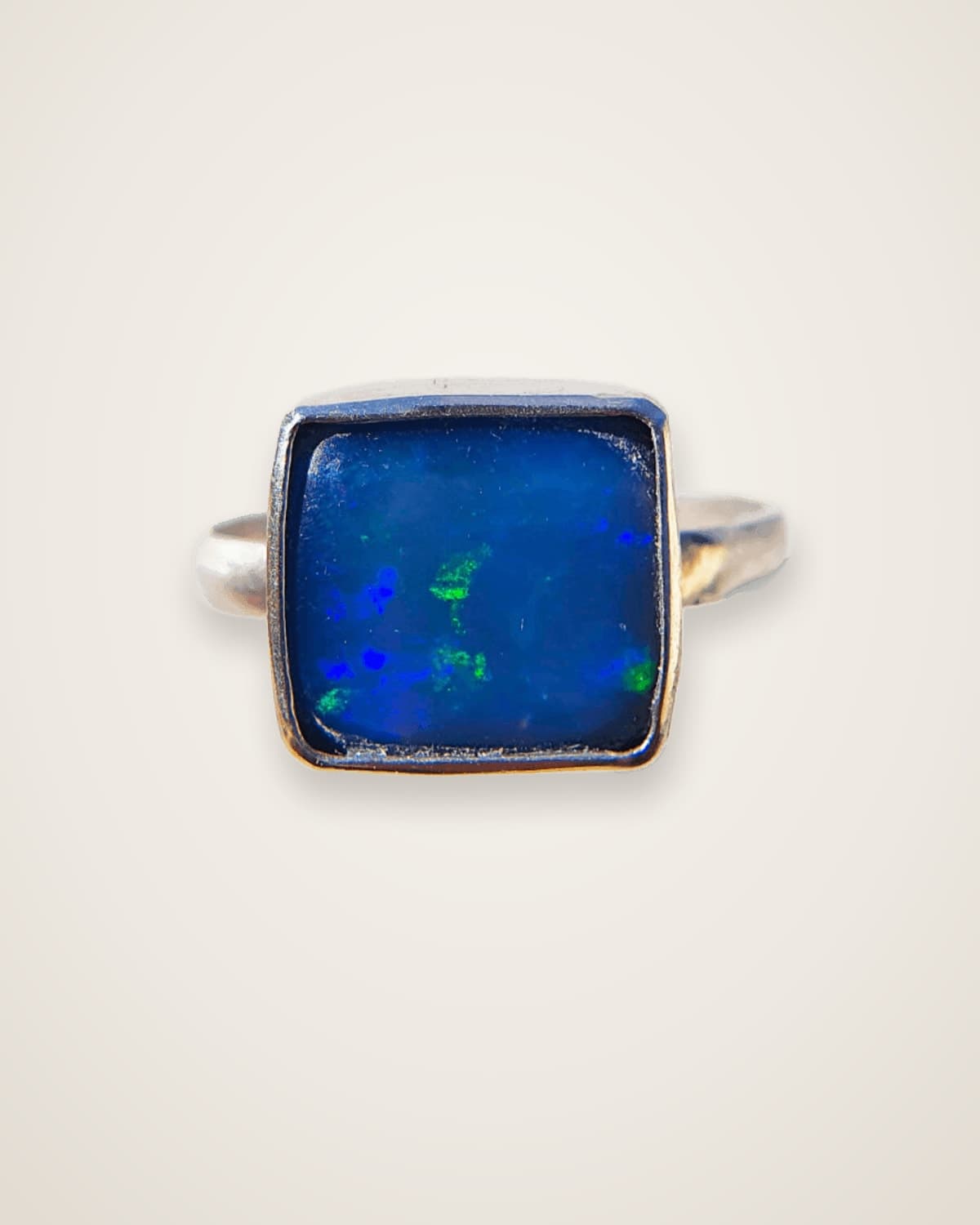
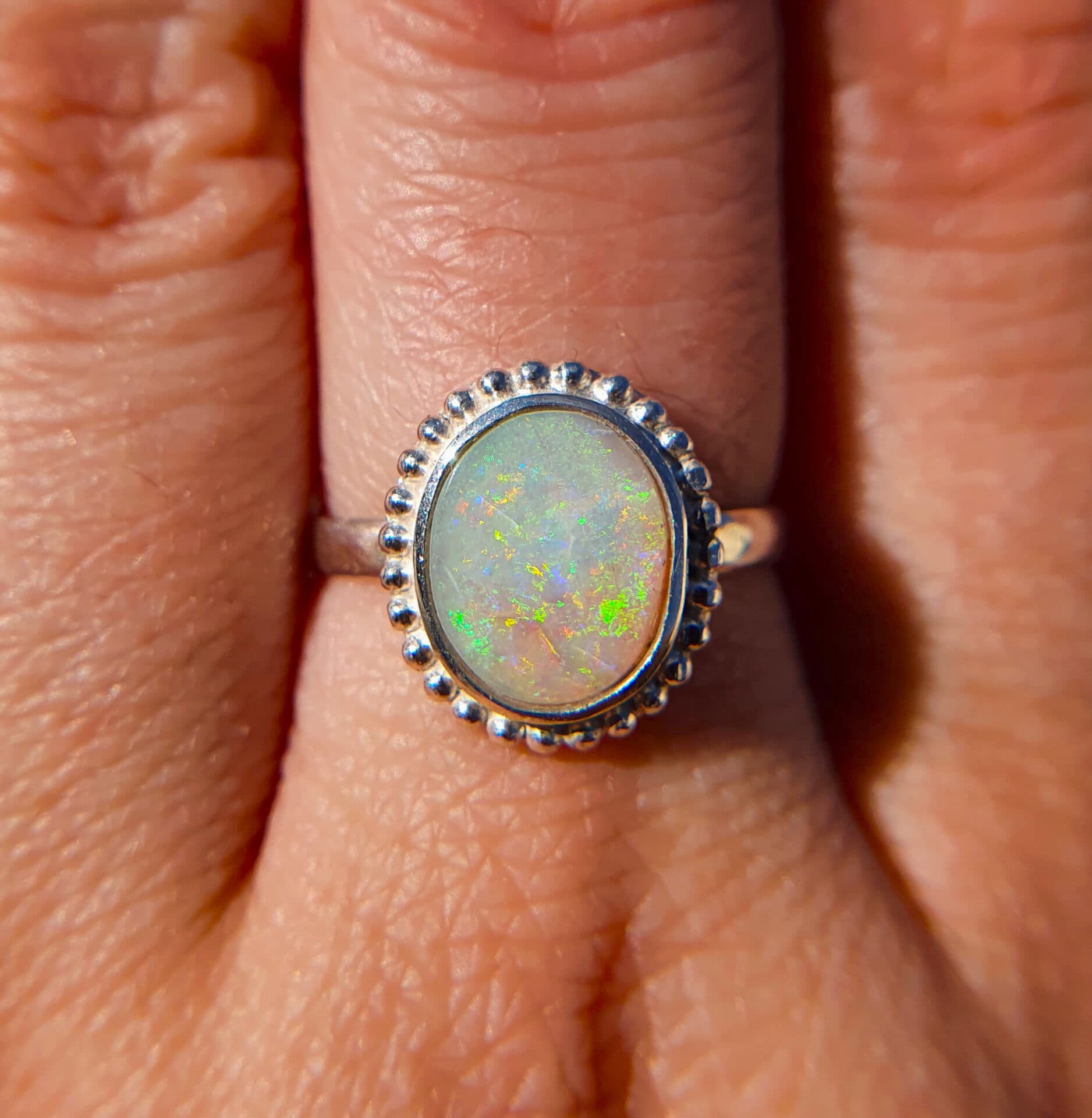
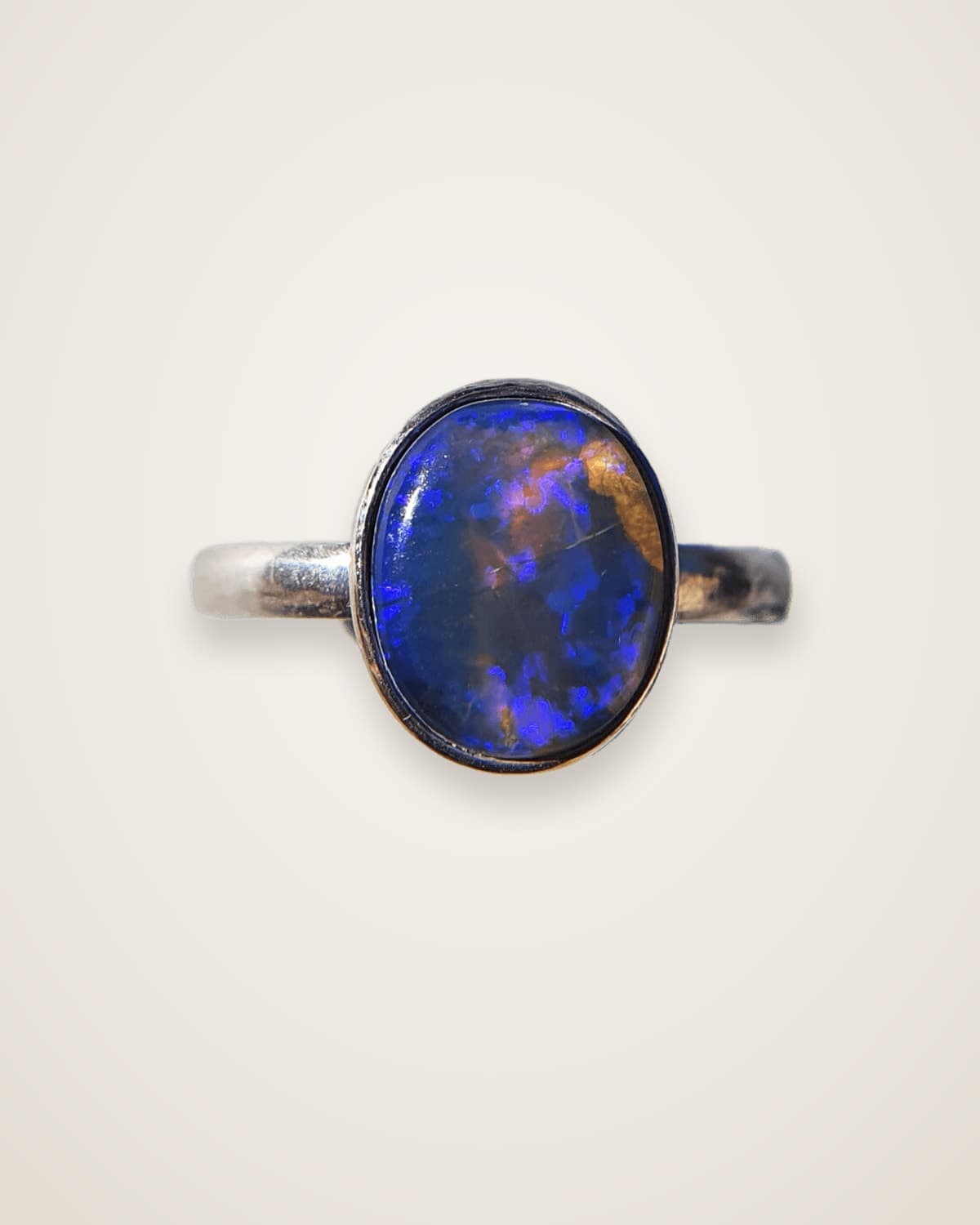
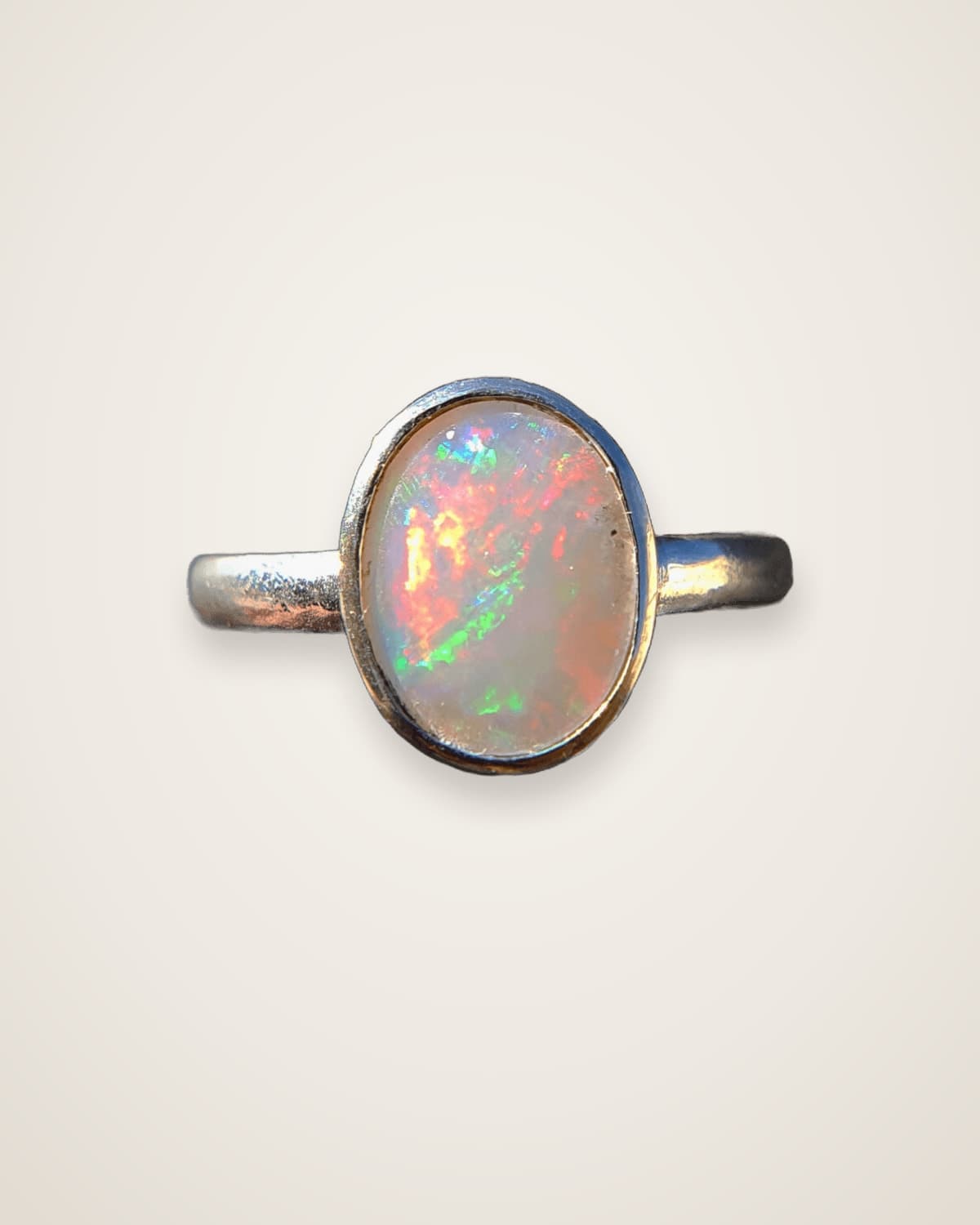
A bezel is a thin band of metal that surrounds the opal and is pushed over its edge all the way round. It's the most protective way to set an opal.
Why I like bezels for opal:
- Edge protection. The metal takes the knocks instead of the girdle.
- Security. There are no individual claws to bend, snag or wear thin.
- Comfort. It's smooth on the outside, with nothing to catch on jumpers or hair.
- Freeform friendly. A bezel can follow the shape of a boulder opal or freeform stone.
- Kind to doublets. It covers the join line on the side of a doublet or triplet.
The trade-off is that a bezel covers a sliver of the stone's face and blocks some light from the sides. With bright opal that rarely matters much, because opal's colour comes from inside the stone rather than from facets bouncing light around like a diamond.
My Gemini ring is a good example. It's a clean, narrow bezel, so the opal is protected without a heavy rim of metal around it.
Open back or closed back?
A bezel can be open at the back or closed. An open back lets light in behind the stone, while a closed back can be darkened. For small calibrated crystal opals, I've recommended darkening the setting to bring out the best colour.
What is a claw setting?
A claw (or prong) setting holds the opal with small metal posts that bend over its edge. It shows off more of the stone and gives a lighter, more open look.
Claw settings work well when:
- the ring is for occasions rather than every day
- the opal is going into a pendant or earrings, which take fewer knocks than a ring
- you want an airy, vintage style with as much stone showing as possible
The weakness is that the opal's edge is exposed between the claws, and claws wear over time. They can snag, lift or thin out, and a loose claw is how stones get lost. Last year I shared a ring repair that showed exactly why it's so important not to make the claws too low: the opals are often lost with the natural wear and tear of the ring. If you have a claw-set opal, get the claws checked regularly.
Which setting is best for each kind of opal?
The best setting depends on the stone as much as the wearer. Here's how I think about it:
- Solid black or crystal opal in an everyday ring: bezel. These are the stones you'll most want to protect.
- White opal: either works, so choose by how often you'll wear it.
- Boulder opal: bezel, which follows freeform shapes and protects the colour layer on the ironstone.
- Doublets and triplets: bezel, which covers and protects the join. Keep them out of water whichever setting you choose.
- Small calibrated stones: bezels for rings; claw-set clusters are better kept to earrings and pendants.
Whatever the stone, I'd steer clear of tension settings, which hold a stone in place by pressure alone. That pressure isn't something opal handles well.
How do I make an opal ring last longer?
The setting does most of the work, but a few habits help too.
- Choose a cabochon with reasonable thickness and a gentle dome, not a paper-thin stone.
- Ask for a setting where the stone sits fairly low on the finger.
- Take the ring off for gardening, the gym, cleaning and heavy work.
- Have the claws or bezel checked whenever you notice a knock or a rattle.
- If the opal gets scuffed over the years, an opal cutter can usually repolish it.
For more on getting a ring right, see my ring sizing hack and these opal jewellery making tips.
Can I choose the setting for my own opal ring?
Yes. If you're having a ring made, the setting is one of the first things to decide, because it affects the look, the comfort and how well the stone is protected. You can start with a stone you love and talk through bezel or claw with a custom ring design, or browse finished opal rings to see both styles.
Questions people ask
Is a bezel or claw setting better for opal?
For a ring worn daily, a bezel is usually better because it protects the whole edge of the stone. Claws show more opal and suit earrings, pendants and occasional-wear rings.
Does a bezel make an opal look smaller?
Slightly, because the metal rim covers a thin edge of the stone. A narrow bezel keeps that to a minimum.
Can opal be set in claws safely?
Yes, if the claws are well made, come far enough over the edge of the stone, and are checked regularly. Most lost opals come down to worn or bent claws, so maintenance matters.
What is the best setting for an opal doublet?
A bezel, because it covers and protects the glued join on the side of the stone. Keep doublet rings away from water.