Online courseAll levels32 lesson groups
The Complete Opal Cutting & Valuation Course
A practical online course covering opal anatomy, Australian opal types and origins, three cutting methods, polishing, and the factors used to value a finished stone.
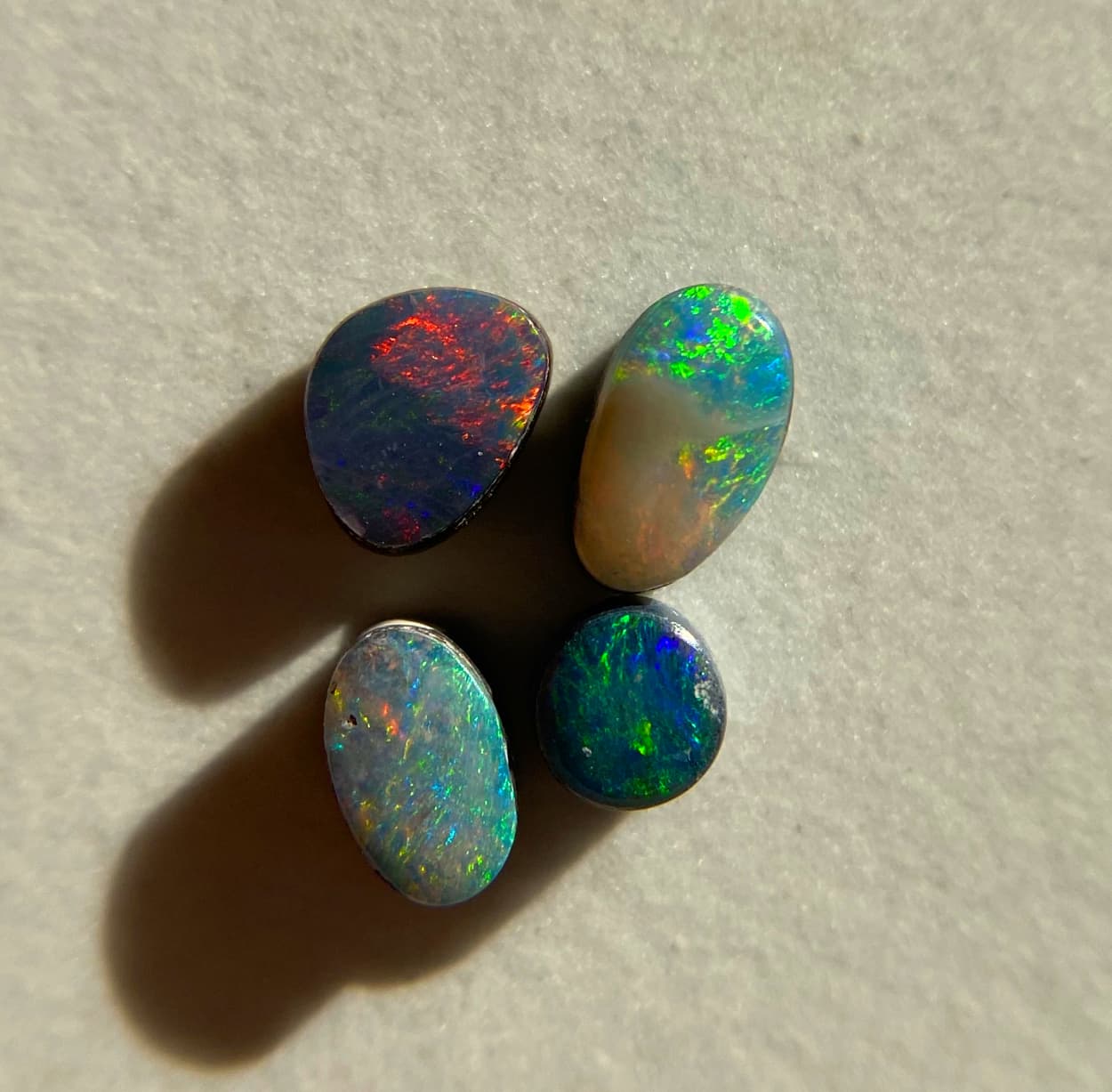
Steph created this public outline to make opal-cutting knowledge easier for beginners to explore. It moves from understanding rough opal through sandpaper, rotary-tool, and cabbing-machine methods, then finishes with opal valuation. The course format, timing, availability, support, and price are still being confirmed. Sending an interest enquiry is not enrolment or payment.
What you will learn
- Inspect rough opal for colour bars, potch, host rock, and inclusions.
- Recognise major Australian opal types and producing regions.
- Compare sandpaper, rotary-tool, and cabbing-machine workflows.
- Plan shaping, refinement, pre-polish, and final polishing steps.
- Evaluate brightness, body tone, colour, pattern, weight, inclusions, and cut together.
Course outline
This public outline shows the planned subjects. It does not include lessons or promise a start date.
01Course introductionMeet Steph and understand why the course was created.1 lesson · 3 steps
- 01
Welcome to the course
- Introduction to the course
- A little bit about me (Steph)
- Why this course was created
- 01
02Module 1: Opal anatomy and Australian opalLearn how opal forms, how to inspect rough, and how Australian types and fields differ.5 lessons · 18 steps
- 01
M1 Lesson 1: Understanding opal anatomy
- The basics: colour bars and potch
- Host rock and residual material
- Tips for inspecting opals
- 02
M1 Lesson 2: Types of opal
- Crystal opal
- White opal
- Black opal
- Boulder opal
- Matrix opal (Andamooka)
- 03
M1 Lesson 3: Region of origin
- Coober Pedy
- Lightning Ridge
- Mintabie
- Andamooka
- Winton and Opalton
- Quilpie and Yowah
- 04
M1 Lesson 4: Opals of the world
- Mexican opals compared with Australian opals
- Ethiopian opals compared with Australian opals
- 05
Module 1: Review and reflection
- Test time
- Module 1 quiz
- 01
03Module 2: Cutting opal with sandpaperStart with an accessible wet-sanding and polishing method.5 lessons · 7 steps
- 01
M2 Lesson 1: Introduction to the sandpaper method
- Equipment
- Inspection and planning
- 02
M2 Lesson 2: Wet sanding, part 1
- Sanding with 600 grit
- 03
M2 Lesson 3: Wet sanding, part 2
- Sanding with 1200 grit
- 04
M2 Lesson 4: Polishing opal
- Polish
- 05
Module 2: Review and reflection
- Tips and tricks
- Assignment
- 01
04Module 3: Cutting opal with a rotary toolUse a Dremel-style rotary tool to shape, refine, pre-polish, and finish opal safely.6 lessons · 14 steps
- 01
M3 Lesson 1: Introduction to rotary-tool opal cutting
- Overview of the opal-cutting process
- Introduction to the rotary tool and resin tips
- Importance of safety and proper handling
- 02
M3 Lesson 2: Basics of cutting opals
- Understanding the softness of opals
- Equipment
- Safety
- 03
M3 Lesson 3: Rotary-tool cutting process
- Technique and patience
- Creating the rough shape and preparing a backing
- 04
M3 Lesson 4: Opal refinement
- Applying the opal to a dopstick
- Refining the opal to pre-polish
- 05
M3 Lesson 5: Polish
- Pre-polishing
- Getting a glossy finish
- 06
Module 3: Review and reflection
- Tips and tricks
- Assignment
- 01
05Module 4: Cutting opal with a cabbing machineMove through machine setup, wheel selection, calibrated shapes, freeforms, and polishing.7 lessons · 18 steps
- 01
M4 Lesson 1: Introduction to cabbing
- Overview of the cabbing process
- Inspecting opal refresher
- 02
M4 Lesson 2: Understanding rough opal
- Potch, host rock, and colour bar
- Cutting for carat weight
- 03
M4 Lesson 3: Understand your equipment
- How the machine works
- Safety first
- Your new best friend
- 04
M4 Lesson 4: Cutting techniques
- Hard wheels
- Soft wheels
- Applying a dopstick refresher
- Basic shaping: ovals and rounds
- 05
M4 Lesson 5: Advanced shaping techniques
- Calibrating opal
- Cushion cuts
- Marquise cuts
- Freeform design
- 06
M4 Lesson 6: Polish
- Glass-finish polishing techniques
- 07
Module 4: Review and reflection
- Tips and tricks
- Assignment
- 01
06Module 5: Opal valuationAssess the interacting characteristics that influence an opal's value.6 lessons · 24 steps
- 01
M5 Lesson 1: Overview of the opal market
- Opal rarity
- Module structure overview
- 02
M5 Lesson 2: Factors that determine price
- Darkness and brightness
- Colour
- Patterns
- Weight in carats
- Inclusions
- 03
M5 Lesson 3: How to price an opal
- Darkness and brightness scale
- Play of colour
- Pattern rarity
- Price per carat and overall cut
- Inclusions
- Pricing guide
- Multipliers and detractors
- 04
M5 Lesson 4: Opal valuation case studies
- Case study: crystal opal
- Case study: boulder opal
- Case study: white opal
- Case study: semi-black opal
- Case study: black crystal opal
- 05
M5 Lesson 5: Test your knowledge
- Crystal opal valuation exercise
- Boulder opal valuation exercise
- Black opal valuation exercise
- 06
Module 5: Review and reflection
- Module 5 recap
- Module 5 quiz
- 01
07Course final reviewRevisit the five modules and complete the final knowledge check.2 lessons · 6 steps
- 01
Module recaps
- Module 1 recap
- Module 2 recap
- Module 3 recap
- Module 4 recap
- Module 5 recap
- 02
Final assessment
- Final quiz
- 01
Stephanie Caruana
Opal cutter
Steph built the course around the information she wished had been easier to find when she began cutting opals.
Who this is for
- Beginners who want a structured introduction to opal cutting.
- Learners comparing low-cost hand methods with rotary tools and cabbing machines.
- Collectors and makers who want a clearer framework for assessing opal value.